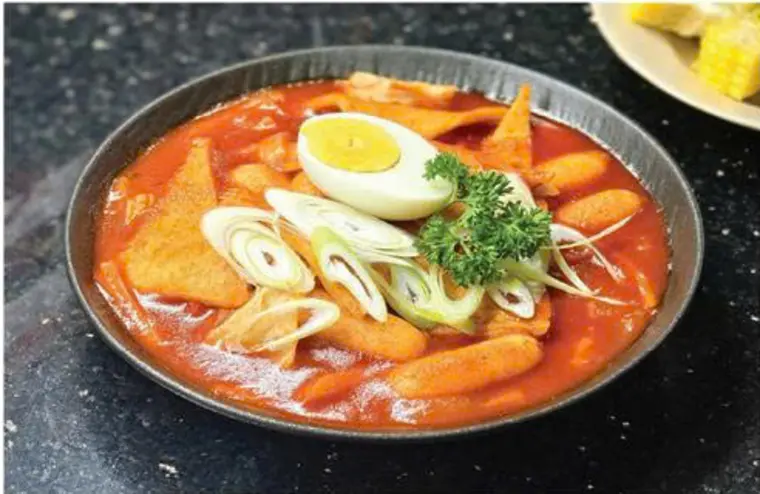
Tokbokki (떡볶이, also spelled tteokbokki) is the most famous spicy rice cake dish of Korean street food. Chewy, soft rice cake sticks are simmered in a glossy red gochujang sauce, with a deep sweet-spicy flavor, and usually eaten with fish cake, boiled eggs and scallions. For young Vietnamese people, tokbokki has become familiar from Korean dramas, but not everyone knows what the dish is really made of, what variations exist and how best to eat it. This article explains it all, from origins to how to enjoy it, including how the dish shows up in a Korean BBQ meal at Gogizip.
📍 Want to try it in Saigon? Gogizip is a charcoal Korean BBQ in Phu My Hung, District 7: grilled at your table, 9 free refillable banchan, sets for 2 from 599k VND, English menu. Book a table
What is tokbokki?
The name tteokbokki combines two parts: tteok means rice cake, and bokki means stir-fried or pan-fried. Simply put, it is stir-fried rice cake, but in practice the cakes are usually simmered in the sauce until it thickens and coats each stick evenly. The rice cake used in this dish is called garaetteok, made from cooked rice flour kneaded into long sticks, with a distinctive chew, a bouncy bite and the mild natural sweetness of rice.
It is a quick, cheap, hot, easy-to-share dish, so it appears on almost every street corner, market and outside school gates in Korea. Koreans eat tokbokki as an afternoon snack, a comfort food after school, or even a light dinner with friends. For foreigners, it is often the first dish they try when it comes to Korean street food.
The origins of tokbokki
Rice cakes have long been a familiar food for Koreans, and there is an old form of tokbokki called gungjung tteokbokki, or royal court tteokbokki. This version is not spicy but cooked with soy sauce, beef, vegetables and sesame, with a gentle salty-sweet flavor. The red spicy rice cake dish we know today became widespread from the mid-20th century, when gochujang (Korean chili paste) was brought into rice cake cooking at small eateries and quickly became a flavor tied to Korean streets.
Since then tokbokki has kept changing, adding fish cake, noodles, cheese and seafood. Every neighborhood and shop has its own recipe, and this flexibility is why tokbokki has lived on through generations.
The main ingredients of tokbokki
Rice cakes (tteok)
The soul of the dish is the rice cake. Good rice cakes must be chewy without sticking to your teeth, soft inside with a bit of bounce. Rice cakes left too long become hard and dry, so they are usually soaked in warm water before cooking to soften again. Some restaurants use cheese-filled rice cakes: bite in and the cheese flows out, a feeling quite different from ordinary rice cakes.
The sweet-spicy sauce
A basic tokbokki sauce includes gochujang, Korean chili flakes (gochugaru), soy sauce, sugar and water or stock made from anchovies and kelp. Gochujang is a fermented chili paste made from glutinous rice, chili and soybeans, giving a mild heat, a lingering sweetness and some umami rather than the sharp bite of fresh chili. The sugar balances the heat, so people who are not used to spicy food can still enjoy it at a moderate level.
Fish cake, eggs and vegetables
Common additions include sheet-style fish cake (eomuk), boiled eggs, scallions, and sometimes cabbage or onion. Fish cake soaks up the sauce beautifully, and boiled egg dipped in the red sauce is a combination many people love. Some places sprinkle toasted sesame and shredded seaweed for extra aroma.
Popular variations of tokbokki
- Classic spicy tokbokki: rice cakes, fish cake, eggs and a rich gochujang sauce. This is the standard version and the easiest to eat.
- Cheese tokbokki: topped with melted mozzarella that softens the heat and adds a creamy richness. Very popular with young people and kids.
- Rabokki: tokbokki with instant noodles (ramyeon) added, making a dish that is half rice cake and half noodles, much more filling.
- Jeongol tokbokki: a mini hot-pot style, with rice cakes and many vegetables, noodles, sausage and seafood in a simmering pot.
- Cream tokbokki: a creamy, mild sauce, good for people afraid of spice.
- Soy sauce tokbokki: the traditional non-spicy style, salty-sweet and fragrant with beef and sesame.
- Cheese shake rice cakes: crispy fried rice cakes shaken with cheese powder, eaten like a snack instead of a saucy dish.
Why is tokbokki so addictive?
There are three main reasons. The first is texture: the chew of the rice cakes makes eating fun, a bit like al dente pasta but thicker. The second is flavor: the sweet heat blends with the umami from the stock and gochujang, leaving an aftertaste that makes you want to reach for more. The third is culture: tokbokki is tied to memories of school days, of a whole group poking skewers into one dish of red sauce, so it feels warm and friendly.
Tokbokki also appears all the time in Korean dramas and TV shows, so when many young Vietnamese people try it, it feels like stepping into a familiar scene from the screen. That explains why it has become a dish almost everyone wants to try once.
How to eat tokbokki the right way
- Eat while hot: rice cakes left to cool become too hard and chewy. It is best when the sauce is still gently bubbling.
- Pair with fried foods: in Korea, tokbokki is often eaten with twigim (crispy fried snacks) and sundae (Korean blood sausage). Try dipping fried food in the tokbokki sauce; the crunch and rich sauce go very well together.
- Drink cold water or a fizzy soft drink: it cuts the heat and cleanses your palate before the next bite.
- Mix rice into the leftover sauce: a Korean habit is to add rice and seaweed to the last of the sauce and stir-fry it into spicy fried rice, called bokkeumbap.
- Add cheese if you’re afraid of spice: cheese makes the sauce milder and richer, perfect for beginners.
Tokbokki in a Korean BBQ meal
In a BBQ meal, tokbokki usually plays the role of a side dish or appetizer. The sweet heat and chew of the rice cakes balance the richness of pork belly and the bolder cuts of meat. Gogizip includes tokbokki as a complimentary dish in Combo A, suitable for two people who want to try several flavors at once. If you want to eat tokbokki on its own, you can order it from the menu and then grill meat as usual.
A sensible way to arrange it is to order tokbokki at the start of the meal to eat while waiting for the grill to heat up, because the sweet-spicy sauce wakes up the palate. Then move to grilled meat, and finish with soup or cold noodles to settle your stomach. See the menu to choose dishes by number of people.
Tokbokki compared with other rice cake dishes
Newcomers often confuse tokbokki with other rice cake dishes. Tokbokki is stick-shaped rice cake cooked in spicy sauce. Tteokguk is sliced rice cake cooked in soup, eaten at the Lunar New Year. Songpyeon is steamed filled rice cake, eaten at the mid-autumn festival. Gungjung tteokbokki is the non-spicy, soy-flavored version. Each has its own preparation and occasion, but all start from the same ingredient: rice flour.
Nutrition and things to note when eating
Rice cakes are rich in starch, giving quick energy but little protein and fiber, so tokbokki is more of a snack than a balanced main meal. The sauce is saltier and higher in sugar than ordinary cooking. So if you are used to eating lightly or watching your starch intake, eat a moderate amount and combine it with vegetables and protein from grilled meat. Beginners who are new to spicy food should choose a moderate level or the cheese version to avoid stomach irritation.
Making simple tokbokki at home
To try making it at home, you need stick rice cakes (from a supermarket that sells Korean food), gochujang, gochugaru, sugar, soy sauce, garlic and stock. Soak the rice cakes in warm water until soft. Heat the stock, dissolve the gochujang, gochugaru, sugar and soy sauce evenly. Add the rice cakes and fish cake and cook over medium heat for about ten minutes, stirring so the rice cakes don’t stick to the bottom of the pot, until the sauce thickens. Add scallions and boiled eggs, and adjust the seasoning to taste.
A small tip: stock made from anchovies and kelp tastes much better than plain water. Add a spoonful of honey or syrup for a glossy sauce with a lingering sweetness. If you want a rabokki, add instant noodles for the last three minutes.
Ideas for pairing tokbokki with other dishes at Gogizip
- Tokbokki + pork belly: the contrast between sweet heat and rich fragrance is wonderfully balanced. See Pork Belly.
- Tokbokki + kimchi soup: two red, spicy dishes that suit spice lovers, and go great with rice.
- Cheese rice cakes + cold noodles: one hot, one cold, one rich, one light, so the meal never gets tiring.
- Tokbokki + steamed eggs: the soft, smooth steamed eggs soothe your mouth after the spicy bites.
Tokbokki in Korean pop culture
Tokbokki is almost a symbol of Korean school days. After class, groups of friends stop at small shops near the school gate, each with a paper cup of fiery red rice cakes, poking skewers into them while still steaming. That is why many Koreans, even as adults, return to tokbokki as a way of recalling memories, like Vietnamese people remembering sticky rice or mixed rice paper in front of the school gate.
The dish also appears constantly in dramas, variety shows and even songs, so it has become something almost everyone who knows Korea has heard of. In Vietnam, thanks to the wave of Korean dramas, rice cake shops have sprung up everywhere and tokbokki has become a favorite snack for young people. By bringing this dish into a BBQ meal, Gogizip wants you to have an experience that feels both familiar and new: familiar because you have seen it on screen, new because you are eating it in the atmosphere of a real Korean charcoal-grill restaurant.
Tokbokki and its fried companions
In Korea, the classic trio of street food stalls is tokbokki, sundae and twigim. Twigim includes crispy fried items such as sweet potato, glass noodle seaweed rolls, shrimp and vegetable fritters. The proper way to eat them is to dip the fried food into the tokbokki sauce and then bite, letting the crisp coating soak up the sweet-spicy sauce. It is simple but delicious, and it also means none of the sauce goes to waste.
Choosing a spice level for each person
If you handle spice poorly, start with cheese tokbokki or cheese-filled rice cakes. If you handle spice moderately, classic tokbokki is the ideal choice. If you are a spice lover, you can add chili powder or eat it with noodles for a bolder heat. The important thing is that the heat should not overpower the sweetness and umami of the sauce, because that is the soul of the dish.
Common misunderstandings about tokbokki
Many people think tokbokki is always very spicy, but the heat can in fact be adjusted from mild to fiery, and many variations are almost not spicy at all. Another misunderstanding is that the rice cake is like Vietnamese banh canh or banh da: in essence, Korean rice cakes are thick, dense and chewier, and not made from thin sheets of rice flour. Some people also think tokbokki is just a cheap snack, but in Korea many long-established tokbokki shops are highly respected and have family recipes.
Frequently asked questions about tokbokki
Is tokbokki spicy?
Usually it has a sweet-spicy flavor, but the heat level can be chosen. Cheese or cream versions are far milder, very suitable for newcomers.
What is tokbokki made from?
From rice cakes (garaetteok) and a sweet-spicy gochujang sauce, usually eaten with fish cake, boiled eggs and scallions.
What is rabokki?
It is tokbokki with instant noodles added, making a dish of rice cakes and noodles in the same pot of spicy sauce.
Can tokbokki be eaten with grilled meat?
Yes. The sweet heat and chew of the rice cakes are great to eat at the start of the meal or between rounds of grilled meat.
Does Gogizip sell tokbokki?
Yes. Gogizip has Tokbokki, Cheese Shake Rice Cakes and Cheese-filled Tteokbokki, and Combo A comes with a complimentary portion of Tokbokki.
Can children eat tokbokki?
They can; choose a mild or cheese version and eat a moderate amount, because the dish is high in starch and fairly strongly flavored.
Conclusion
Tokbokki is more than a snack; it is part of the memory and street food culture of Korea. Chewy, sweet-spicy, hot and easy to share, it is a wonderful way to open a BBQ meal or to try Korean flavors for the first time. See you at Gogizip, 93 Pham Van Nghi Street, Phu My Hung Urban Area, Tan Hung Ward, Ho Chi Minh City. Prices exclude 10% VAT. See all dishes.
📍 Try Tokbokki with Korean BBQ in Saigon: see Korean BBQ in District 7. Gogizip, 93 Pham Van Nghi, Phu My Hung – Combo A for 2 (599,000₫) comes with a free Tokbokki. Open 11:00–23:00, book 0898 611 611.
Craving Korean BBQ? Gogizip BBQ – 93 Pham Van Nghi, Phu My Hung (District 7), open 11:00–23:00 daily. Combos for 2 from 599k VND, for 4 from 1,159k VND (prices before 10% VAT). 9 free banchan, refilled anytime. Some of our staff speak English.