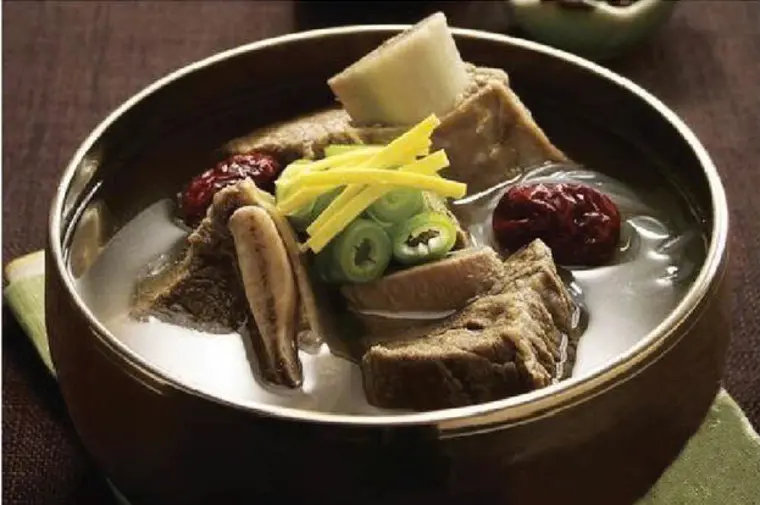
Mention Busan and Koreans immediately think of Haeundae beach and a steaming bowl of dwaeji gukbap (돼지국밥): milky pork-bone broth, thinly sliced pork and rice, finished with seasoned garlic chives and salted shrimp. Today Gogizip shares the story behind this dish and how to make it at home.
A dish born in wartime
According to the Korean press, dwaeji gukbap became popular in Busan during the Korean War (1950), when huge numbers of refugees poured into the port city. Beef was scarce, so people used pork bones and pork – easier to come by – to cook the familiar soup-and-rice dish of their hometowns. The City of Busan also notes another theory: the dish was originally a market-day food in Miryang (Gyeongnam province) and spread after the war. In 2026, Busan even held a “dwaeji gukbap contest” for residents to vote for the best restaurants.
Ingredients (serves 4)
Broth
- 1.5 kg pork leg bones
- 600 g pork shoulder or pork belly (in one piece)
- 1 onion, 1 leek (or a few stalks of Korean green onion), 1 head of garlic, 1 slice of ginger
- About 4 liters of water
To serve
- 4 bowls of steamed white rice
- 1 bunch of garlic chives (called “jeongguji” in Busan), 1 spoon Korean chili flakes, 1 spoon fish sauce, 1 spoon vinegar, 1 spoon sesame oil, toasted sesame seeds
- Korean salted shrimp (saeujeot) or salt
- Spring onions, pepper, kimchi
Method
- Soak the bones in cold water for about 1–2 hours, changing the water a few times to draw out the blood.
- Blanch the bones: boil for 5–10 minutes, discard the water, then rinse the bones and the pot.
- Make the broth: put the bones back in the pot with fresh water, bring to a boil over high heat, then keep at a moderately strong boil for 3–4 hours, topping up with boiling water now and then. A strong boil is what turns the broth its signature milky white.
- Cook the pork: about 1 hour before the broth is done, add the pork, onion, leek, garlic and ginger. Cook until a chopstick pushed into the meat brings out no pink juices, then lift out, let cool and slice thinly.
- Season the chives: cut the chives into 4–5 cm lengths and toss gently with chili flakes, fish sauce, vinegar, sesame oil and sesame seeds just before eating.
- Assemble: pour hot broth over the bowl of rice and sliced pork and drain it off 2–3 times to warm everything through, then fill the bowl with broth. Sprinkle with spring onions and pepper.
- Season at the table: everyone adds salted shrimp and seasoned chives to taste. Serve with kimchi.
Tips
- Don’t season the broth in advance – letting each person season it with salted shrimp is the Busan way.
- If you like it spicy, add a little “dadaegi” (a chili paste mixed with garlic and chili flakes).
- You can also eat the boiled pork on its own, dipped in salted shrimp, like “suyuk”.
No time to cook? Gogizip has hot Korean soups
Not everyone has 4 hours to simmer bones. Gogizip doesn’t serve dwaeji gukbap, but we do have beef short rib soup (galbitang) and ginseng beef short rib soup – a clear, fragrant broth served with rice and kimchi, perfect for cooler evenings. If you’re in the mood for pork, there’s charcoal-grilled pork belly (ba chỉ heo, samgyeopsal), pork jowl (nọng heo, hangjeongsal) and pork collar (cổ heo, moksal). Read more about Korean BBQ pork cuts, see the menu or book a table. Hotline 0898 611 611 – 93 Pham Van Nghi, Phu My Hung.
Frequently asked questions
Why is dwaeji gukbap broth milky white?
Because the pork bones are kept at a strong boil for hours, fat and collagen dissolve into the water and turn it milky white.
What do you eat with dwaeji gukbap?
Seasoned garlic chives (jeongguji), salted shrimp (saeujeot), kimchi, onion and chili paste.
When did dwaeji gukbap originate?
It became popular in Busan during the Korean War in the 1950s; another theory says it began at the Miryang market.
Sources
- Wikitree – Why Busan is famous for dwaeji gukbap
- Wikitree (2026) – Busan picks 20 dwaeji gukbap restaurants; theories on its origin
- KNN (10/2026) – Busan dwaeji gukbap awards
Craving Korean BBQ? Gogizip BBQ – 93 Pham Van Nghi, Phu My Hung (District 7), open 11:00–23:00 daily. Combos for 2 from 599k VND, for 4 from 1,159k VND (prices before 10% VAT). 9 free banchan, refilled anytime. Some of our staff speak English.