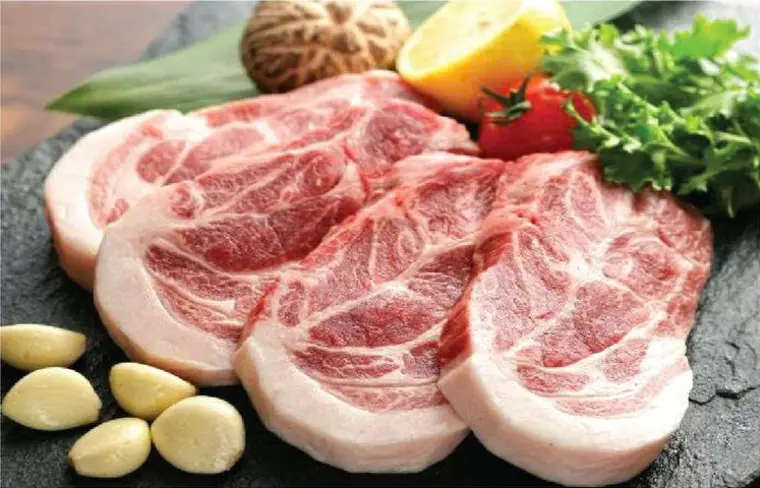
Korean BBQ pork comes in many cuts, each with a very different level of fat, crunch and flavor. The most popular are pork belly (samgyeopsal), pork collar (moksal), pork jowl (hangjeongsal), pork loin, ribs and pork skin. Pork belly is rich and juicy thanks to its alternating layers of fat; pork collar is chewy and full-flavored; pork jowl is crunchy and fragrant; marinated ribs are deeply savory. Knowing each cut helps you pick the right one for your taste and grill it properly so the meat tastes its best.
This article introduces the pork cuts you will commonly find at a Korean restaurant, with their characteristics, how to grill them, how to dip them and what to pair them with. If you want a deeper look at the most popular cut, read our guide to samgyeopsal: how to grill and eat Korean-style pork belly.
Pork belly (samgyeopsal): the most familiar cut
Pork belly is the underside of the pig, made up of alternating layers of lean meat and fat. The name “samgyeopsal” means “three-layer meat.” It is the most popular grilled meat in Korea. As it cooks, the rendered fat leaves the edges crisp, the inside tender and the whole bite rich and fragrant. Pork belly is usually cut into moderately thick slices and grilled unmarinated to keep its natural flavor, then eaten with ssam and side dishes.
Suggested way to eat: grill until golden on both sides, cut into bite-size pieces, and wrap in lettuce with perilla leaf, grilled garlic and a little ssamjang. You can find Pork Belly on the menu.
Pork collar (moksal): chewy and full-flavored
Pork collar comes from the neck area, with fine marbling and firmer, springier meat than pork belly. Grilled just right, it has a light chew, with a fragrant, juicy bite that is not too greasy. Diners often love pork collar for that satisfying chew that stays tender.
How to grill: use medium heat and flip it evenly so it cooks through without grilling too long, which dries it out. It goes well with sesame-salt dip or ssamjang. See also Pork Collar.
Pork jowl (hangjeongsal): the signature crunch
Pork jowl is the meat under the chin, rich in fat yet with a distinctive crunchy snap. Grilled through, the fat turns fragrant and the meat is tender inside and lightly crisp outside. Many people love this cut for its deeply satisfying mouthfeel.
Tip: because pork jowl is fatty, eat it with fresh greens, pickled onions or kimchi to cut the richness. You can try Pork Jowl.
Pork loin and tenderloin: leaner and lighter
For people who don’t like too much fat, pork loin or tenderloin is a good choice. These cuts are lean, low in fat and tender when grilled properly, but easily dry out if grilled too long. They are often lightly marinated or cut thicker to hold in moisture. Choose them when you want a lighter grilling meal, or pair them with fattier cuts like pork belly for balance.
Special cuts and others
- Special pork loin meat: a cut with moderate marbling, tender and full-flavored. Try Special Pork Loin Meat.
- Marinated pork ribs: ribs in a sweet-savory marinade, grilled until fragrant. See Marinated Pork Ribs.
- Pork skin: the skin is grilled until crackly and is a fun finger food. See Grilled Pork Skin.
Quick comparison of Korean BBQ pork cuts
| Cut | Fattiness | Texture | Pairs well with |
|---|---|---|---|
| Pork belly | High | Tender, crisp edges | Ssam, kimchi, ssamjang |
| Pork collar | Medium | Chewy, sweet | Sesame salt, lettuce |
| Pork jowl | High | Crunchy | Fresh greens, pickled onions, kimchi |
| Pork loin, tenderloin | Low | Lean, tender, dries out easily | Ssamjang, wrap greens |
| Marinated ribs | Medium | Savory, tender | Lettuce, pickled vegetables |
| Pork skin | High | Crackly | Pepper salt, kimchi |
Which cut should you order first?
A suggested order for a group of friends:
- Start with unmarinated meat: pork belly or pork collar, to taste the pure flavor of the meat.
- Move on to bolder cuts: pork jowl or special pork loin meat.
- Finish with marinated meat: marinated pork ribs, because the sauce burns easily, so grill them last to keep the grill cleaner.
If you are dining in a larger group, pork combos are more convenient. Take a look at Combo A (pork belly, pork collar, pork jowl) or Combo B for a group of four.
How to grill pork so it doesn’t dry out
- Preheat the grill: a hot grill sears the meat and keeps it juicy.
- Don’t flip too often: let one side turn golden before you flip.
- Don’t overcook: pork should be cooked through but not charred at the edges. Pork belly usually needs just a few minutes per side, depending on thickness.
- Cut with scissors: cutting the meat into bite-size pieces right on the grill helps it make even contact with the heat.
- Blot extra fat: if a lot of fat renders out, you can use oil-blotting paper or add garlic and kimchi to soak it up.
Safety note: pork must be cooked through. Use separate tongs for raw meat and chopsticks for eating.
Korean pork and how Koreans enjoy it
Pork is the most consumed meat in Korea, and samgyeopsal is almost a “national dish” of gatherings. Koreans usually grill pork unmarinated, sliced thicker than in the European style, then cut it into small pieces with scissors right on the grill. This style emphasizes the quality and freshness of the meat rather than using seasoning to cover up its flavor.
A Korean BBQ meal tends to last quite a while: everyone grills and chats, sips drinks, makes ssam wraps, and orders a soup or cold noodles to finish. For many Koreans it is a form of social bonding: coworkers gathering after work, friends meeting on weekends, families celebrating special occasions. This shared culture is what makes grilled meat more special than an ordinary meal.
How does slice thickness affect the grilling?
The same cut at a different thickness gives a completely different experience. Thinly sliced pork belly (the “chadol” style) cooks very fast and is crisp, good for ssam wraps or a quick bite. Thicker slices keep more juice, with fat that stays inside and meat that is tender in the middle, but need a little longer on the grill. Most Korean restaurants choose a medium thickness, enough to sear both sides while the inside stays tender.
For pork collar and pork jowl, slices are usually a little thicker because these two cuts have their own springy chew. Slice them too thin and you won’t feel their signature texture. For lean loin and tenderloin, a medium cut is enough to keep them from drying out.
How to choose good pork at the market or supermarket
- Color: fresh meat is light to deep pink with white or slightly cream-colored fat, without dark spots or unusual discoloration.
- Elasticity: press the meat lightly with a finger; fresh meat springs right back.
- Smell: fresh meat has no sour or off smell. A mild smell of raw meat is normal.
- Moisture: the surface should be slightly moist, not slimy, and not leaking a lot of liquid in the tray.
- Fat-to-lean ratio: for pork belly, choose slices with even layers of lean meat, around 3 to 5 layers.
If you buy at a restaurant or BBQ place you don’t need to worry about this, but when cooking at home, these signs help you pick a good piece of meat. It is also why many younger diners choose to eat out for convenience.
What to order for each type of group
| Group | Suggestion |
|---|---|
| 2 people | Combo A (about 400 g, including pork belly, pork collar, pork jowl) plus a soup or side dish. |
| 3 to 4 people | Combo B (about 800 g), plus a hot pot or stew for everyone to share. |
| Groups of more than 4 | Order a variety of individual portions to try more: pork belly, pork collar, pork jowl, special pork loin meat, along with side dishes. |
| Groups who prefer lighter eating | Prioritize pork collar and lean pork loin, plus fresh greens and a light soup. |
| Groups who like bold flavors | Pork jowl, marinated pork ribs, with kimchi and a spicy soup. |
You can see the details of each combo in our dishes hub and menu.
Common mistakes when grilling pork
- Grilling before the grill is hot: the meat sticks, releases liquid and doesn’t sear nicely.
- Putting too much meat on at once: the temperature drops, the meat steams instead of grilling, and it is hard to control doneness.
- Flipping constantly: the meat loses its crisp outer crust.
- Overgrilling: the meat dries out and loses its sweetness and tenderness.
- Not changing the grill when it burns: a blackened grill gives the meat a burnt, bitter taste that affects the whole meal.
If the grill gets dirty from sauce or burnt fat, you can ask the staff to change it so every round of meat tastes great.
Questions first-timers ask about Korean-style pork
Is unmarinated meat bland? No. Good fresh pork already has a natural sweetness, and grilling it until the edges brown makes it fragrant. The dips, wraps and side dishes add the flavor, so the meal as a whole is far from bland.
Does the meat need to be fully cooked? Pork should be cooked all the way through, especially when eating at home or when there are young children, older adults or pregnant women. A sign of doneness is that no raw pink remains in the middle of the piece or in the juices.
Is a lot of fat harmful? Grilled meat with a lot of fat should be eaten in moderation, with plenty of vegetables and not too much in one meal. If you have a health condition that requires limiting fat, ask your doctor or a nutrition specialist.
Do you eat grilled pork with rice or not? Both are correct. Many Koreans eat the meat first, then order rice or cold noodles. Some people wrap a small spoonful of rice in the ssam from the start. Choose whichever feels most comfortable.
How much meat should you order per person? On average about 150 to 250 g of meat per person, depending on appetite and side dishes. If you also order soup, noodles or rice, you can order less meat.
What to eat with grilled pork
Fatty pork goes well with sour, spicy or refreshing foods: kimchi, pickled onions, pickled vegetables, lettuce, perilla leaf, grilled garlic and hot soup. If you don’t know which soup to choose, read our guide to Korean soups and stews. And to learn about dipping sauces, read Korean BBQ dipping sauces.
Dine at GogizipBBQ
Address: 93 Pham Van Nghi Street, Phu My Hung Urban Area, Tan Hung Ward, Ho Chi Minh City.
Open daily 11:00 – 23:00. Hotline: 0898 611 611.
Menu prices exclude 10% VAT.
Frequently asked questions about Korean BBQ pork
Which cut of pork is best for grilling?
It depends on your taste: pork belly is rich and juicy, pork collar is chewy, pork jowl is crunchy, and lean loin is lighter. Pork belly is the most popular cut.
Which part of the pig is samgyeopsal?
Samgyeopsal is pork belly, the underside of the pig with alternating layers of lean meat and fat.
How do pork collar and pork jowl differ?
Pork collar comes from the neck, with fine marbling and a chewy bite; pork jowl is under the chin, fattier and crunchy.
What do you eat with grilled pork to cut the richness?
Kimchi, pickled onions, lettuce, perilla leaf, grilled garlic and hot soup help balance the fatty flavor.
How long should you grill pork?
Depending on thickness, pork belly usually takes a few minutes per side until golden, crisp and cooked through. Don’t grill too long or the meat will dry out.
Should marinated pork be grilled first?
Grill it last, because the sauce burns easily and dirties the grill, affecting the cuts you grill afterwards.
Craving Korean BBQ? Gogizip BBQ – 93 Pham Van Nghi, Phu My Hung (District 7), open 11:00–23:00 daily. Combos for 2 from 599k VND, for 4 from 1,159k VND (prices before 10% VAT). 9 free banchan, refilled anytime. Some of our staff speak English.