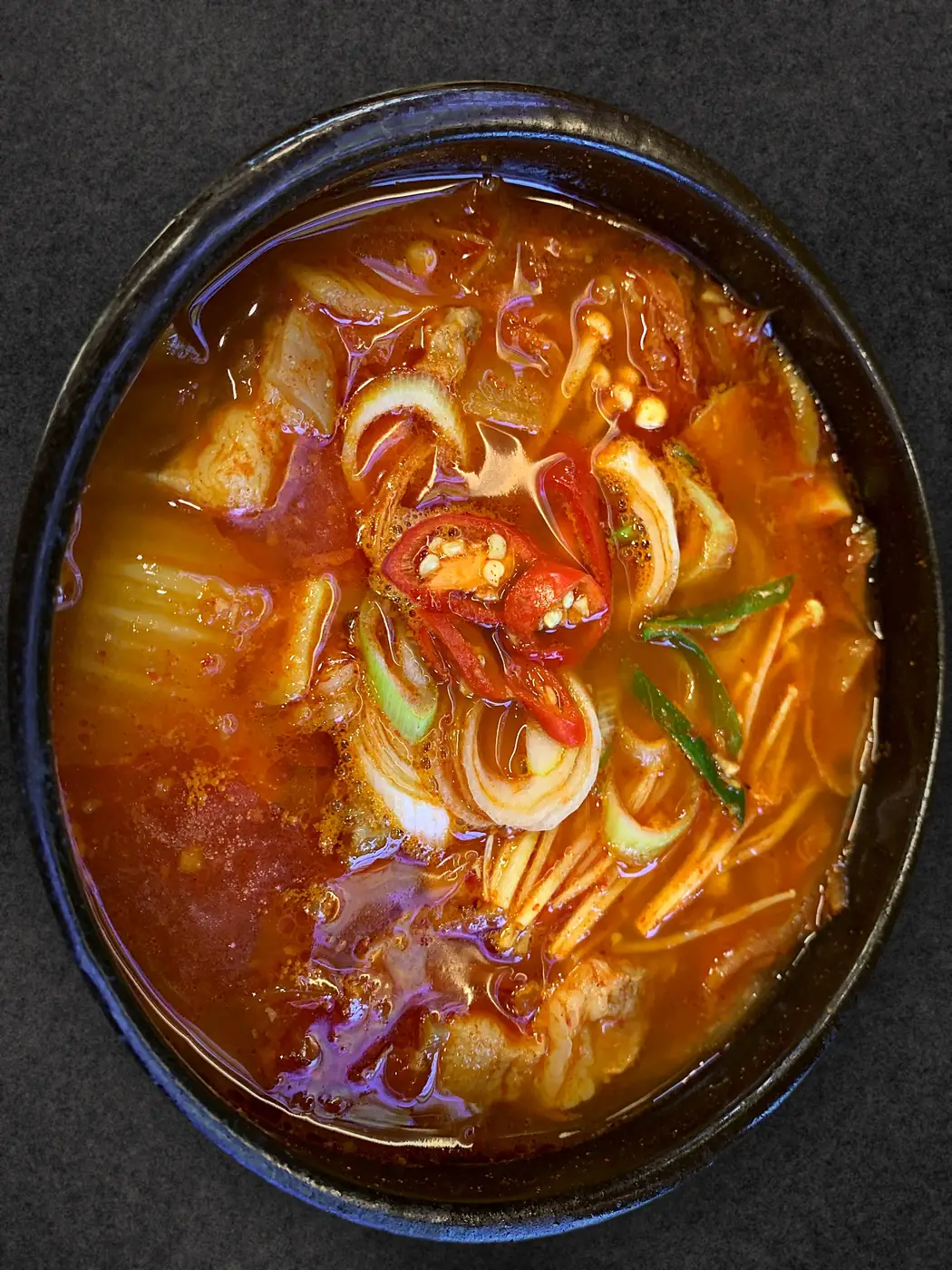
Korean soups and stews are usually divided into three main groups: jjigae (찌개, a concentrated stew with little broth), guk (국, a clear soup eaten with rice every day) and tang (탕, a broth-rich stew cooked for a long time, usually eaten to feel full). These three names sound alike, but the richness, the amount of broth and the way they are eaten are quite different. This article helps you tell them apart, understand each famous dish and know what to order when you go for Korean BBQ.
Why does a Korean meal always have a hot soup?
A traditional Korean meal is usually built on a formula: white rice, a soup or stew, a few plates of banchan (side dishes) and a main dish. The hot soup is not there just to fill out the table. It balances the flavor of salty, spicy or oily dishes and makes the meal feel complete. With grilled meat, a hot pot of soup in the middle of the table is also a way to “soothe” the richness of the meat before going back to the grill.
If you are new to this, read more about what banchan is and the side dishes served with Korean BBQ to understand the whole picture of a table, and Korean BBQ culture to learn why Koreans eat in this order.
Jjigae, guk and tang: a quick guide
| Type | Characteristics | Examples |
|---|---|---|
| Jjigae (찌개) | Cooked in a small pot with little broth and strong seasoning, usually spicy or deeply savory. Eaten with rice. | Kimchi jjigae, doenjang jjigae, sundubu jjigae |
| Guk (국) | A soup with more broth and a lighter flavor, the soup served with everyday meals. | Miyeok-guk (seaweed soup), tofu soup |
| Tang (탕) | A long-simmered stew with lots of broth and big ingredients such as bones, ribs or a whole chicken. Can be eaten as a main dish. | Galbi-tang (braised beef rib soup), samgyetang (ginseng chicken soup) |
| Jeongol (전골) | Korean hot pot, cooked at the table in a wide pot with many ingredients arranged in advance. | Beef and mushroom hot pot, offal hot pot |
The line is sometimes blurry: many dishes called “soup” in Vietnamese have a Korean name of jjigae or tang. The easiest way to remember is to look at how concentrated it is. Jjigae is bold with little broth, guk is light with plenty of broth, and tang is hearty and long-simmered.
Kimchi jjigae: the national stew
If you had to choose one stew to represent Korea, many people would think of kimchi jjigae right away. The core ingredient is well-fermented kimchi, cooked with meat (usually pork or beef), tofu and scallions. The more the kimchi has fermented, the clearer the tang and the deeper the broth, which is why Koreans usually use aged kimchi rather than freshly made kimchi.
The flavor is sour, spicy and bold, with a little richness from the meat. It goes best with hot white rice: spoon some broth over the rice, add a piece of soft kimchi, and it is delicious without needing anything else. At Gogizip you can order Kimchi Soup with Pork or Kimchi Soup with Seafood to suit your taste: the pork version is rich and bold, the seafood version is sweeter and lighter.
Tips for enjoying kimchi jjigae more
- Eat it while it is still gently bubbling. This dish is best when the broth is hot and simmering.
- Alternate with grilled meat: a bite of rich meat, a spoonful of sour-spicy soup, and your palate “resets” right away.
- You do not need to add much seasoning; the kimchi is already bold enough.
Doenjang jjigae: the taste of soybean paste
Doenjang is Korea’s fermented soybean paste, with a distinctive aroma and a deeply salty flavor. Doenjang jjigae cooks this paste with tofu and vegetables (usually including greens, squash, potato and onion), and may add seafood or meat. Unlike the sour and spicy kimchi jjigae, this dish leans toward a salty-sweet, bold and more “homey” flavor.
First-timers may find the smell of the paste a little strong, but most get used to it quickly because the flavor is balanced, not harsh. At Gogizip, this dish appears as Seafood Soybean Stew, great for those who like bold flavors but do not eat spicy food. Another option is Soft Tofu Soup with Beef, which is milder and easier to eat.
Sundubu jjigae: spicy, hot soft tofu
Sundubu is soft tofu, very tender and smooth, almost melting in your mouth. Sundubu jjigae usually has a spicy red broth with seafood or meat, and sometimes an egg is cracked into the pot as it comes to a boil. The appeal is the contrast: the broth is fiery hot, but the tofu inside is soft, cool and lightly rich.
This dish is very popular with young people because it is both spicy and easy to eat, the kind of dish you get hooked on. The closest version on the Gogizip menu is Spicy Soft Tofu Soup with Seafood. If you cannot handle spice well, tell the staff so they can adjust the heat level.
Miyeok-guk: seaweed soup and a special cultural tradition
Miyeok-guk (미역국) is seaweed soup cooked with beef or seafood, lightly seasoned with soy sauce and sesame oil. The soup is light, mildly sweet and slightly rich from the sesame oil, the kind of soup eaten every day but also tied to special occasions in Korean culture.
The most interesting part is the tradition: Koreans usually eat miyeok-guk on their birthdays. It is a familiar part of the culture, so if you watch Korean dramas, you will see a scene with a hot bowl of seaweed soup placed in front of the person being celebrated. This is one reason many young people like to order it when dining with a group of friends that includes someone celebrating a birthday.
Gogizip has two versions to choose from: the bolder Beef Seaweed Soup and the sweeter, lighter Seafood Seaweed Soup.
Galbi-tang: braised beef ribs in a clear broth
Galbi-tang (갈비탕) is a stew of beef ribs in a clear broth, light but deeply sweet from long simmering. The ingredients usually include beef ribs, radish, glass noodles and scallions. The traditional way to eat it is to add salt and pepper at the table to your own taste, rather than having it pre-seasoned salty.
The appeal of this dish is its balance: filling but not heavy, a hot broth, and beef so tender it falls off the bone. If you are already familiar with LA galbi-style grilled ribs (see Korean grilled beef: galbi and LA galbi), galbi-tang is a completely different way to enjoy the same cut. On the menu, you can choose the Beef Rib Soup or the more premium Ginseng Beef Rib Soup.
Samgyetang: ginseng chicken soup
Samgyetang (삼계탕) is a young chicken stuffed with glutinous rice, stewed with ginseng, jujubes and garlic in a clear broth. This dish is most famous in the hot Korean summer, when people have a habit of eating hot food to “regain strength” in the sweltering weather, an interesting cultural habit that Koreans call “fighting heat with heat.”
The flavor of samgyetang is very mild, lightly sweet, with the distinctive aftertaste of ginseng, and the chicken is tender enough to fall off the bone. It is an easy dish for older people or anyone who does not like spicy food. Gogizip has Chicken Stewed with Korean Ginseng for you to try.
Korean hot pot: sharing with the whole group
If you are dining with a crowd, jeongol (Korean hot pot) is the most fun way to enjoy a stew because the whole table cooks and picks from the pot together. Unlike Vietnamese-style hot pot, Korean hot pot usually has a moderate amount of broth, ingredients arranged in the pot in advance and bolder seasoning.
- Beef and Mushroom Hot Pot: a lightly sweet broth, great for those who do not eat spicy food.
- Spicy Beef Tripe Soup: for small groups who like spicy flavor and a crunchy bite.
- Spicy Beef Intestine Hot Pot: bold and deeply flavored, great with a group of friends.
How should you pair soup with grilled meat?
Grilled meat and a hot soup complement each other. There are a few easy rules to remember:
- Rich pork (pork belly, pork collar) goes with sour and spicy soups like kimchi jjigae, where the tang balances the richness. See also samgyeopsal: how to grill and eat Korean-style pork belly.
- Grilled beef goes with light soups like seaweed soup or beef rib soup, because beef is already bold and needs a light broth to rest the palate.
- Larger groups should order one big hot pot or stew for the middle of the table instead of a bowl for each person.
- If you do not eat spicy food, choose seaweed soup, beef rib soup, soft tofu soup with beef or ginseng chicken soup.
If you want to order a complete set, check out the grilled meat combos and add a soup to your taste. The full list is on the Gogizip dishes hub and the menu.
Why do young people love Korean stews?
Korean stews are not only delicious but also perfect for photos, videos and group dining. A red broth bubbling away, a piece of soft tofu quivering, an egg just cracked into the pot: these are all familiar moments from Korean dramas and TV shows, so when they get to sit and eat in real life, many young people feel like they have stepped into a movie scene. On top of that, the price of a pot of stew or a bowl of soup is easy to split, which suits groups of friends, coworkers or weekend dates.
A small tip for larger groups: do not order too many soups at once. Choose one bold stew, one light soup and let the grilled meat be the center. This split gives the table enough spicy, rich and light flavors so no one gets tired midway. If you are still undecided, the staff at the restaurant are always ready to suggest options based on the number of people and the table’s tastes.
How to eat Korean soup properly
Koreans eat soup with a spoon (sutgarak), while chopsticks are for dry dishes. White rice is usually eaten with soup: you can put rice into the broth or dip each spoonful of rice into it. Do not be shy about eating it hot, because many stews are served still boiling in a stone or cast-iron pot. Wait a few seconds for it to cool slightly before eating.
At a large table, the stew is placed in the middle and everyone scoops from the shared pot, a very characteristic sharing tradition. If you bring foreign friends or come with family, this is an experience worth trying.
A few notes on choosing dishes by taste
- Love spice: kimchi jjigae, sundubu jjigae, spicy beef intestine hot pot, spicy beef tripe soup.
- Do not eat spicy food: seaweed soup, beef rib soup, soybean stew, ginseng chicken soup.
- Prefer mild, light flavors: seafood seaweed soup, soft tofu soup with beef.
- Want something filling and bold: ginseng beef rib soup, beef and mushroom hot pot.
Note: everyone’s taste is different, so please ask the staff about spice level and ingredients if you have dietary restrictions or food allergies.
Enjoy it at GogizipBBQ
Address: 93 Pham Van Nghi Street, Phu My Hung Urban Area, Tan Hung Ward, Ho Chi Minh City.
Open 11:00 – 23:00 daily. Hotline: 0898 611 611.
Menu prices exclude 10% VAT.
Frequently asked questions
How are jjigae and guk different?
Jjigae is a concentrated stew with little broth, boldly seasoned and usually spicy or salty. Guk is a soup with more broth and a lighter flavor, served with rice at everyday meals.
What does tang mean in Korean?
Tang (탕) is a broth-rich stew simmered for a long time with large ingredients such as ribs, bones or chicken. Galbi-tang and samgyetang are two famous examples.
Which Korean soups are not spicy?
Seaweed soup (miyeok-guk), galbi-tang, soybean stew and samgyetang all have non-spicy or very mildly spicy versions.
Why do Koreans eat seaweed soup on their birthdays?
It is a popular cultural tradition in Korea: a bowl of miyeok-guk is served on a birthday as a way of celebrating.
What soup should I order with grilled meat?
Rich pork goes well with sour and spicy kimchi soup, while beef goes well with light soups like seaweed soup or beef rib soup. Larger groups can order a hot pot to share.
Does Gogizip serve Korean soups and stews?
Yes. The menu includes kimchi soup, seaweed soup, seafood soybean stew, tofu soup, beef rib soup, ginseng chicken soup and several hot pots. Open 11:00 – 23:00, hotline 0898 611 611.
Craving Korean BBQ? Gogizip BBQ – 93 Pham Van Nghi, Phu My Hung (District 7), open 11:00–23:00 daily. Combos for 2 from 599k VND, for 4 from 1,159k VND (prices before 10% VAT). 9 free banchan, refilled anytime. Some of our staff speak English.