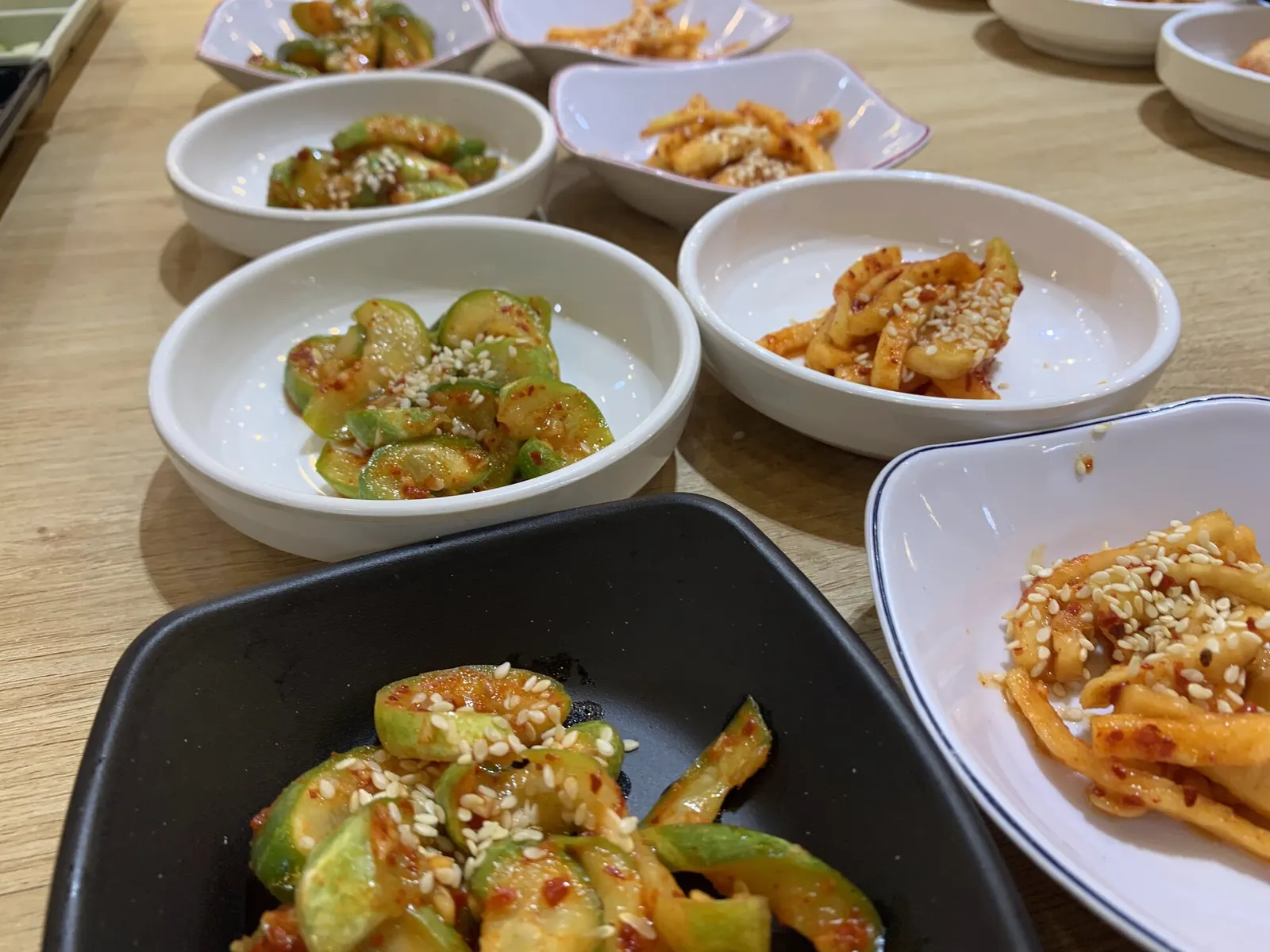
Quick summary: Banchan (반찬) are the small side dishes served with rice and soup in a Korean meal, usually including kimchi, seasoned vegetables, stir-fried dishes, braised dishes and pickles. With Korean BBQ, banchan balance the richness, cleanse the palate and make every bite of meat taste better.
What is banchan?
Banchan is the general name for the small plates placed in the middle of a Korean dining table. A traditional Korean meal usually revolves around rice, soup and banchan. The number of banchan can range from a few dishes at a family meal to dozens on special occasions.
What makes banchan special is that they are shared: everyone can reach for them, and at many Korean restaurants they can even be refilled when they run out. These little plates create the “abundant” feel of a Korean table.
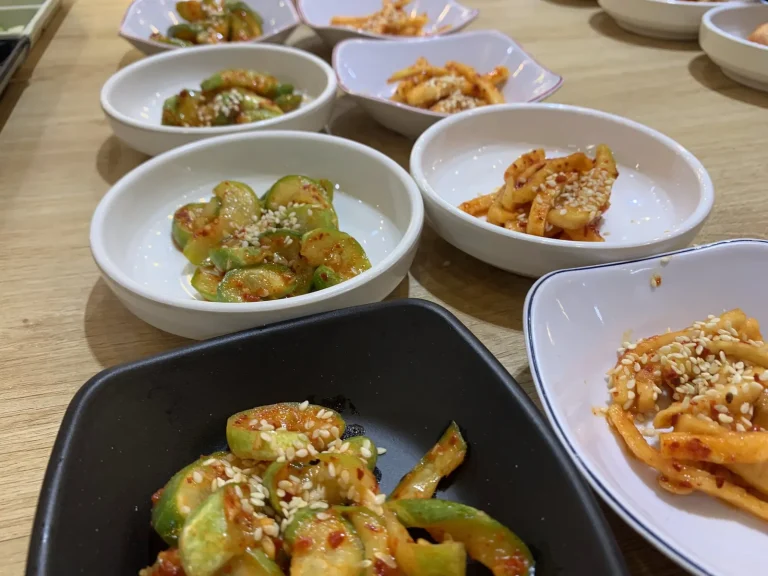
Banchan served with grilled meat
Grilled meat is rich and bold, so banchan are usually sour, spicy, crunchy and refreshing to balance it out:
- Kimchi: spicy salted napa cabbage or radish, with a light sourness that cuts the richness.
- Pickled radish and pickled scallions: crunchy, sweet and sour, eaten between bites of meat.
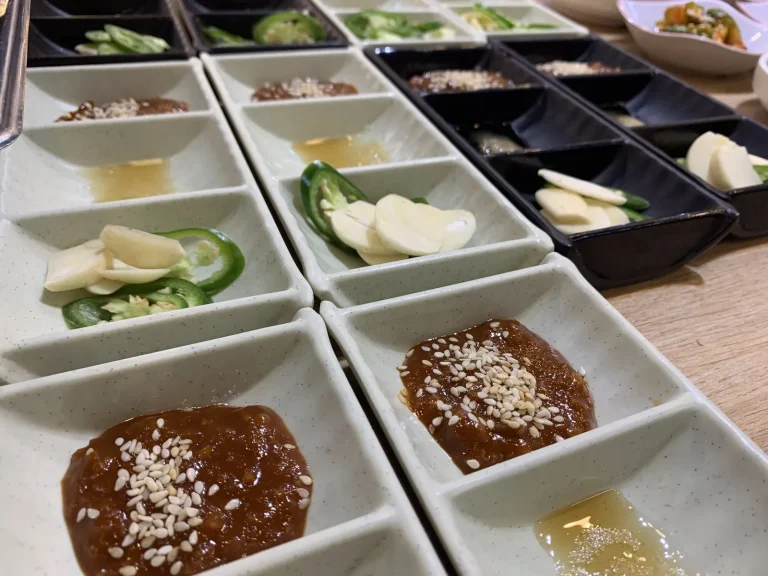
- Wrapping greens (ssam): lettuce and perilla leaves, with raw garlic and chili to wrap around the meat.
- Dipping sauces: sesame-pepper salt (gireumjang) and sweet-spicy ssamjang.
- Grilled garlic and kimchi: grilled on the grill alongside the meat for extra aroma.
Banchan in everyday Korean meals
At a family meal, banchan are prepared in many different ways so the meal never gets monotonous:
- Namul (seasoned vegetables): blanched or boiled vegetables tossed with sesame oil, garlic and salt.
- Bokkeum (stir-fried dishes): stir-fried with chili paste or soy sauce.
- Jorim (braised dishes): braised in a sweet-savory sauce and able to keep for a long time.
- Jeon and pan-fried dishes: rolled omelet, savory pancakes and other light fried foods.
- Jangajji (pickled vegetables): vegetables pickled in soy sauce or vinegar.
Many banchan are salted, fermented or braised, so one batch can be used for many days. That is why they are so common in Korean home kitchens.
How to eat banchan the right way
- Alternate bites of meat with a little sour or crunchy banchan to cut the richness.
- Wrap the meat, greens, garlic and dipping sauce into a single ssam bite.
- Take just enough; once you have finished, you can ask for more.
- Enjoy with rice or soup for a complete meal.
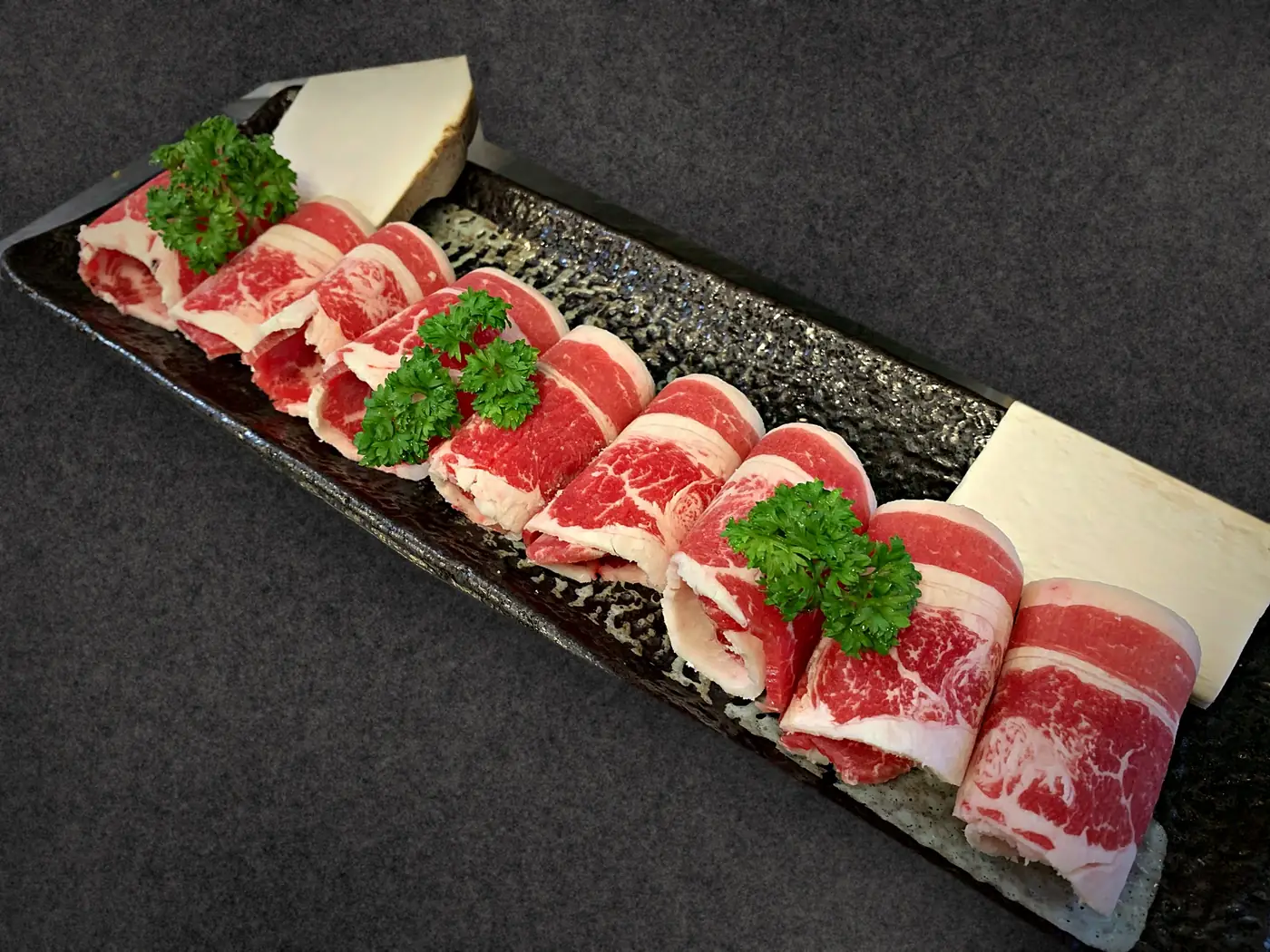
Enjoy Korean-style BBQ at Gogizip BBQ
At Gogizip BBQ, you can order grilled meat as combos for 2–4 people, served with soup and rice. To find out which side dishes are currently available, ask our staff when you visit or call the hotline.
93 Pham Van Nghi Street, Phu My Hung Urban Area, Tan Hung Ward, Ho Chi Minh City · Open 11:00–23:00
Frequently asked questions
Do you have to pay for banchan?
At many restaurants in Korea, banchan come with the meal. Policies may differ at each restaurant, so it is best to ask the staff.
What is the most popular banchan?
Kimchi is the most popular banchan, along with seasoned vegetables (namul), pickled radish, rolled omelet and braised dishes.
Why does grilled meat need banchan?
Banchan are sour, spicy and crunchy, which balances the richness of the meat, cleanses the palate and makes every bite taste better.
Read more: Korean BBQ culture · Is Korean food good for your health?
References: Encyclopedia of Korean Culture (encykorea.aks.ac.kr), Korea Tourism Organization (visitkorea.or.kr), Korean Food Promotion Institute (koreanfood.or.kr). Content is intended as an introduction to the culture.
Craving Korean BBQ? Gogizip BBQ – 93 Pham Van Nghi, Phu My Hung (District 7), open 11:00–23:00 daily. Combos for 2 from 599k VND, for 4 from 1,159k VND (prices before 10% VAT). 9 free banchan, refilled anytime. Some of our staff speak English.