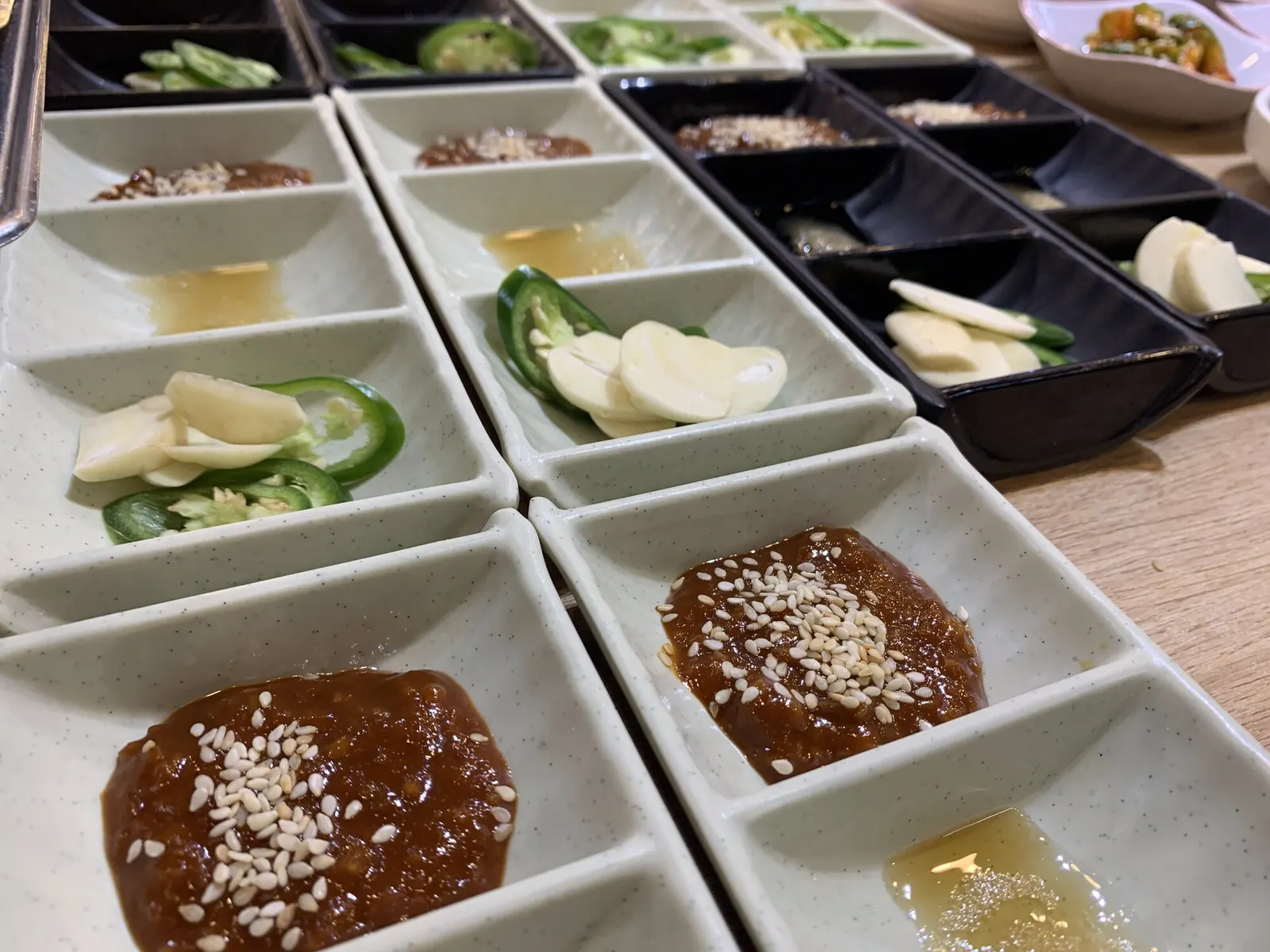
Korean BBQ dipping sauces generally fall into three main types: sesame salt (gireumjang), ssamjang (wrapping paste) and sweet-and-sour or spicy sauces such as scallion-vinegar sauce and chili paste. Each suits a different group of meats: sesame salt brings out the sweetness of beef, ssamjang balances the richness of pork, and tangy sauces help you eat a lot without feeling heavy. Choosing the right dipping sauce is a simple way to make a grilled meat meal clearly better.
This article gathers the popular dipping sauces for Korean BBQ, how to mix each one at home, how to pair them with each cut of meat and common mistakes. You can also read the detailed article on ssamjang and how to make the dipping paste to learn more about the most important sauce.
Why do dipping sauces matter with grilled meat?
Grilled meat is delicious thanks to the sweetness of the meat, the smoky aroma and the richness. Dipping sauce is not meant to “hide” the flavor of the meat but to add what the meat lacks: a moderate saltiness, aroma, tang to cut richness, or a little heat to stimulate the palate. Koreans usually do not dip too much; a small amount is enough to round out the flavor.
In addition, each kind of meat has different characteristics. Fatty pork belly needs a tangy, spicy flavor for balance; good beef needs salt and sesame oil to keep the full sweetness; pre-marinated meat (like LA galbi beef ribs) needs very little dipping sauce because it is already boldly flavored.
Sesame salt (gireumjang): beef’s best friend
Sesame salt is a mixture of sesame oil, salt and a little ground pepper, sometimes with toasted sesame seeds. It is the simplest dipping sauce but goes wonderfully with beef, especially the best cuts such as skirt, top blade and rib finger meat. The light saltiness of the salt brings out the sweetness of the meat, while the sesame oil adds a rich nutty aroma without overpowering the meat.
How to mix: 1 tablespoon sesame oil, 1/2 teaspoon salt, a little ground pepper, and some toasted sesame seeds if you like. Stir well in a small bowl. Mix it right before eating so the sesame oil is at its most fragrant.
How to use: dip lightly one part of a freshly grilled piece of meat. Do not submerge it, because sesame oil can make the meat feel greasy.
Ssamjang: bold wrapping paste for pork
Ssamjang is a paste made from doenjang and gochujang, with a salty-sweet and slightly spicy flavor. It is the most common dipping sauce for grilled pork such as pork belly, pork collar and pork jowl. The bold flavor of the paste balances the richness, especially when wrapped with lettuce, perilla leaves and garlic. Use a small amount and avoid letting the paste overpower the meat.
You can see the full recipe in the article what ssamjang is and how to make it. If you do not eat spicy food, reduce the gochujang or replace it with a little honey.
Scallion-vinegar sauce (pajeori): extremely effective at cutting richness
Pajeori is thinly sliced scallions tossed with vinegar, soy sauce and a little sesame oil and chili flakes. Placed on a hot piece of pork belly, the crisp fresh scallions and light tang make the meat noticeably lighter. Some restaurants serve this as a separate side plate.
How to mix: thinly shredded scallions, tossed with 1 tablespoon soy sauce, 1 tablespoon vinegar, 1 teaspoon sugar, 1 teaspoon sesame oil, and a little Korean chili flakes (optional). Toss gently and let sit for a few minutes so the scallions absorb the seasoning.
Onions pickled in vinegar and soy sauce: a familiar partner for beef
This is a side dish that goes very well with grilled beef. Thinly sliced onions are pickled in a mixture of vinegar, soy sauce and a little sugar, keeping their crunch with a light tang and aroma. When eating, place a bit of onion next to a piece of beef grilled to medium, which cuts the richness and adds freshness.
Simple recipe: 1 thinly sliced onion, 3 tablespoons soy sauce, 3 tablespoons vinegar, 2 tablespoons sugar, 3 tablespoons water. Heat the mixture until the sugar dissolves, let cool, then pour over the onion and pickle for at least 30 minutes. It can be stored in the refrigerator for a few days.
Gochujang and other spicy sauces
Gochujang is a fermented chili paste with a mild heat, sweetness and bold flavor. When dipping grilled meat, Koreans often thin gochujang with a little sesame oil, minced garlic and toasted sesame seeds to make a gentle spicy sauce. This suits pork jowl, marinated pork and grilled offal dishes. You can also dip it with kimchi or wrap it in ssam.
If you do not eat spicy food, avoid the red spicy sauces and choose sesame salt or scallion-vinegar sauce.
Wasabi and mustard: a modern twist
Although not traditionally Korean, many BBQ restaurants in Asian countries serve a little wasabi or whole-grain mustard next to grilled beef or pork. The sharp heat that hits your nose combined with rich meat creates a novel sensation, especially for young people who like to try new things. If you try it, use very little, placed directly on the piece of meat rather than mixed into the dipping sauce.
Pairing dipping sauces with each kind of meat
| Meat | Suggested dipping sauce | Accompanying side dishes |
|---|---|---|
| Pork belly | Ssamjang, scallion-vinegar sauce, sesame salt | Perilla leaves, grilled garlic, kimchi |
| Pork collar, pork jowl | Sesame salt, ssamjang, a little wasabi (optional) | Lettuce, cucumber, pickled onion |
| Plain grilled beef (skirt, top blade, rib finger meat) | Mainly sesame salt | Onions pickled in vinegar and soy sauce, perilla leaves, lettuce |
| Sliced beef belly | Sesame salt, a little ssamjang | Lettuce, pickled onion |
| Pre-marinated meat (LA galbi, marinated pork ribs) | Very little or none | Lettuce, pickled radish |
For beef, you can follow the popular Korean way: grill to medium, about one minute per side, dip in salt with sesame oil, and eat with onions pickled in vinegar and soy sauce or wrapped in lettuce and perilla leaves. This keeps the rich, juicy flavor of the beef; grilling it too long makes the meat dry and tough.
Common mistakes when dipping grilled meat
- Dipping too much: a bold sauce makes you lose the flavor of the meat. Dip only part of the piece.
- Dipping raw meat: never dip raw meat into a shared dipping sauce; use separate tongs and separate chopsticks.
- Using the same chopsticks for raw meat and for eating: this easily causes cross-contamination. Use tongs for raw meat and separate chopsticks for eating.
- Using one sauce for every kind of meat: rich pork and sweet beef need different ways of dipping.
- Forgetting to balance with greens: bold sauces need fresh greens, garlic and pickled onion so the meal does not feel heavy.
Suggestions for a complete dipping sauce spread
If you want to prepare a Korean-style BBQ table at home, get ready:
- A small bowl of sesame salt.
- A bowl of ssamjang.
- A plate of onions pickled in vinegar and soy sauce.
- A plate of scallions tossed in vinegar (pajeori) or chopped kimchi.
- A bowl of thinned spicy sauce (to taste).
- A plate of greens including lettuce, perilla leaves, cucumber, garlic and green chili.
With this set, everyone can “match” a dipping sauce to each round of meat, which is both fun and varied. It is also how many Korean BBQ restaurants serve their guests.
Korean-style vs. Vietnamese-style dipping sauces
Vietnamese people are used to liquid dipping sauces made from fish sauce, sugar, lime, garlic and chili. Korean dipping sauces lean toward two types: thick pastes (ssamjang, gochujang) and a simple oil-and-salt mixture (sesame salt). The biggest difference is in how they are used: Vietnamese sauces are usually used for dunking or drizzling over the dish, while Korean sauces are usually dipped just a little or spread in a thin layer on a leaf or a piece of meat.
If you are used to garlic-chili fish sauce, you can try mixing a hybrid dipping sauce: good fish sauce, sugar, garlic, chili and a little sesame oil, which suits grilled pork very well. However, to experience the true Korean flavor, spend at least one round eating with sesame salt and ssamjang the proper way.
Tips to make dipping sauces taste better
- Use good-quality sesame oil: pure toasted sesame oil is far more fragrant than diluted sesame oil.
- Toast the sesame seeds before using: sesame seeds toasted hot and lightly crushed are more fragrant than ones left sitting for a long time.
- Use fresh, finely minced garlic: pre-minced garlic left sitting loses its aroma and turns harsh.
- Season just enough and taste first: each paste has a different saltiness, so taste and adjust.
- Prepare many small bowls: instead of one big shared bowl, several small bowls are more hygienic and easier for everyone to reach.
- Let the sauce rest for a few minutes: the flavors blend and the aroma spreads better.
Dipping sauces for people who do not eat spicy food and for children
If there are elders or young children in your group, prioritize sesame salt, scallion-vinegar sauce without chili, and thinned ssamjang with less heat. You can set out a separate “non-spicy” bowl so everyone can reach it easily. Let the staff know when you order so they can advise you.
Dipping sauces in Korean dining culture
For Koreans, dipping sauces and seasonings are not just an afterthought. A traditional table always has many kinds of “jang” (paste) such as doenjang, gochujang and ganjang, plus salt and sesame oil so everyone can adjust the flavor themselves. This culture encourages initiative: you choose what to dip in, how much, and which greens to pair it with. When eating Korean BBQ, this is where that initiative is most visible.
Interestingly, the order of enjoyment also affects the choice of sauce. If you start with good beef, keep the flavor light with sesame salt and pickled onion. Then, moving on to pork, you can use ssamjang, kimchi and bolder wrapping greens. Near the end, many people like to eat a soup or cold noodles to soothe the palate; you can read more in the article on Korean soups and stews.
How to quickly mix a dipping sauce set for a large group
If you are hosting a BBQ party at home for 6 to 8 people, prepare by “doubling” the recipes while keeping the proportions:
- Sesame salt: 3 tablespoons sesame oil, 1 teaspoon salt, a little pepper, divided into 3 small bowls placed around the table.
- Ssamjang: 4 tablespoons doenjang, 2 tablespoons gochujang, minced garlic, sesame oil, scallions, a little honey, divided into 2 bowls.
- Pickled onions: 2 onions, soy sauce, vinegar and sugar in the proportions above, made 1 hour ahead.
- Greens plate: prepare plenty of lettuce, perilla leaves, cucumber, sliced garlic and green chili.
The tip is to divide the sauces into many small bowls placed near different spots so people do not have to pass them back and forth, which is both more hygienic and tidier.
Enjoying grilled meat with dipping sauces at Gogizip
You can see the pork and beef cuts on the Gogizip dishes hub, for example Pork Belly, Beef Outside Skirt, Top Blade and the combos on the menu.
Enjoy it at GogizipBBQ
Address: 93 Pham Van Nghi Street, Phu My Hung Urban Area, Tan Hung Ward, Ho Chi Minh City.
Open 11:00 – 23:00 daily. Hotline: 0898 611 611.
Menu prices exclude 10% VAT.
Frequently asked questions about Korean BBQ dipping sauces
What do you dip Korean BBQ in?
The most common are sesame salt (sesame oil mixed with salt and pepper), ssamjang (wrapping paste), scallion-vinegar sauce and onions pickled in vinegar and soy sauce. Each suits a different group of meats.
What is the best dipping sauce for grilled beef?
Sesame salt is the choice many Koreans prefer because it keeps the full sweetness of the meat; it can be eaten with onions pickled in vinegar and soy sauce and wrapping greens.
What do you dip pork belly in?
Ssamjang, sesame salt or scallion-vinegar sauce, eaten with perilla leaves, grilled garlic and kimchi to balance the richness.
Can I mix sesame salt myself?
Yes. Mix sesame oil with salt and a little ground pepper, adding toasted sesame seeds if you like. Mix it right before eating so the sesame oil is at its most fragrant.
Which dipping sauces are not spicy?
Sesame salt, scallion-vinegar sauce without chili, and onions pickled in vinegar and soy sauce are the non-spicy options.
Should I dip a lot of sauce?
No. Dip only a small amount to keep the flavor of the meat; a bold sauce easily overpowers the taste.
Craving Korean BBQ? Gogizip BBQ – 93 Pham Van Nghi, Phu My Hung (District 7), open 11:00–23:00 daily. Combos for 2 from 599k VND, for 4 from 1,159k VND (prices before 10% VAT). 9 free banchan, refilled anytime. Some of our staff speak English.