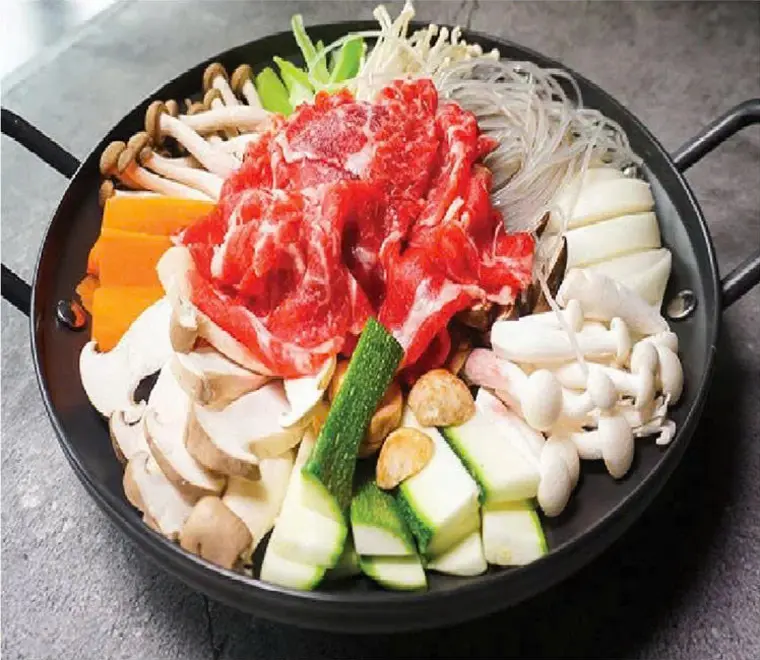
Korean hot pot (often called jeongol or jeongol-style hot pot) is a steaming-hot dish cooked right at the table, made of a rich broth with meat, vegetables, mushrooms, tofu, glass noodles and many other ingredients neatly arranged in a shallow pot. Unlike Vietnamese hot pot, which tends toward a light broth and lots of greens, Korean hot pot has a bolder broth, fewer vegetables but more meat, mushrooms and signature seasonings such as soybean paste, gochujang and garlic. On rainy days or cool evenings, a pot of steaming hot pot is the perfect choice for friends and family.
What is jeongol?
The word jeongol (전골) refers to Korea’s traditional hot pot, in which ingredients are carefully arranged in a wide, shallow pot, topped with just enough broth, and heated directly on a burner at the table. In the old days, jeongol was a royal court dish, with beef and vegetables beautifully cut and arranged in colorful clusters. Today, jeongol is popular in both restaurants and homes, with many variations: beef jeongol (bulgogi jeongol), seafood jeongol, mushroom jeongol, army stew (budae jjigae) and more.
What defines jeongol is a flavor that is rich but not harsh, a broth with the clean sweetness of meat, mushrooms, onion and garlic, seasoned with soybean paste or gochujang. Because it is cooked at the table, the whole group waits together, watches the broth come to a boil together, and adds the ingredients together, creating a very distinctive atmosphere of togetherness.
A short history of Korean hot pot
Korean hot pot has a long history that begins with royal court dishes of the Joseon era. The dish was then called sinseollo and was cooked in a special pot with a chimney in the middle to hold hot charcoal, with ingredients such as beef, eggs, mushrooms and vegetables arranged around it. It was a dish for kings and nobles, showing great care in its presentation. Later it entered everyday life with a simpler method, an ordinary shallow pot and easy-to-find ingredients.
In the 20th century, many modern hot pot variations appeared. There is army stew (budae jjigae), born after the war with sausage, instant noodles, baked beans and kimchi. There are spicy seafood hot pot, mushroom hot pot and beef hot pot. Each variation reflects the historical context and tastes of its era. Understanding this history helps you see that a pot of hot pot is not just a dish but also a story about how Koreans share a meal and get through difficult times.
Why do Koreans love hot pot in cold weather?
Winters in Korea are bitterly cold, so hot dishes with rich broth are favored. Hot pot lets the whole family gather around the burner, the heat spreads, and the meal stretches out and feels cozy. Although Vietnam’s climate is warmer, rainy days and cool nights in Ho Chi Minh City are still perfect times for a pot of hot pot.
How is Korean hot pot different from Vietnamese hot pot?
| Criteria | Korean hot pot (jeongol) | Vietnamese hot pot |
|---|---|---|
| Broth | Rich, meaty-sweet, with soybean paste or gochujang | Light, sweet and sour, many types (Thai, fermented fish sauce, fish, etc.) |
| Ingredients | Beef, mushrooms, onion, tofu, glass noodles | Lots of greens, seafood, meat |
| How to eat | Eaten straight from the pot, ladled into a bowl | Dipped in the broth, then in fish sauce or sour fermented sauce |
| Dipping sauce | Usually not needed or very simple | Usually has its own dipping sauce |
| Finish | Add noodles or rice to the broth | Add noodles or rice vermicelli |
In general, Korean hot pot is about “cooking everything together in a rich broth,” while Vietnamese hot pot is about “dipping each item as you eat.” When eating jeongol, you usually ladle meat, vegetables and broth together into your bowl and eat it like a thick, hearty soup.
Hot pots at Gogizip
Beef and Mushroom Hot Pot
A clean, sweet beef broth cooked with several kinds of mushrooms, beef and vegetables. The flavor is gentle and easy to enjoy, suitable for children and older adults as well as people who do not eat spicy food. The mushrooms soak up the broth and turn soft and sweet, and the beef is cooked to a fragrant tenderness.
Spicy Beef Tripe Soup (mini hot pot)
A small hot pot with crunchy beef tripe in a fiery broth. It suits small groups of two to three who want to try the spice without ordering a whole large pot.
Spicy Beef Intestine Hot Pot
Beef intestines simmered in a rich, spicy, fatty broth. It is for people who like bold flavors and enjoy offal. We suggest eating it with rice or noodles to soak up the broth. You can also read our article on Korean grilled offal to learn more about beef intestines.
What goes into the broth of Korean hot pot
The broth is the soul of hot pot. Beef hot pot usually uses beef bone stock or a broth made from beef, seasoned with soy sauce, garlic, green onion, pepper and a little sugar. Spicy hot pot adds gochujang and chili flakes (gochugaru) for a rich sweet heat. Mushroom hot pot often uses a vegetable broth or one made from dried anchovy and kelp, with many kinds of mushrooms adding natural sweetness. Some hot pots add soybean paste (doenjang) to build a deeper umami flavor.
The broth gets richer the longer it cooks, because vegetables, mushrooms and meat release their sweetness. That is why, with Korean hot pot, people usually eat gradually from light to rich and add broth only when needed. The last of the broth is often the best part, so it is perfect for cooking noodles or rice.
Common ingredients in Korean hot pot
- Thinly sliced beef: cooks fast, sweet and tender.
- Mushrooms: enoki, shiitake, king oyster and oyster mushrooms.
- Vegetables: onion, green onion, cabbage, napa cabbage, celery.
- Tofu: soft tofu soaks up the broth and tastes wonderful.
- Glass noodles and noodles: added at the end to eat with the broth.
- Rice cakes: a chewy starch that soaks up the broth.
How to eat Korean hot pot the right way
- Wait for the broth to boil: so the ingredients cook evenly; do not rush to eat before it is hot enough.
- Ladle small bowls: meat, vegetables, mushrooms and a little broth.
- Add ingredients gradually: do not drop in too much at once.
- Taste the broth: adjust the seasoning if needed.
- Finish with noodles or rice: to soak up all of the rich broth.
Which hot pot for which group?
Families with young children and older adults
Beef and Mushroom Hot Pot is the safe choice: a clean, sweet broth, not spicy, tender meat and lots of mushrooms. It is easy for children to eat and easy for older adults to digest. Ask for the ingredients to be cut small and let them cool a little before giving them to children.
Young friends who love spice
The mini Spicy Beef Tripe Soup or the Spicy Beef Intestine Hot Pot will give you a refreshing kick. These dishes are bold and spicy and go well with rice or noodles. Order steamed egg or a fizzy soft drink as well to ease the heat.
Couples
A mini hot pot is a sensible choice: enough for two, not too much, and easy to pair with a light portion of grilled meat. The meal is cozy and romantic, and lasts just the right amount of time.
Groups of coworkers
Order one large hot pot along with a few portions of grilled meat to share. Hot pot gives the meal a part that “lingers,” so everyone can chat comfortably.
Hot pot in a Korean BBQ meal
Some people wonder whether they should order hot pot along with grilled meat. The answer is yes, especially when the weather is cool or rainy. Hot pot provides hot broth that warms the stomach, complementing the dry, smoky taste of grilled meat. Our suggestion: order a small hot pot with a meat combo, eat the meat first, then use the hot pot to relax and eat slowly.
The order of eating hot pot and grilled meat in one meal
When you order both grilled meat and hot pot, arrange things so that no dish goes cold or piles up. A suggested order: start with a light appetizer, put the hot pot on the burner so the broth comes to a boil gradually, eat grilled meat while the hot pot finishes cooking, then switch to the hot pot once the meat has thinned out. At the end of the meal, add noodles or rice to the pot to finish with a warm belly. This makes use of the waiting time and keeps the whole table from going hungry.
Also, pay attention to balancing your portions. Both hot pot and grilled meat are high in energy, so order moderately and add more if needed. Warm drinks or plain water are better for digestion than ice-cold drinks while you eat hot pot. See also our menu and dishes suggestions to plan your meal.
Korean hot pot and nutrition
Hot pot provides protein from meat and vitamins and minerals from vegetables, mushrooms and tofu. Because it is cooked in liquid, it uses less oil than many fried or stir-fried dishes, but the broth can contain a lot of sodium. Limit how much thick broth you drink if you need to manage your blood pressure. Spicy hot pot can irritate the stomach of sensitive people. Adding greens helps balance the meal.
Things to keep in mind when eating hot pot
The pot is hot, so be careful to avoid burns. Small children should sit away from the burner. The rich broth gradually reduces and may become saltier toward the end, so add broth if needed. People with weak stomachs should be careful with spicy hot pot.
Small tips for a tastier pot of hot pot
- Do not add all the ingredients at once: add them in order: slow-cooking ingredients first (root vegetables, mushrooms), then soft greens and meat.
- Skim the foam: if the broth has foam, skim it off so the broth stays clear and sweet.
- Keep the heat moderate: a gentle, steady simmer rather than a rolling boil.
- Taste before eating: the broth thickens as it cooks, so taste it again.
- Add noodles or rice at the end: to soak up all the broth and avoid waste.
Hot pot and the story of togetherness
No dish expresses the spirit of togetherness as clearly as a pot of hot pot. The whole group gathers around one pot, waiting together, ladling together, talking together. In Korean culture, hot pot often appears at family reunions, company parties and gatherings of friends who have not seen each other in a long time. Sitting around a hot pot, the boundaries between people seem to blur, and everyone is more relaxed and open.
At Gogizip, you can feel that spirit in both the grilled meat and the hot pot: cooking together, eating together. If you are undecided, reserve a table through the hotline 0898 611 611 and come with family and friends for a complete evening.
Frequently asked questions about Korean hot pot
What is jeongol?
It is Korea’s traditional hot pot, cooked at the table in a shallow pot with meat, mushrooms, vegetables and a rich broth.
Is Korean hot pot spicy?
It depends on the type. Beef and Mushroom Hot Pot is mild and not spicy. Spicy Beef Tripe Soup and Spicy Beef Intestine Hot Pot are boldly spicy.
How is Korean hot pot different from Vietnamese hot pot?
Korean hot pot has a rich broth and fewer vegetables and is eaten like a thick soup; Vietnamese hot pot has a light broth and is dipped and eaten with fish sauce.
How do you finish Korean hot pot?
Usually by adding noodles or rice to the pot to soak up all the broth.
What hot pots does Gogizip have?
Gogizip has Beef and Mushroom Hot Pot, mini Spicy Beef Tripe Soup and Spicy Beef Intestine Hot Pot.
Is hot pot suitable for young children?
The non-spicy Beef and Mushroom Hot Pot is suitable for young children; pay attention to safety when sitting near a hot burner.
Common mistakes when eating hot pot for the first time
A common mistake is putting too much meat in at once, which lowers the broth temperature and cooks the meat unevenly. Another is eating too fast before the broth has fully come to a boil, leaving the meat rare or the vegetables undercooked. A third is not re-tasting when the broth concentrates, so the dish gradually becomes salty. A fourth is leaving noodles or glass noodles in too long, when they absorb all the broth and turn mushy. Add noodles in the final round and eat them right away.
Also, keep safety in mind: keep your sleeves tucked in when leaning over the burner, do not let small children touch the pot, and use a ladle to serve instead of chopsticks. These small details make the meal more enjoyable and safer.
Conclusion
Korean hot pot is a warm, rich dish, perfect for get-togethers. Try it at Gogizip, 93 Pham Van Nghi Street, Phu My Hung Urban Area, Tan Hung Ward, Ho Chi Minh City. Prices exclude 10% VAT.
Craving Korean BBQ? Gogizip BBQ – 93 Pham Van Nghi, Phu My Hung (District 7), open 11:00–23:00 daily. Combos for 2 from 599k VND, for 4 from 1,159k VND (prices before 10% VAT). 9 free banchan, refilled anytime. Some of our staff speak English.