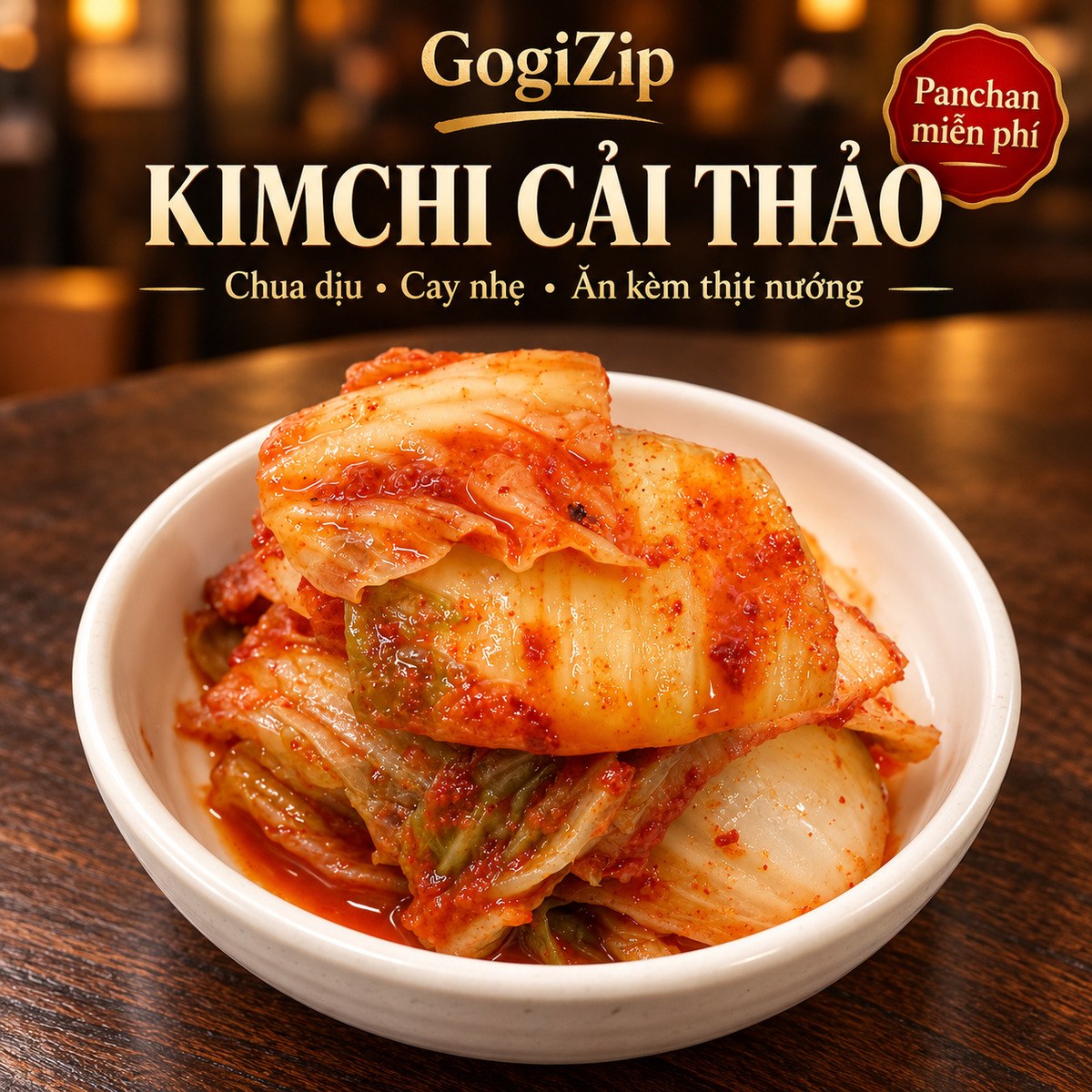
Every November, when the weather in Korea turns cold, families gather to make kimchi together to eat all winter long. This custom is called kimjang (김장). In 2026, Korean media and research institutes published a lot of interesting figures showing how kimjang is changing. Gogizip sums them up below.
What is kimjang?
Kimjang is making a large amount of kimchi all at once in late autumn to stock up for the whole winter, when fresh vegetables are scarce. More than a kitchen task, kimjang is an occasion for relatives and neighbors to pitch in and share the work: someone washes the cabbage, someone mixes the seasoning, someone packs it into jars. In 2013, the culture of making and sharing kimchi (Kimjang) was inscribed by UNESCO as an Intangible Cultural Heritage of Humanity.
Koreans usually time their kimjang for when the average daily temperature drops to around 4°C or below, because the cold slows fermentation and helps kimchi keep longer.
2026: do Koreans still make their own kimchi?
According to a survey by the Korea Rural Economic Institute (KREI) released on November 9, 2026:
- About 67.8% of respondents said they would make about the same amount of kimchi as last year; 16.1% would make less and 13.8% would make more.
- The most common reason for making less is that the family eats less kimchi (42.9%).
- The share of households making their own kimchi or receiving it from people they know fell to 58.6% (64.1% the previous year), while the share buying ready-made kimchi rose to 41.4%.
- Among those buying ready-made kimchi, about 60% buy it online.
In other words: kimjang is still alive, but young families in Korea increasingly favor convenience.
How much does kimjang cost this year?
The good news for Koreans this year is a bumper crop of napa cabbage and radish. Autumn napa cabbage production is estimated at about 1.21 million tonnes, up about 18.5% from the previous year; autumn radish is up about 11%. As a result, the Korea Agro-Fisheries & Food Trade Corporation (aT) estimates that the ingredient cost of kimjang for a family of 4 (about 20 heads of cabbage) in early November 2026 is only about 199,000 won, around 9% lower than the same period last year.
What goes into a batch of kimjang?
- Salted napa cabbage: soaked in brine overnight to soften, then rinsed and drained.
- The filling (sok): julienned radish, scallions, garlic, ginger and gochugaru chili flakes.
- Umami: salted shrimp (saeujeot) and anchovy fish sauce.
- The kimjang-day treat: boiled pork bossam wrapped in salted cabbage leaves with fresh kimchi filling – the “reward” after a long day of hard work.
Eat kimchi the Korean way in Phu My Hung
You don’t have to make your own kimchi to enjoy good kimchi. At Gogizip BBQ (93 Phạm Văn Nghị, Phu My Hung, District 7), napa cabbage kimchi is one of the 9 free banchan and is refilled continuously. If you like a stronger kimchi flavor, order a piping-hot kimchi stew in a stone pot (canh kimchi, kimchi-jjigae) to go with your charcoal-grilled meat – just like a Korean winter meal.
Frequently asked questions
What month does kimjang take place?
Usually from mid-November to early December, when the weather starts to turn cold. The northern regions of South Korea make kimchi earlier than the southern regions.
Is kimjang a UNESCO heritage?
Yes. Korea’s culture of making and sharing kimchi was inscribed by UNESCO in 2013.
Sources
Gogizip compiled and rewrote this article from information in the following sources; the original content is copyrighted by the respective organizations:
- KDI EIEC – summary of the KREI report on 2026 kimjang intentions
- Special Times – kimjang costs according to aT (11/2026)
- Korean Center – 2026 autumn napa cabbage and radish production
Craving Korean BBQ? Gogizip BBQ – 93 Pham Van Nghi, Phu My Hung (District 7), open 11:00–23:00 daily. Combos for 2 from 599k VND, for 4 from 1,159k VND (prices before 10% VAT). 9 free banchan, refilled anytime. Some of our staff speak English.