When eating Korean BBQ, a familiar question is: is charcoal grilling or gas grilling better? The short answer: charcoal gives strong heat, a distinctive smoky aroma and a beautifully seared crust, especially good for quick-grilled beef; while a gas (or electric) grill is clean, easy to adjust and low in smoke, suitable for many kinds of spaces. Each method has its own strengths, and understanding the difference will help you grill correctly, eat well and choose the right restaurant.
This article compares the two methods, explains why high heat matters for beef, how to control the temperature, tips for grilling each type of meat and safety notes for grilling at the table. You can also read our guide to Korean grilled beef: galbi, LA galbi and American beef cuts to learn the order for grilling beef cuts.
Charcoal grilling: smoky flavor and strong heat
Charcoal is the traditional way to grill, regarded by many as the “true flavor” of Korean BBQ. When small drips of fat fall onto the hot charcoal, smoke rises and clings to the meat, creating a distinctive aroma. Charcoal produces high, steady heat, so the meat sears quickly on the surface and keeps its juices inside.
Advantages:
- A distinctive smoky aroma that is hard to replace with another heat source.
- Strong heat, beef grills quickly, with a nicely seared surface and juicy inside.
- A lively atmosphere, true to the traditional grilling meal.
Drawbacks:
- Needs a good smoke extraction system, otherwise the smoke clings to clothes and hair.
- Hard to adjust the heat instantly; you need to get used to it or have staff help.
- Charcoal takes time to light and maintain, and requires safety attention.
Gas or electric grilling: clean and easy to control
Gas and electric grills let you adjust the heat with a knob, with even and steady temperature. They produce less smoke than charcoal and a cleaner dining table, suitable for indoor spaces, air-conditioned rooms or small restaurants. They are also an easy choice if you grill at home.
Advantages:
- Easy to adjust the heat up or down, quickly and in full control.
- Less smoke, a cleaner table, and less odor clinging to you.
- Convenient, quick to start, with no waiting for the charcoal to burn.
Drawbacks:
- No smoky aroma like charcoal.
- The heat is not as strong as charcoal on some types of stoves, and the meat may release more liquid if you add too much.
- An electric grill may be a little slow to heat and hard to get a deep sear.
Quick comparison
| Criterion | Charcoal | Gas / electric |
|---|---|---|
| Flavor | Distinctive smoky aroma | Meat keeps its natural flavor, less smoke |
| Heat | High, strong, hard to adjust quickly | Easy to adjust, steady |
| Best meats | Quick-grilled beef, pork belly, pork collar | Marinated meat, seafood, vegetables |
| Smoke and odor | More, needs good extraction | Less |
| Convenience | Needs time and experience | Easy to use, quick |
Why does beef need high heat?
For good beef, high heat is an important factor. Many Koreans like to enjoy beef starting from the best cut: outside skirt, top blade, rib finger meat, and then beef belly. These cuts need strong charcoal heat from the start, so the surface sears quickly and keeps the juiciness and rich flavor inside.
Beef should only be grilled until just cooked through. About one minute per side is enough; grilling too long makes the meat chewy, dry, tough and loses its juicy richness. When eating, dip in sesame salt, eat with soy-vinegar pickled onions, or wrap with lettuce and perilla leaf. See also our guide to soy-vinegar pickled onions.
Grilled pork: medium or high heat?
For pork such as pork belly, pork collar and pork jowl, medium to high heat both work. What matters is that the grill is hot and you don’t put too much meat on at once. Charcoal makes pork belly crisp at the edges and fragrant, while a gas grill lets you adjust the heat when a lot of fat renders out, preventing burning. Pork must be grilled all the way through, so you can wait until both sides are evenly golden before eating.
Tips for charcoal grilling
- Wait until the charcoal is evenly red: grill only when most of the charcoal has turned to ash with a thin white layer.
- Create heat zones: one high-heat zone and one low-heat zone, to move meat when there is a lot of fat.
- Don’t brush on too much oil: fat dripping onto the charcoal can flare up and burn the meat.
- Grill marinated meat last: sauce with sugar burns easily and affects the later rounds of meat.
- Good ventilation: always grill where there is smoke extraction or fresh air.
Tips for gas or electric grilling
- Preheat the grill well: a grill that is not hot makes the meat stick and release liquid.
- Grill a little at a time: avoid overcrowding, which drops the grill temperature.
- Use high heat first, then lower it: to sear the surface and cook the inside evenly.
- Change the grill when it burns: a blackened grill gives the meat a burnt smell.
A short history of the tabletop grill
Grilling meat right at the table is a signature of Korean-style BBQ restaurants. At first, people grilled meat on a charcoal stove placed in the middle of the table, and diners flipped and picked up the meat themselves. Later, many restaurants switched to gas or electric stoves with a smoke exhaust duct above to reduce smoke and make operation easier. Even though the tools changed, the spirit of “grill it yourself, share together” remains the core: the whole table watches the sizzling meat, waits for it to cook, then wraps and eats together.
That is why Korean BBQ is seen as a social activity, not just eating and drinking. Whether you choose charcoal or gas partly reflects each restaurant’s style and the needs of each group.
Grill plates, pans and choosing your tools
- Grill grate: creates nice grill marks, lets fat drip down onto the charcoal or tray, and gives the meat a clear smoky flavor. Good for beef and marinated pork.
- Flat or convex pan: the meat touches more surface and gets evenly crisp, good for pork belly, kimchi, mushrooms and garlic. Fat flows to the edge and can be used to fry kimchi.
- Paper or foil liner: some restaurants use it to grill marinated meat, reducing burning and making cleanup easy.
- Tongs and scissors: two indispensable tools; tongs for flipping the meat, scissors for cutting bite-size pieces.
Each tool suits a different way of grilling. When dining in a group, you can ask the staff about the best way to grill the cut you ordered.
Safety when grilling at the table
- Don’t let young children stay near the grill; place the stove on a stable surface.
- Use separate tongs for raw meat and cooked meat.
- Avoid wearing clothes with very wide sleeves when grilling over charcoal.
- If you grill with gas at home, check the gas tank and hose, and make sure there is ventilation.
- Never pour water directly onto charcoal to put out a fire; ask the staff to handle any incident.
Reference grilling times for each type of meat
| Type of meat | Heat level | Reference time | Sign of doneness |
|---|---|---|---|
| Beef outside skirt, top blade, beef rib finger meat | High heat | About 1 minute per side | Lightly seared surface, cooked through inside, still juicy |
| Sliced beef belly | High to medium heat | About 1 minute per side, depending on thickness | Fat rendered inside, lightly seared surface |
| Pork belly | Medium to high heat | A few minutes per side, depending on thickness | Golden and crisp on both sides, cooked through |
| Pork collar, pork jowl | Medium heat | A few minutes per side | Evenly golden, cooked through, not dried out |
| Marinated meat (LA galbi, marinated pork ribs) | Medium heat, grill last | Depends on thickness, flip often | Sauce caramelized, edges seared, not burnt black |
These are only reference benchmarks; actual time depends on slice thickness, grill temperature and your taste. With pork, always grill until fully cooked. With beef, grilling just through is what many Koreans prefer, but you can grill it a little longer if you like.
How to reduce smoke smell clinging to you
- Choose a seat near the exhaust duct or somewhere airy, if the restaurant has an outdoor or open area.
- Wear breathable, easy-to-wash clothes; avoid wool and thick jackets if you want to reduce odor.
- Leave your jacket or bag somewhere with little smoke if the restaurant has a place to store things.
- After the meal, use a light fabric deodorizing spray or change clothes if you are going somewhere else.
- Drink more tea or chew mint candy to reduce mouth odor after the meal.
Sit indoors or outdoors when eating grilled meat?
The dining space strongly affects the experience. Sitting outdoors is airy and good for evenings, with a natural and friendly feel, but can be hot in sultry weather or rain. Sitting indoors in air conditioning is comfortable, with less dust and noise, suitable for large groups, groups with older adults or children. If you want to go at lunchtime, an air-conditioned space is usually more comfortable. If you need a private space for a gathering, contact the restaurant in advance for advice on suitable seating.
Charcoal or gas for a group meal?
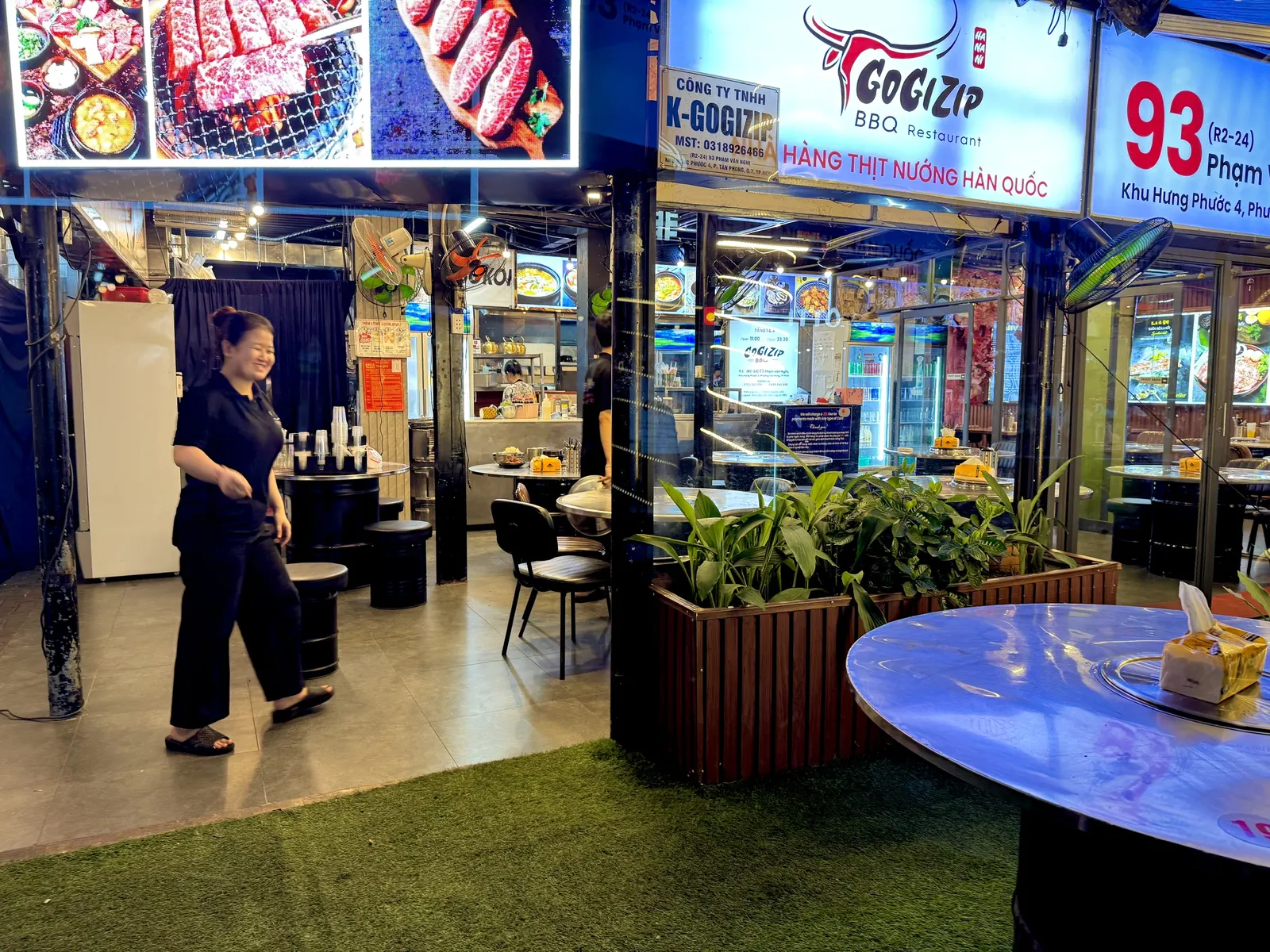
If you prioritize flavor, choose a charcoal grill restaurant or one with real charcoal. If you prioritize cleanliness and don’t want smoke clinging to you before work or going out afterwards, a gas or electric grill is a reasonable choice. Some restaurants combine both: tables with a charcoal stove and a good smoke extraction system. The important thing is to ask in advance if you have special needs. Gogizip has both air-conditioned indoor space and an outdoor area for you to choose from according to your preference; see more photos on the space page.
Dine at GogizipBBQ
Address: 93 Pham Van Nghi Street, Phu My Hung Urban Area, Tan Hung Ward, Ho Chi Minh City.
Open daily 11:00 – 23:00. Hotline: 0898 611 611.
Menu prices exclude 10% VAT.
Choosing a grilling method for a party at home
If you want to host a grilling party at home, consider the space and the number of people:
- Apartment, small balcony: prefer an electric or mini gas stove with a low-smoke grill pan. Avoid charcoal in enclosed spaces because of the risk of carbon monoxide poisoning.
- Yard, airy rooftop: a charcoal grill can be used if there is good ventilation, away from flammable items.
- Groups of 2 to 4 people: a mini gas or electric stove is enough.
- Groups of 6 or more: you need a large stove or two small stoves to avoid long waits between rounds.
Whichever you choose, have tongs, scissors, towels, and a small spray bottle of water (to handle flare-ups when grilling over charcoal) ready, and keep to food hygiene: separate tools for raw meat, and wash hands before and after touching raw meat.
If you don’t want the hassle of preparing, cleaning up and worrying about ventilation, dining at a restaurant is far easier: you just choose your dishes, grill, enjoy and chat with friends.
Frequently asked questions
Is charcoal grilling tastier than gas grilling?
Charcoal gives a smoky aroma and strong heat, good for quickly grilled beef. A gas grill is clean and easy to adjust. Which is tastier depends on your taste and the kind of meat.
Why should beef be grilled over high heat?
High heat sears the surface quickly and keeps the juices and sweetness inside; grilled just through, about one minute per side, the meat is juicy and rich.
Is well-done beef okay?
Overgrilled beef becomes tough, dry and hard and loses its rich fattiness, so Koreans usually grill beef just through.
How long should pork be grilled?
Depending on thickness, usually a few minutes per side. Pork must be fully cooked and evenly golden on both sides.
Does charcoal grilling leave a smoke smell?
It can, if the extraction is poor. Restaurants with a good smoke extraction system reduce the smell on clothes considerably.
When should marinated meat be grilled?
Grill it last, because sauce with sugar burns easily, dirties the grill and affects the later rounds of meat.
Craving Korean BBQ? Gogizip BBQ – 93 Pham Van Nghi, Phu My Hung (District 7), open 11:00–23:00 daily. Combos for 2 from 599k VND, for 4 from 1,159k VND (prices before 10% VAT). 9 free banchan, refilled anytime. Some of our staff speak English.
Comments
One response to “Charcoal vs. Gas Grill: What’s the Difference When Eating Korean BBQ?”
[…] For true charcoal flavour you need a charcoal grill in a well-ventilated space. See charcoal vs gas grilling. […]