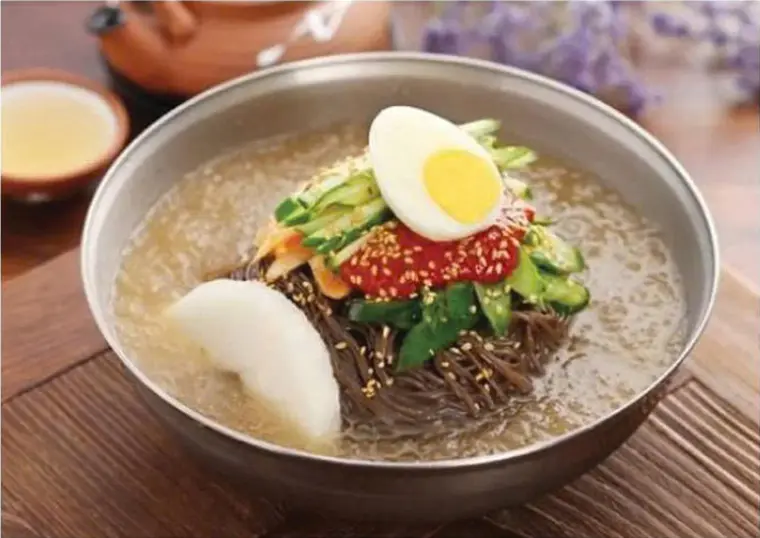
Korean cold noodles (naengmyeon, 냉면) are chewy noodles served cold in a refreshing broth, usually ordered after grilled meat to balance the richness and cool you down from the heat of the charcoal. In Korea, people eat naengmyeon year-round, especially in summer, and almost every BBQ restaurant has cold noodles on the menu. So what are cold noodles made of, what kinds are there, how do you eat them properly, and how do they go with grilled meat? This article explains it all so you can order with confidence next time at Gogizip.
What is naengmyeon?
The word naeng means cold and myeon means noodles. Naengmyeon is therefore a cold noodle dish: the noodles are boiled, rinsed in cold water to firm them up, and served in a bowl with ice-cold broth or a spicy sauce. The signature of this dish is its very chewy noodles, almost hard to bite through, which can surprise first-timers. Koreans usually cut the noodles into shorter lengths with scissors before eating, and restaurants often bring scissors to the table.
Traditional noodles are made from buckwheat flour, sometimes mixed with sweet potato starch, potato starch, or tapioca starch, giving them a slightly gray or light brown color and a very chewy bite. Unlike ramen or Italian pasta, naengmyeon has a texture closer to thick glass noodles: elastic and slippery.
Origins of cold noodles
Naengmyeon originated in the northern part of the Korean peninsula. Two regions are closely tied to the dish: Pyongyang and Hamhung. Pyongyang-style cold noodles (pyongyang naengmyeon) have a delicate broth with the light sweetness of beef and pickled radish broth, and the noodles contain more buckwheat. Hamhung-style cold noodles (hamhung naengmyeon) usually use starch-based noodles that are even chewier, and are popular in the spicy mixed style.
In the old days, this dish was typically eaten in winter rather than summer, following the habit of eating cold noodles in a warm house after a snowy night. When northerners migrated south after the war, they brought the dish with them and it gradually spread across Korea, and over time people shifted to eating it chilled in the heat of summer.
The two most popular styles
Mulnaeng myeon (cold noodles in broth)
Mulnaeng myeon is cold noodles in broth; mul means water. The bowl contains noodles, a clear cold broth, a few slices of beef or boiled meat, a boiled egg, and slices of cucumber and pear. The broth is usually simmered from beef bones and seasoned with a light tang, then topped with ice cubes or finely shaved ice to make it bitterly cold. It is light, refreshing, and an excellent way to cool down, and it is the favorite choice after a rich BBQ meal.
Bibim naengmyeon (spicy mixed cold noodles)
Bibim naengmyeon is mixed cold noodles; bibim means mixed. The noodles are tossed with a sweet and spicy gochujang sauce, vinegar, garlic, and sesame, with toppings such as cucumber, radish, egg, and sometimes slices of pear. There is little liquid, so the flavor is bold and spicy. It suits people who love spice and want a dish with more personality than the light broth version.
Hoe naengmyeon and other variations
There is also a variation called hoe naengmyeon, tossed in a spicy sauce with thinly sliced raw fish, popular in coastal areas. In addition, there is a style of cold noodles in ground soybean broth (kongguksu, similar to cold soy milk noodles), but that is a different summer dish rather than true naengmyeon.
Quick comparison
| Criteria | Cold Noodles with Soup | Spicy Cold Noodles |
|---|---|---|
| Flavor | Light, slightly tangy, sweet from bone broth | Bold sweet-spicy, sesame aroma |
| Broth | Yes, cold, usually with ice | None or very little |
| Best for | Those who eat little spice and want to cut richness | Spice lovers who want bold flavor |
| Feel | Cool, gentle | Stimulating, rich |
Why do cold noodles go well with grilled meat?
Grilled meat, especially pork belly and beef ribs, has a rich, fatty flavor and smoky aroma. After many pieces of hot meat, your palate can easily tire. A bowl of light, tangy cold noodles instantly cleanses the mouth so you can keep enjoying more. In terms of sensation, hot meat and cold noodles make a fun temperature contrast. Nutritionally, cold noodles supply starch and fluids to a meal that is heavy in protein and fat.
That is why in Korea it is common to order cold noodles at the end of a BBQ meal (sometimes together with the meat). Koreans joke that a BBQ meal without cold noodles is not yet finished. Read more in the article Korean BBQ culture to understand how a meal is structured.
How to eat cold noodles the right way
- Cut the noodles: use scissors to cut the noodles into 2–3 pieces for easier eating, since the strands are very chewy and long.
- Add vinegar and mustard: for the broth version, Koreans often add a few drops of vinegar and a little sharp mustard to boost the flavor.
- Mix well: for the spicy version, toss the noodles thoroughly with the sauce so the flavor coats evenly.
- Drink the broth: for the broth version, taste the broth first to appreciate its original flavor before adding any seasoning.
- Eat with kimchi or pickled radish: the crisp, tangy flavor makes the dish even more appealing.
What comes in a bowl of cold noodles
A proper bowl of cold noodles is not just noodles and broth. Each extra component has its role. Slices of boiled beef or pork add protein and sweetness. Half a boiled egg gives soft richness. Julienned cucumber keeps the bowl crisp and cool. Slices of pear (or apple) bring a natural light sweetness and gentle aroma. Sliced pickled radish sharpens the palate. A sprinkle of toasted sesame on top adds fragrance.
At some restaurants, the cold noodle broth is made from beef bone stock blended with the liquid from water kimchi (dongchimi), giving a light tang and a sweet finish. As the shaved ice slowly breaks down in the bowl, the broth stays cold without suddenly becoming watery, thanks to the small, calculated amount of ice. The overall flavor is usually very different from Vietnamese noodle soups; it may feel unfamiliar at first but becomes more addictive the more you eat.
Why are the noodles so chewy?
Buckwheat flour and starch do not contain gluten like wheat flour, so to make the strands hold together, noodle makers press them from a very stiff dough under high pressure and then boil them immediately in boiling water. After being drained, the noodles are rinsed several times in cold water and sometimes gently squeezed to remove surface starch. This process creates noodles that are elastic, firm, chewy, and not sticky. So do not be surprised if you find you need to chew more than usual.
Cold noodles and health
Cold noodles are generally lighter on the stomach than many hot noodle soups, since they are low in oil and usually served with vegetables. The broth can be quite high in salt if you drink all of it, so eat in moderation if you watch your sodium. Spicy cold noodles with gochujang sauce and sugar are higher in calories, so people on a diet should take note. People with sensitive stomachs or who get stomachaches from cold food should eat slowly and avoid drinking too much iced water right after hot dishes.
Choosing a style for each occasion
Dining as a pair
Order one portion of cold noodles with soup and one portion of spicy cold noodles to split. Spice lovers will enjoy the mixed version, and those who prefer lighter flavors will enjoy the broth version. By sharing, both of you can try both styles without getting full.
Dining with a large group
Order a few portions of each style and place them in the middle of the table for everyone to taste. BBQ tends to stretch a meal out, so after ordering the last round of meat is a good time to add cold noodles for the whole table.
Dining with older family members
Older adults and small children are often not used to very cold food, so order the cold noodles with soup, ask for less ice if needed, and cut the noodles small so they are easier to chew. Spicy cold noodles are not recommended for young children because of the heat and the chewiness of the noodles.
Cold noodles in Korean food culture
In Korea, there is a custom of eating noodles to wish for a long life, since long noodle strands symbolize longevity. That is why noodles often appear at birthdays, weddings, and family events. Cold noodles are especially tied to many families of northern origin, where the dish is treated as a food of homeland memory. Even if you are not Korean, a serious bowl of cold noodles can feel like touching a bit of that memory.
If you want to explore more dishes tied to Korean holidays, stay tuned for upcoming articles on Seollal, Chuseok, and Korean-style birthdays on the Gogizip news page.
Cold noodles at Gogizip
The Gogizip menu has two styles: refreshing cold noodles with soup and spicy mixed cold noodles. You can order one portion per person or share within the group. If you are dining as a pair, you can combine a BBQ combo and a bowl of cold noodles as the finishing highlight. See the menu and dishes to choose by taste.
Common mistakes when eating cold noodles for the first time
The first mistake is trying to bite through the noodles with your front teeth, which sends the noodles flying and sticking everywhere. Cut the noodles with scissors before eating, or wrap a moderate amount around your chopsticks before putting it in your mouth. The second mistake is adding too much vinegar or mustard from the start; season a little at a time and taste. The third mistake is letting the noodles soak in the broth for too long, which softens them and loses their characteristic chew. Eat within a few minutes of the noodles being served.
One more note: do not order cold noodles too early when you are hungry and the meat has not reached the table. Cold noodles soothe the palate, and if you eat them first, the meat that follows will be harder to appreciate fully. That said, you can certainly order them early if the weather is sweltering or if you want a gentle start.
Pairing cold noodles with other dishes
- Cold noodles with soup + pork belly: rich meets refreshing, wonderfully balanced. See Pork Belly.
- Spicy cold noodles + beef: sweet heat joins robust beef flavor, great for people who like strong flavors. See Beef Outside Skirt.
- Cold noodles + hot soup: one cold and one hot for an unusual sensation and just the right fullness.
- Cold noodles + kimchi: the sour, spicy crunch of kimchi makes the bowl even more refreshing.
Frequently asked questions about cold noodles
What are Korean cold noodles made of?
Usually buckwheat flour or starch, making chewy, slightly gray noodles eaten cold with broth or a spicy sauce.
How are mulnaeng and bibim naengmyeon different?
Mulnaeng is cold noodles in broth, lightly tangy. Bibim naengmyeon is noodles tossed in a sweet-spicy sauce, with bolder flavor.
Why do you cut the noodles with scissors?
Because the noodles are long and chewy, cutting them shorter makes them tidier and easier to chew.
When should I eat cold noodles during a BBQ meal?
Usually at the end of the meal to cut richness, but you can order earlier if you like to alternate.
Are cold noodles spicy?
Cold noodles with soup are not spicy or only very mild. Spicy cold noodles have a sweet heat from gochujang.
Does Gogizip have cold noodles?
Yes. Gogizip serves cold noodles with soup and spicy cold noodles.
Are cold noodles right for Vietnamese diners?
Vietnam’s hot, humid climate makes cold noodles a natural choice. Vietnamese people are used to light, refreshing dishes such as bún, phở cuốn, and gỏi cuốn, so the light tang and clear broth of naengmyeon are not too foreign. The biggest differences are the texture of the noodles and the icy serving, but after just one try many people quickly get used to it and fall in love. It is also a dish that foreign visitors often mention as a surprising highlight of a Korean BBQ meal.
If you are still undecided, try the cold noodles with soup the first time, then the spicy version next time. A small portion does not need to fill you up; it just needs to be enough to notice the difference. And remember, eating the right way means eating comfortably: cut the noodles, add vinegar to your liking, there are no hard rules.
Conclusion
Cold noodles are the perfect finishing piece for a Korean BBQ meal: chewy, cool, light, and refreshing. Try both styles at Gogizip, 93 Đ. Phạm Văn Nghị, Khu đô thị Phú Mỹ Hưng, Tân Hưng, Ho Chi Minh City. Prices exclude 10% VAT.
Craving Korean BBQ? Gogizip BBQ – 93 Pham Van Nghi, Phu My Hung (District 7), open 11:00–23:00 daily. Combos for 2 from 599k VND, for 4 from 1,159k VND (prices before 10% VAT). 9 free banchan, refilled anytime. Some of our staff speak English.