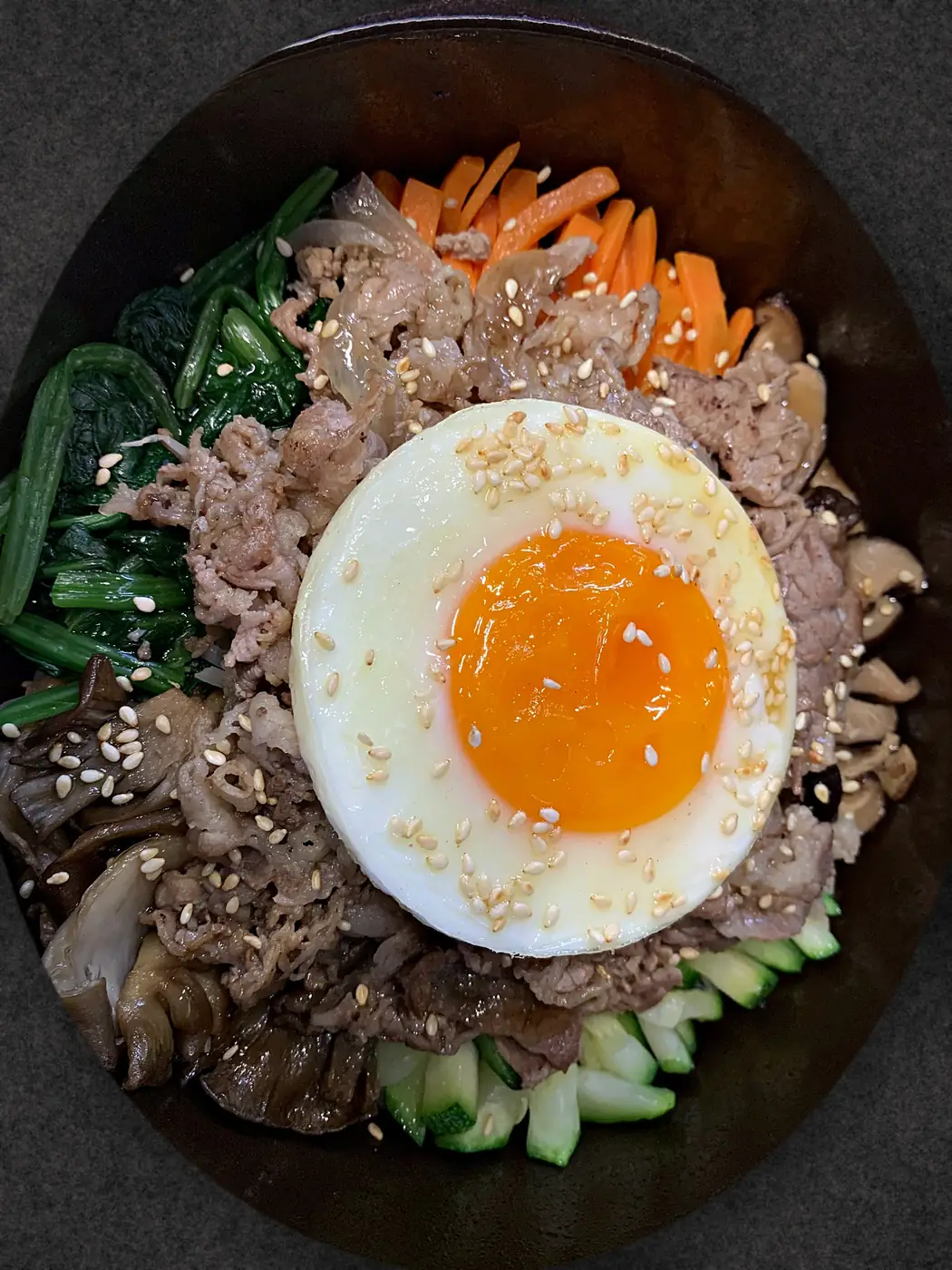
Bibimbap (비빔밥) is Korea’s most famous mixed rice dish: a bowl of hot white rice topped with assorted sautéed or blanched vegetables, beef, an egg, and gochujang sauce, all mixed together before eating. The name literally means “mixed rice” (bibim means mixed, bap means rice). It is both nutritionally complete and beautiful with its vivid colors, so it is regarded as a representative of Korean cuisine. For Vietnamese diners, bibimbap is also very easy to enjoy because it is close to a familiar home meal: rice, vegetables, meat, egg, and a dipping sauce. This article will help you understand bibimbap from A to Z and how to enjoy it in a BBQ meal.
📍 Want to try it in Saigon? Gogizip is a charcoal Korean BBQ in Phu My Hung, District 7: grilled at your table, 9 free refillable banchan, sets for 2 from 599k VND, English menu. Book a table
What is bibimbap?
Bibimbap is a bowl of rice with many toppings arranged in colorful clusters around a center, usually a fried egg or a raw egg yolk. The toppings are varied: blanched bean sprouts, blanched spinach, sautéed carrots, sautéed zucchini, sautéed shiitake mushrooms, seaweed, radish, fernbrake (gosari), stir-fried beef, and of course gochujang. When eating, you use a spoon to mix everything thoroughly so the sauce reaches every grain of rice, rather than eating each part separately.
The fun of bibimbap is that it is a “freestyle” dish: you can adjust the amount of sauce and add or remove ingredients as you like. Spice lovers add plenty of gochujang, those who prefer mild use less, and vegetarians skip the meat. This flexibility makes bibimbap approachable for many kinds of diners.
Origins of bibimbap
There are many theories about the origins of bibimbap. One says the dish came from ancestral rites: after the ceremony, family members mixed the leftover offerings with rice to eat together. Another says it began with farmers mixing rice with whatever vegetables were on hand for a quick meal during the harvest. Yet another is tied to the royal court, where a mixed rice dish was prepared for the king with the finest ingredients.
What is certain is that bibimbap has been regarded as a traditional Korean dish for centuries and has many regional variations. The most famous is Jeonju bibimbap, said to be the most elaborate, with rice cooked in broth, separately prepared bean sprouts, and a full range of seasonings, along with Jinju bibimbap, which features thinly sliced raw beef. Today, bibimbap appears on Korean restaurant menus around the world, even on international flights.
Main components of bibimbap
Rice
The rice should be short-grain white rice, moderately sticky and piping hot. Rice that is too soggy loses its texture when mixed, while rice that is too dry is hard to combine with the sauce. Some places cook the rice in beef broth for extra flavor.
Namul (seasoned vegetables)
Namul is the general name for blanched or lightly sautéed vegetable dishes, seasoned with sesame oil, salt, and garlic. Each vegetable is prepared separately to preserve its color and flavor. This is the unique feature that makes bibimbap both beautiful and delicious: no vegetable blends into another until you mix.
Beef
Thinly sliced beef is marinated in soy sauce, sugar, garlic, and sesame oil, then stir-fried until cooked. The rich aroma of the stir-fried beef gives the whole bowl a highlight. You may notice this beef is close to the marinade style of bulgogi; see the article what is bulgogi to understand the marinade.
Egg
A sunny-side-up egg with a runny yolk is the most common choice. When mixed, the yolk flows out and makes the rice silky and rich. Some places use a raw egg yolk. If you are concerned about raw egg, choose a cooked egg.
Gochujang sauce
The mixing sauce is made from gochujang with sesame oil, sugar, vinegar, and garlic, with a mellow sweet-spicy flavor. The sauce is added last, just before mixing. The amount is adjustable: start with a small spoonful and add more if you want it spicier.
Dolsot bibimbap: mixed rice in a hot stone pot
Dolsot bibimbap is the variation served in a stone pot (dolsot) heated until the rice touching the bottom becomes golden, crisp, fragrant scorched rice (nurungji). When the pot is brought out, you can hear the sizzle of the hot rice. The crunchy scorched rice at the bottom is the part many people love most. The dolsot holds heat for a long time, so the rice stays hot throughout the meal.
If you get the chance, try dolsot at least once to feel the difference: crispy scorched rice, the aroma of sesame oil, and a light smokiness from the stone pot. Although the Gogizip menu currently features Beef Bibimbap and Vegetable Bibimbap, understanding dolsot shows how rich bibimbap can be.
How to mix bibimbap properly
- Don’t mix too early: admire the bowl first, then mix. The colors are part of the dish.
- Put the sauce in the middle: add gochujang and a little sesame oil at the center of the bowl.
- Mix from the bottom up: scoop rice from the bottom and fold it over so the components blend; don’t mash the vegetables.
- Eat it hot: cold rice spoils the aroma and flavor.
- Pair with soup: a hot soup such as seaweed soup or kimchi soup balances the meal.
Bibimbap from a cultural perspective
In Korean culture, bibimbap expresses the spirit of harmony: many different ingredients mixed together into one unified dish. For this reason, it is often used as a symbol when introducing Korean food to the world, appearing at cultural promotion events, food fairs, and even in-flight meals. At home, bibimbap is also a way to use up leftovers after a holiday: banchan and leftover vegetables are gathered into a bowl of rice, topped with sauce, and mixed into a delicious meal.
For young Vietnamese, bibimbap is often known through films, where characters skillfully stir a bright red bowl of rice with a spoon. When you try it yourself, you will find the mixing very natural and unfussy, and the flavor familiar to the Vietnamese palate: rice, vegetables, meat, egg, and a sweet-spicy dipping sauce.
Should you drink broth with mixed rice?
Yes. A bowl of light hot soup such as seaweed soup or tofu soup keeps the mixed rice from feeling dry. See Beef Seaweed Soup or Soft Tofu Soup with Beef to choose a side.
Nutritional value of bibimbap
Bibimbap is a balanced dish because it covers all the food groups: starch from rice, protein from beef and egg, fiber and vitamins from vegetables, and fat from sesame oil. With plenty of vegetables in the bowl, it suits people who want something lighter than a purely meat-focused BBQ meal. However, gochujang sauce contains sugar and salt, so don’t add too much. People who limit carbs can eat less rice or swap in brown rice.
Bibimbap in a BBQ meal
In a BBQ meal, bibimbap is often ordered as the starch that ends the meal, replacing plain white rice. The flavors of vegetables, egg, and sweet-spicy sauce add variety after rich pieces of meat. Also, if you want a light yet complete meal, a bowl of mixed rice is enough to be a main dish on its own. You can see all dishes or the menu to order for the whole group.
Beef Bibimbap
Suited to people who love meat and want extra protein. Rich stir-fried beef combines with vegetables and egg for a complete bowl.
Vegetable Bibimbap
Suited to people who prefer something lighter or eat less meat. A variety of colorful vegetables with a clean flavor, great for a light meal or alongside grilled meat.
Common namul in a bibimbap bowl
Namul is the soul of bibimbap, and each type is prepared its own way. Bean sprouts (kongnamul) are quickly blanched and tossed with sesame oil, salt, and garlic, keeping a crisp sweetness. Spinach (sigeumchi) is blanched just until done, squeezed dry, and tossed with soybean paste or sesame salt. Carrots and zucchini are cut into strips and stir-fried quickly over high heat to keep their color and crunch. Dried shiitake are soaked until soft and sautéed with soy sauce for a deep aroma. Fernbrake (gosari) is stir-fried until tender, with a distinctive earthy fragrance. Shredded radish is lightly pickled, adding a refreshing accent.
Preparing each vegetable separately takes effort, but that is exactly why a Korean-style mixed rice bowl has clear colors and layered flavors. When you mix, each spoonful of rice has a random combination of a few vegetables, so every spoonful feels different. That is why bibimbap never gets boring.
Colors and the five-element philosophy
In traditional Korean thinking, a mixed rice bowl should contain five colors: white, black, red, green, and yellow, symbolizing the five elements and balance. Although many modern restaurants are not strict about this, the spirit of “eating many colors” remains. That is why mixed rice is often considered healthy, since eating a variety of foods is a basic nutritional principle.
Misconceptions about bibimbap
The first misconception is that bibimbap is always spicy. In reality, the heat is entirely determined by the sauce; you can use little sauce or none. The second misconception is that bibimbap is just leftovers mixed together. In practice, each vegetable is prepared, seasoned, and arranged separately. The third misconception is that bibimbap must be eaten with a spoon; in fact Koreans usually use a spoon to mix and eat, but using chopsticks is fine too.
Bibimbap and other Korean rice dishes
Besides bibimbap, Korean cuisine has many familiar rice dishes. Kimbap is seaweed-wrapped rice rolls, eaten by hand and easy to carry. Bokkeumbap is fried rice. Gukbap is rice served with hot soup. Dopbap is rice with a topping. Each has its own way of eating, but bibimbap stands out for its mixing and variety of components. If you are interested in kimbap, stay tuned for an article comparing kimbap and sushi on the Gogizip news page.
Ordering suggestions by type of group
- Solo diners: a bowl of beef bibimbap with a portion of soup makes a complete lunch.
- Couples: share a BBQ combo and order two different bowls of mixed rice (beef and vegetable) to taste both.
- Groups of friends: order mixed rice to share a few spoonfuls at the end of the meal, in place of plain white rice.
- Families with small children: vegetable bibimbap, asking for little spicy sauce, helps kids eat more vegetables without noticing.
Tips for mixing rice even better
Add a little sesame oil on top right before mixing, and the toasted sesame aroma will really come alive. If you like your rice a bit drier and bolder, mix it thoroughly with the spoon; if you prefer it softer and silkier, mix in the egg yolk as well. You can also wrap a little mixed rice in lettuce or seaweed and eat it like a small wrap, which is fun. Finally, don’t skip the rice at the very bottom of the bowl, because that is where the sauce collects and is richest.
Frequently asked questions about bibimbap
What does bibimbap mean?
It means “mixed rice” in Korean: bibim means mixed, bap means rice.
Is bibimbap spicy?
The heat depends on the amount of gochujang sauce. You can use less sauce or ask for it on the side.
How is dolsot bibimbap different from regular bibimbap?
Dolsot is served in a hot stone pot, creating a crispy scorched rice layer at the bottom and keeping the rice hot longer.
Can bibimbap be vegetarian?
Yes, if you skip the beef and use vegetable toppings. Ask the restaurant about the sauce and oil to be sure.
Does Gogizip have mixed rice?
Yes. Gogizip has Beef Bibimbap and Vegetable Bibimbap.
What do you eat with bibimbap?
Usually a bowl of hot soup such as seaweed soup or kimchi soup, and a few banchan.
Conclusion
Bibimbap is a rice dish that is beautiful, nourishing, and flexible, perfect as a main meal or as the finale of a BBQ dinner. Try it at Gogizip, 93 Đ. Phạm Văn Nghị, Khu đô thị Phú Mỹ Hưng, Tân Hưng, Ho Chi Minh City, open 11:00–23:00 daily. Prices exclude 10% VAT.
Craving Korean BBQ? Gogizip BBQ – 93 Pham Van Nghi, Phu My Hung (District 7), open 11:00–23:00 daily. Combos for 2 from 599k VND, for 4 from 1,159k VND (prices before 10% VAT). 9 free banchan, refilled anytime. Some of our staff speak English.