If kimchi is the “soul” of the Korean table, then jang (장) – fermented soybean sauces and pastes – is the foundation of almost every Korean dish. In December 2024 the world recognised that value: UNESCO inscribed “Knowledge, beliefs and practices related to jang-making in the Republic of Korea” on the Representative List of the Intangible Cultural Heritage of Humanity.
What exactly did UNESCO inscribe?
- On 3 December 2024 (local time), at the session of the Intergovernmental Committee for the Safeguarding of the Intangible Cultural Heritage in Asunción (Paraguay), UNESCO decided to inscribe Korea’s “jang-making culture”.
- The heritage is not just the sauces themselves but the whole body of knowledge, beliefs and skills for making, storing and using jang – passed down within families and communities.
- UNESCO noted that making jang together fosters bonds and a sense of belonging within the community.
- It is Korea’s 23rd intangible heritage element, and its second food-related one after kimjang (kimchi-making, 2013).
How is jang made?
Soybeans are cooked, mashed and shaped into blocks called meju, which are dried to ferment. The meju is then soaked in brine in earthenware jars. After a while, the liquid is separated off to become ganjang (soy sauce), and the soybean solids become doenjang (soybean paste). Many families also keep a little aged soy sauce (the “mother sauce”) to blend into each new batch, passing the flavour down from generation to generation.
The 3 most familiar jang
- Ganjang (간장) – soy sauce: salty and aromatic; used to season soups and in marinades for bulgogi and ribs.
- Doenjang (된장) – soybean paste: rich and slightly pungent; used in doenjang jjigae stew and for boiling bossam pork to remove any odour.
- Gochujang (고추장) – chilli paste: made from glutinous rice, chilli powder and meju; sweet and spicy, used in tteokbokki, bibimbap and spicy marinades.
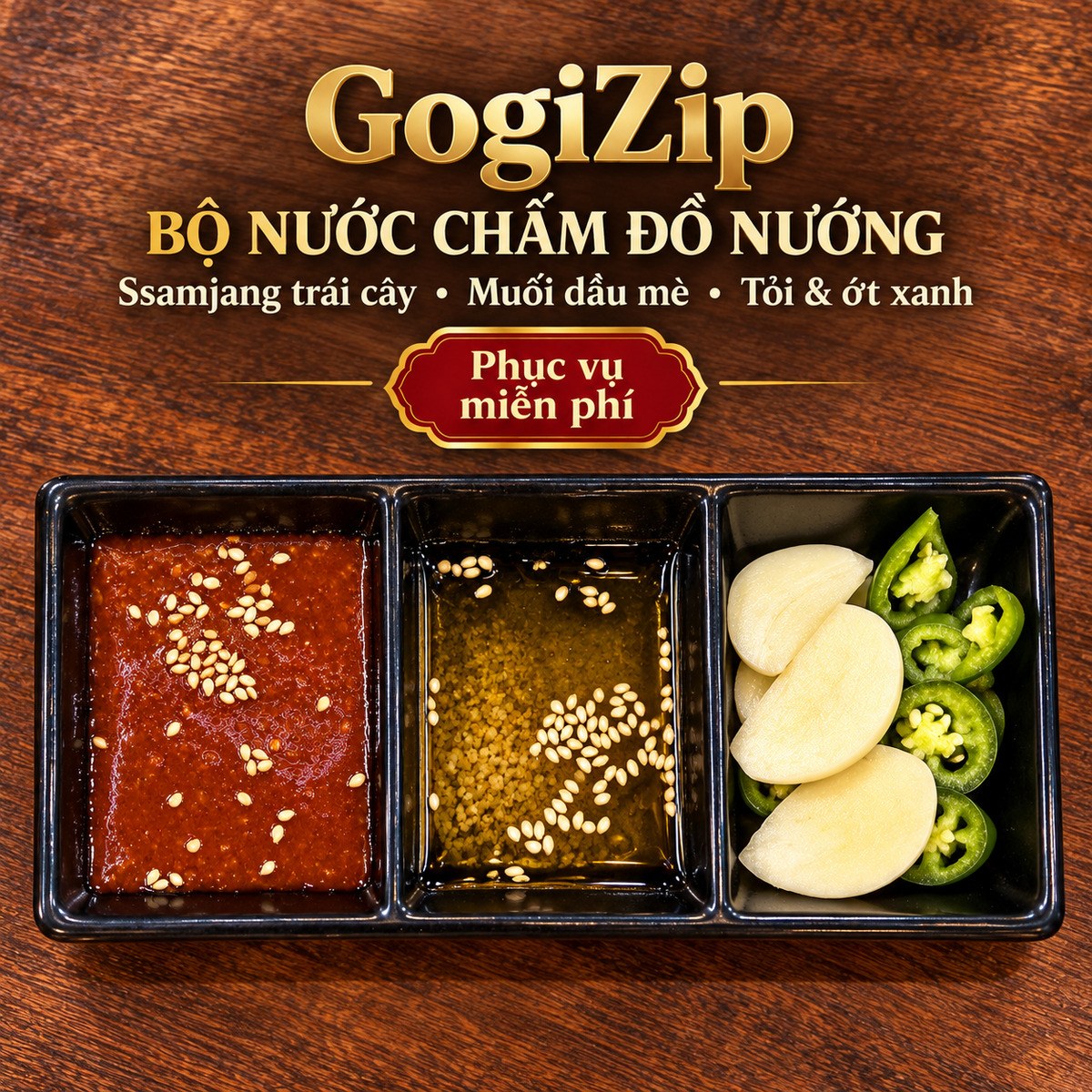
- Ssamjang (쌈장) – “wrap sauce”: doenjang and gochujang mixed with garlic and sesame oil – the familiar dipping sauce for wrapping grilled meat.
Jang on the BBQ table at Gogizip
When you eat Korean BBQ, you’re using jang in many places: ssamjang for lettuce wraps, soy sauce in the LA beef short rib (sườn bò LA) marinade, gochujang in beef bibimbap. At Gogizip BBQ (93 Phạm Văn Nghị, Phú Mỹ Hưng, District 7), every grill table gets its own set of dipping sauces along with 9 free banchan – try dipping into each one to taste the difference.
Frequently asked questions
When was Korean jang recognised by UNESCO?
On 3 December 2024, Korea’s “jang-making culture” was inscribed on the Representative List of the Intangible Cultural Heritage of Humanity.
Is ssamjang the same as doenjang?
Not quite. Ssamjang is a blended sauce, usually doenjang and gochujang mixed with garlic and sesame oil; it’s used as a dip when wrapping grilled meat in lettuce.
References (in Korean)
- Kyunghyang Shinmun – jang-making culture becomes Korea’s 23rd intangible heritage (12/2024)
- News Seoul – Korea Heritage Service announces the inscription
- Vogue Korea – how jang is made
Craving Korean BBQ? Gogizip BBQ – 93 Pham Van Nghi, Phu My Hung (District 7), open 11:00–23:00 daily. Combos for 2 from 599k VND, for 4 from 1,159k VND (prices before 10% VAT). 9 free banchan, refilled anytime. Some of our staff speak English.