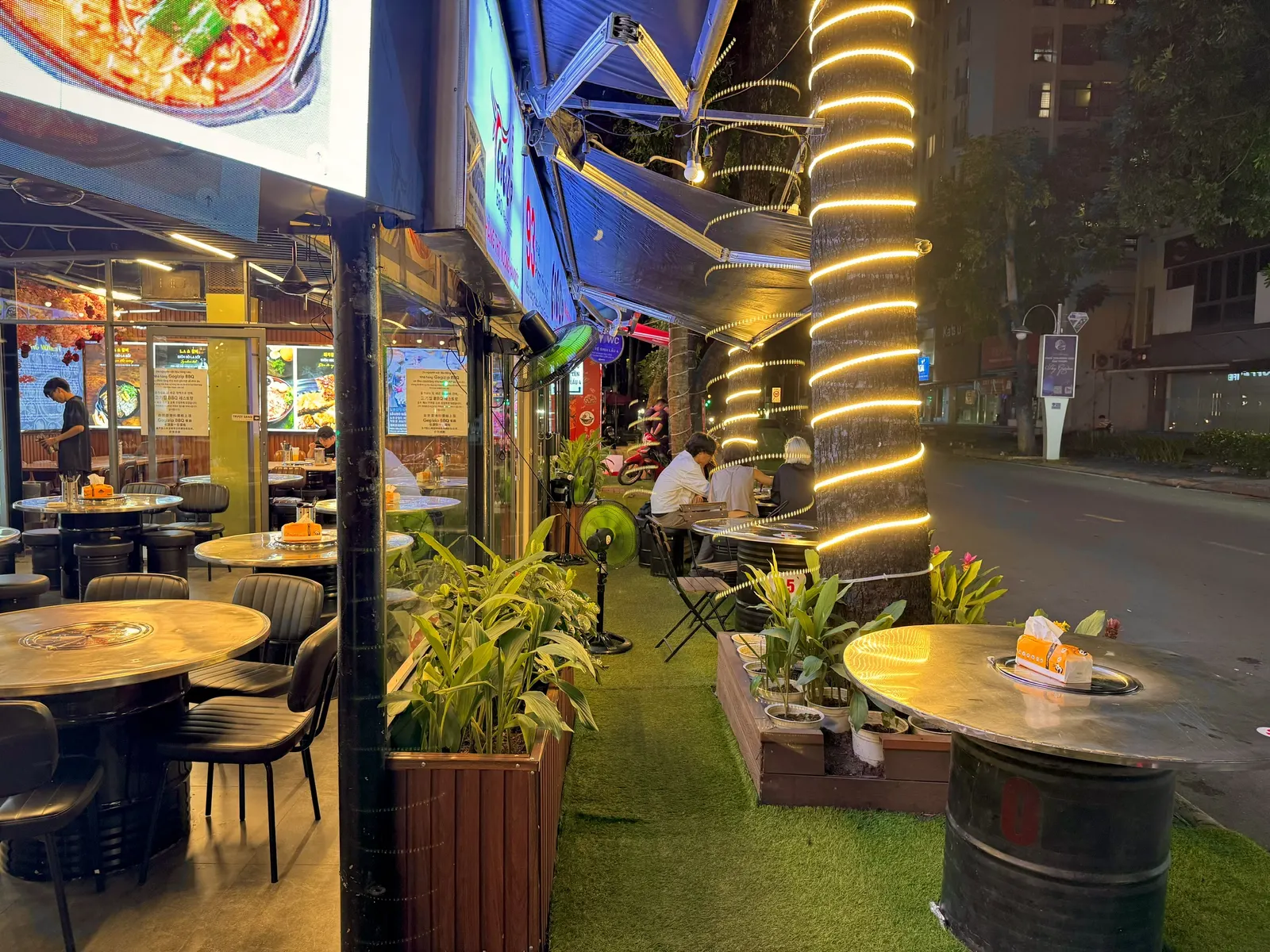
Korean dining etiquette reflects a culture that respects elders, values sharing, and sees a meal as a chance to bring people together. Many of the rules will sound familiar to Vietnamese diners, since Vietnam also has a tradition of “respecting those above and yielding to those below,” but there are some interesting differences: a spoon for rice and soup, metal chopsticks, pouring drinks with both hands, and never sticking chopsticks upright in a rice bowl. When you go out for Korean BBQ, you don’t need to memorize every rule, but knowing them in advance makes the meal feel more natural. This article brings together 12 things worth knowing, with the reasons behind them and how to apply them comfortably at Gogizip.
1. The eldest picks up their chopsticks first
At a family meal or a group meal with older people, everyone usually waits for the eldest person to pick up their chopsticks or spoon before starting to eat. This is a way of showing respect. If you are dining with grandparents, parents, or your boss, invite them to begin first. Among friends of the same age, this rule is applied much more loosely.
2. Use the spoon for rice and soup, chopsticks for side dishes
A Korean place setting includes a spoon (sujeo) and chopsticks (jeotgarak). Rice and soup are eaten with the spoon, while banchan and meat are picked up with chopsticks. Don’t hold both in one hand at the same time. Both the spoon and chopsticks are usually made of metal, so they are heavier and slipperier than Vietnamese bamboo chopsticks; it takes a little getting used to.
3. Never stick chopsticks upright in a bowl of rice
This gesture recalls the image of incense sticks burning in a ritual offering for the deceased, so it is considered taboo. Vietnamese culture has a similar belief. When you pause during the meal, rest your chopsticks on a chopstick rest or lay them across the table.
4. Don’t lift the rice bowl while eating
Unlike the habit of Vietnamese and Japanese diners, Koreans leave the rice bowl on the table and scoop with a spoon. Lifting the bowl to eat can be seen as slightly impolite. However, this mainly applies at formal meals; in modern restaurants, many people are not strict about it.
5. Pour drinks with both hands (or with one hand supporting the elbow)
This rule is especially noticeable when drinking soju or beer, but it also applies to soft drinks and tea. If the glass of the person next to you is almost empty, offer to top it up. If someone pours for you, raise your glass with both hands to receive it. You shouldn’t let a glass sit empty with no one pouring, because that feels like overlooking the person at your table.
When pouring alcohol or other drinks for an older person, a younger person pours with both hands, or pours with one hand while the other hand supports the elbow or forearm. When receiving a drink, also hold your glass with both hands. You also shouldn’t pour for yourself first; pour for others first, and they will pour for you in return. This is part of the culture of looking after one another at the table.
6. Turn your head aside when drinking in front of elders
With alcoholic drinks, younger people usually turn their body or face to the side when drinking in front of an older person as a sign of respect. If you don’t drink alcohol, just politely decline or switch to another drink; there’s no need to worry.
7. Share dishes
Koreans eat family-style: the main dishes are placed in the middle of the table and everyone picks from them. Banchan are shared too. So if hygiene matters to you, use serving chopsticks or clean chopsticks to move food onto your own plate. At a Korean BBQ, there are usually dedicated tongs and scissors.
8. The youngest, or whoever sits closest to the grill, does the grilling
In a large group, usually the youngest person or the one sitting closest to the grill will grill and cut the meat and pick it up for others, especially for the older guests. This is a gesture of care, not of being ordered around. If you are the older person, say thank you and don’t forget to pick up a piece for the person grilling.
9. Cut the meat with scissors
At a Korean BBQ restaurant, scissors are an essential tool. Thick cuts, ribs, and pork belly are all cut into bite-size pieces with scissors right on the grill. Don’t be surprised to see staff cutting meat with scissors; this is the standard way. See our article on your first time at Korean BBQ to learn more.
10. Wrap each ssam in one piece and eat it in one bite
When wrapping lettuce around meat, make the wrap just big enough for your mouth and eat it whole in one bite, rather than biting off part and continuing to wrap. Taking a bite and then wrapping further is considered less tidy. See our article on ssam – wrapping grilled meat in lettuce to learn how to wrap.
11. Don’t talk with your mouth full, and don’t chew too noisily
This is general good manners. However, Koreans aren’t required to stay silent: a meal is a time to chat and laugh, but swallow first and then speak. The sound of slurping noodles or soup is not considered impolite in many settings.
12. Say thanks before and after the meal
Koreans say “jal meokgesseumnida” (I will eat well) before eating and “jal meogeosseumnida” (I ate very well) afterward. It is a way of expressing gratitude to whoever prepared the meal. You can do the same with a simple thank-you to the chefs and staff in your own language.
Why do Koreans take table manners so seriously?
Korean culture has been deeply shaped by Confucianism, in which hierarchy and filial respect are core values. The meal is where these values are expressed every day: the young serve the old, the old look after the young, and everyone shares the dishes like a family. This explains why there are so many rules about who picks up chopsticks first, how to pour drinks, how to sit, and how to defer to others.
In addition, a traditional Korean table usually has many dishes placed in the center at the same time, rather than one portion per person. So shared rules are needed to make sure everyone gets a share and no one is overlooked. Once you understand the reasons behind them, the rules no longer feel stiff; they become a way of showing consideration.
Comparison with Vietnamese dining culture
Vietnamese people also say “mời cơm” (inviting others to eat) before a meal, pick up food for older people, avoid tapping chopsticks on the bowl, and avoid sticking chopsticks upright in a rice bowl. Many rules are similar because both cultures share East Asian influences. The difference is that Vietnamese diners usually lift the rice bowl, eat mainly with chopsticks, and rarely use a spoon for rice. Korea is the opposite. Knowing these differences helps you avoid feeling lost when dining at a Korean restaurant.
Quick summary table
| Situation | Do | Avoid |
|---|---|---|
| Starting the meal | Invite the eldest first | Eating before the elders begin |
| Utensils | Spoon for rice/soup, chopsticks for other dishes | Holding both at once |
| Resting chopsticks | Place on a rest or across the table | Sticking them upright in the rice bowl |
| Drinks | Pour with both hands for elders | Pouring for yourself first |
| Grilled meat | Cut with scissors, pick up for others | Letting meat burn on the grill |
Etiquette when dining with a group of friends
Among close friends, strict rules are usually relaxed. Everyone takes turns grilling, picks up meat for each other, and chats freely. Still, a few good habits are worth keeping: don’t let meat burn on the grill, pick up meat for your friends before yourself, thank whoever is grilling, and share the best cuts evenly. When someone doesn’t eat spicy food or has dietary restrictions, respect that and order accordingly.
Another thing to remember is that grilled meat tastes best eaten right away. So focus on eating while the meat is just cooked instead of taking photos for too long. Snap one quick picture, then enjoy together. A meal is for eating and talking, not only for the camera.
Etiquette when dining with family and older people
- Invite grandparents and parents to sit in the most comfortable spots, away from the grill if needed.
- Grill and pick up meat for older people first.
- Cut the meat into small pieces for those with weak teeth and for young children.
- Pour water or other drinks for older people.
- Ask whether they would like to order anything else.
Etiquette at business meals
At a business meal in Korea, the “hoesik” (company dinner) culture usually places the boss in the central seat or the seat farthest from the door. Younger staff typically handle the grilling and pouring drinks. However, this culture is gradually changing, and many modern companies don’t insist on it. If you are having a business meal at Gogizip, just be considerate, respectful, and make sure everyone gets their share.
Are these rules mandatory?
No. Korean restaurants abroad are usually very relaxed, and staff don’t expect guests to know all the rules. The rules above are mainly useful when you want to show respect for the culture or when dining with Korean people. The most important thing is a friendly attitude, caring about the people at your table, and enjoying the meal happily.
Useful Korean phrases for dining out
- Jal meokgesseumnida (잘 먹겠습니다): I will eat well (said before eating).
- Jal meogeosseumnida (잘 먹었습니다): I ate very well (said after eating).
- Gamsahamnida (감사합니다): thank you.
- Mulpuri juseyo (물 주세요): may I have some water, please.
- Deo juseyo (더 주세요): more, please.
- Geonbae (건배): cheers.
You don’t need perfect pronunciation; showing friendliness is enough. Staff and fellow diners will welcome your smile and good intentions. If you want to learn more dining vocabulary, watch for our article on Korean words for dining out on the Gogizip news page.
Common mistakes foreign guests make
The most common mistakes are sticking chopsticks in the rice bowl, lifting the rice bowl to eat, or pouring a drink for yourself first. Other mistakes include grilling meat and forgetting it on the grill until it burns, or using chopsticks you have eaten with to pick up shared food. Another is eating too fast without waiting for everyone. Still, don’t worry too much. Koreans are very friendly toward foreign guests and are happy when you make an effort to learn their culture.
Frequently asked questions about Korean dining etiquette
What do Koreans eat with?
A metal spoon and metal chopsticks: the spoon for rice and soup, the chopsticks for side dishes.
Why shouldn’t you stick chopsticks in a bowl of rice?
Because it resembles incense sticks burning in a ritual offering for the deceased, so it is considered taboo.
Do you have to lift the rice bowl while eating?
No. Koreans usually leave the rice bowl on the table and scoop with a spoon.
What should I pay attention to when dining with my boss?
Invite your boss to pick up their chopsticks first, pour drinks with both hands, and grill and pick up meat for older people.
Do I need to follow these rules when eating Korean BBQ at Gogizip?
Not at all. Eat however you like; the rules are just for cultural reference.
Do I need to drink alcohol to fit in?
No. You can choose a non-alcoholic drink and politely decline.
A meal is a chance to connect
Behind every rule is a shared spirit: a meal is not only to fill your stomach but to connect people. When you pick up meat for the person next to you, pour water for an older person, or wait for everyone to pick up their chopsticks, you are offering care. That is what makes a Korean table so warm, and it is also something the Vietnamese table has much in common with. When you come to Gogizip, you don’t need to memorize every rule; just bring that spirit with you.
You can start by trying to wrap a ssam, cutting meat with scissors, or picking up meat for your friends first. Each small gesture will make the meal more fun and more intimate. See more ideas on our menu and dining space to prepare for your next get-together.
Conclusion
Korean dining etiquette is a way of showing respect and care at the table. Try applying a few of these tips at Gogizip, 93 Pham Van Nghi Street, Phu My Hung Urban Area, Tan Hung Ward, Ho Chi Minh City. Prices exclude 10% VAT.
Craving Korean BBQ? Gogizip BBQ – 93 Pham Van Nghi, Phu My Hung (District 7), open 11:00–23:00 daily. Combos for 2 from 599k VND, for 4 from 1,159k VND (prices before 10% VAT). 9 free banchan, refilled anytime. Some of our staff speak English.