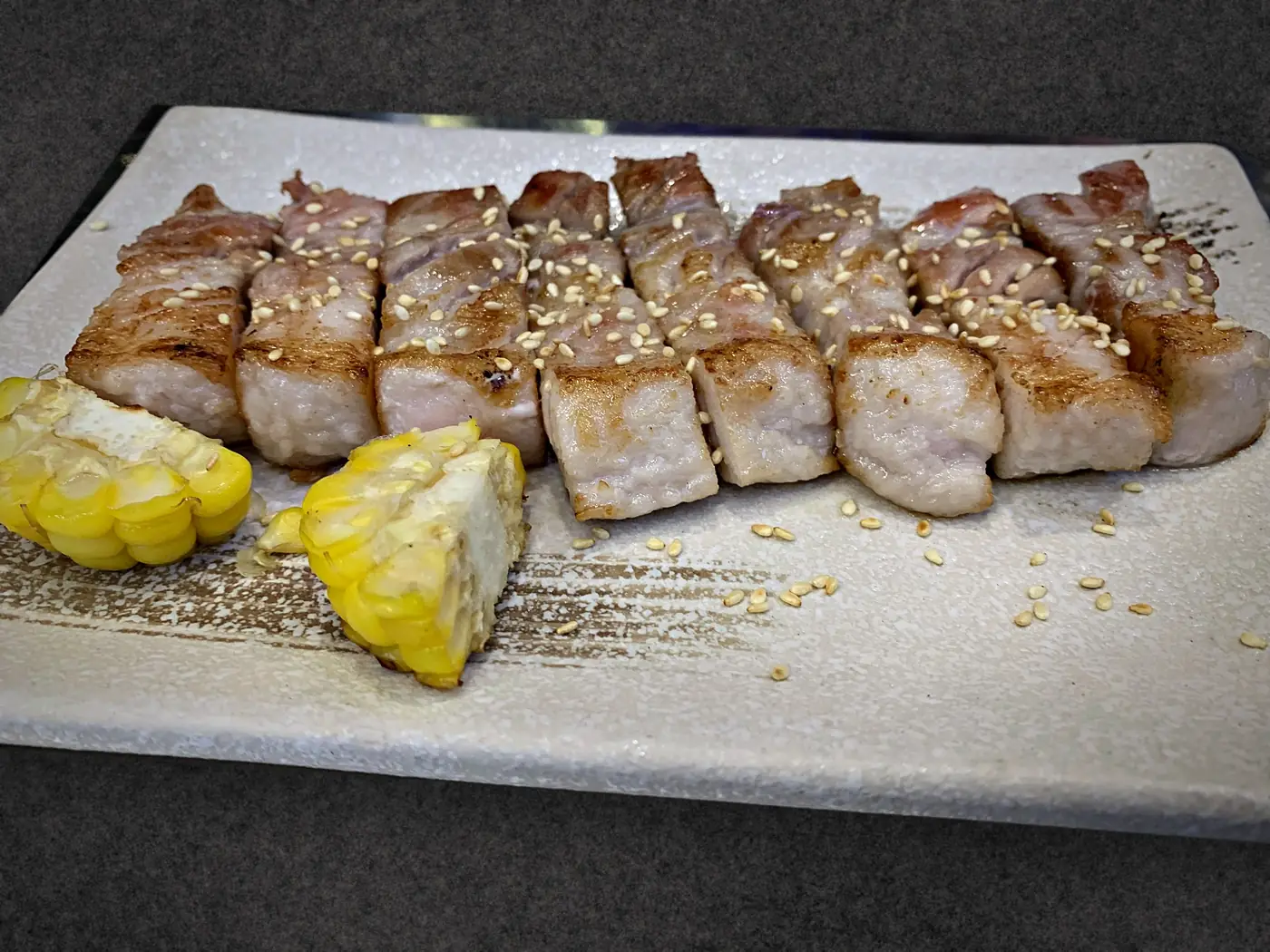
Ssam (쌈) is the signature Korean way of eating: take a fresh leaf such as lettuce, perilla (kkaennip) or blanched cabbage, wrap a piece of grilled meat in it with a little rice, garlic and dipping sauce, then put the whole bundle in your mouth in one bite. The word “ssam” simply means “to wrap.” This way of eating makes a Korean BBQ meal feel lighter, less heavy, and balances the richness of the meat with the freshness of the greens.
If it is your first time at a Korean BBQ restaurant and you see a whole basket of greens on the table, do not skip this part. This article explains what ssam is, the greens used for wrapping, the proper wrapping order, how to dip, and small tips for wrapping neatly without tearing or dropping anything.
What is ssam, and why do Koreans eat grilled meat wrapped?
In Korean dining culture, greens are always part of the meal. With grilled meat, greens are not just a side dish but part of what makes the experience: a hot, rich piece of meat “wrapped” in a cool leaf, with the light heat of garlic and the depth of ssamjang paste, makes a bite that is salty, rich, sweet, spicy and fresh all at once.
Koreans also believe in balancing meat with vegetables. Wrapping ssam means each piece of meat comes with a certain amount of greens, so you can eat quite a lot of meat and still feel comfortable. In practical terms, the leaf also lets you hold a hot piece of meat in your hand without burning it and keeps sauce from dripping out.
Greens commonly used for ssam
A basket of ssam greens at a Korean restaurant usually includes a few of the following:
- Lettuce (sangchu): the most common, with soft, large leaves that are easy to wrap. Red leaf lettuce or butter lettuce both work.
- Perilla leaves (kkaennip), also called sesame leaves: leaves with a distinctive, slightly strong aroma, perfect with pork and beef. Newcomers may find the smell unusual, but many get hooked after a few tries.
- Steamed or blanched cabbage (yang-baechu): leaves steamed until soft with a light sweetness, used to wrap rich dishes.
- Seaweed (gim): dried or toasted, wrapped with rice and meat.
- Napa cabbage or mustard greens: depending on the restaurant, added for variety.
These greens are usually washed, drained and arranged on a plate. When eating, take a leaf, lay it in your palm and wrap.
What goes into a complete ssam wrap
A good ssam wrap usually has all of the following components:
- A leaf as the wrapper: lettuce or perilla, and you can stack one lettuce leaf and one perilla leaf together.
- Grilled meat: a bite-sized piece, cut small with scissors right on the grill.
- White rice: one small spoonful, not too much so the wrap is not bulky.
- Raw or grilled garlic: one thin slice, adding a spicy aroma and balancing the richness.
- Ssamjang: a bold dipping paste made from soybean paste and chili paste. You can read more about it in the article on banchan and side dishes for grilled meat.
- Accompaniments: a little pickled onion, chopped kimchi, green chili or pickled radish, as you like.
How to wrap ssam, step by step
- Prepare the leaf: lay a lettuce leaf in your palm. For more aroma, stack a perilla leaf on top.
- Add rice: add about one small spoonful of rice in the middle of the leaf, spread thinly.
- Add meat: place a bite-sized piece of grilled meat on the rice. It can be pork belly, pork collar or beef.
- Add seasoning: a little ssamjang, a slice of garlic, a few strands of pickled onion or green chili if you like heat.
- Wrap it up: fold the two edges of the leaf in, then roll from the bottom up into a round bundle small enough to put in your mouth at once.
- Eat it in one bite: in the Korean view, ssam should be eaten whole in one bite to experience all the layers of flavor. Biting it in half makes the filling fall out and loses the deliciousness.
If the wrap is too big, reduce the amount of rice or cut the meat smaller. For women and children, a smaller wrap is easier to eat.
Which meats suit ssam?
Almost any grilled meat can be wrapped as ssam, but each has its own “pair” of greens:
- Pork belly (samgyeopsal): best with perilla leaves and grilled garlic, because the aroma of perilla balances the richness. See also samgyeopsal: how to grill and eat Korean-style pork belly.
- Pork collar and pork jowl: crisp and chewy, great with lettuce and ssamjang, plus pickled onion to cut the richness.
- Beef (top blade, skirt, rib finger meat): usually eaten with salt and sesame oil, onions pickled in vinegar and soy sauce, or lightly wrapped with lettuce and perilla leaves. This way keeps the sweetness of the beef while adding the freshness of greens.
- Marinated beef ribs (LA galbi): great with lettuce and a little kimchi, which balances the sweet sauce.
You can look at the cuts on the Gogizip dishes hub, for example Pork Belly, Pork Collar, Pork Jowl or Top Blade.
How to dip when wrapping ssam
There are three popular dipping options when eating ssam:
- Ssamjang: bold, salty-sweet and slightly spicy. Use a small amount, placed directly on the meat or on the leaf.
- Sesame salt (gireumjang): sesame oil mixed with salt and a little pepper, used to dip the meat before wrapping. This is a good choice for beef because it does not overpower the meat.
- Sweet-and-sour dipping sauce: some restaurants also offer a scallion sauce mixed with vinegar, which is lighter and works well with rich pork.
Tip: if you are eating good beef and want to taste its natural sweetness, dip it in sesame salt first, then wrap a different piece as ssam. This keeps the flavor of the meat and adds variety.
Does ssam always need rice?
Not necessarily. Some people wrap ssam without rice to keep it light, focusing on the meat and greens. Others like to wrap in plenty of rice to make a filling meal. Both are correct, and it depends on your preference. In the traditional way, though, a small spoonful of rice in the wrap balances the saltiness and makes it moderately filling.
Common mistakes when eating ssam
- Wrapping too big: hard to fit in your mouth and the filling falls out easily. Reduce the filling and rice.
- Too much ssamjang: the paste is salty and bold, and too much will overpower the meat. Just a small amount is enough.
- Wet leaves: water makes the leaf tear and the filling slip. Let them drain or blot gently with a clean paper towel.
- Leaving grilled meat too long: cold meat gets hard and difficult to wrap. Wrap while the meat is still hot.
- Skipping the garlic: garlic balances the richness, and once you are used to it, a wrap without garlic feels like it is missing a layer of flavor.
Other famous ssam dishes beyond grilled meat
The Korean way of wrapping is not only for grilled meat. A few other “ssam” dishes you may come across:
- Bossam (보쌈): boiled pork sliced thin, eaten with napa cabbage leaves or salted cabbage, radish kimchi and salted shrimp sauce. It is a famous wrap dish in Korean cuisine, often eaten at family gatherings.
- Bokssam (복쌈): by custom, on the first full moon of the lunar year (Jeongwol Daeboreum), Koreans wrap rice with greens or seaweed, meaning good luck and abundance for the whole year.
- Ssambap (쌈밥): a meal with a big basket of greens to wrap yourself, usually served with ssamjang and a few stews. Many ssambap restaurants have dozens of seasonal greens.
- Gimbap and seaweed rolls: although not exactly ssam, the spirit of “wrap and eat neatly” is similar.
This shows that ssam is a distinctive dining spirit: combining many flavors in one bite, wrapping it by hand and sharing with the people at your table.
Tips for wrapping ssam neatly and firmly
- Choose large, soft leaves: wide lettuce leaves that are not torn at the rib. Leaves that are too stiff are hard to fold.
- Place the filling in the middle, slightly toward the bottom: leave some space at the top to fold the edges in so the filling does not spill out.
- Let the meat cool slightly: meat straight off the grill is too hot and will wilt the leaf quickly. Wait a few seconds for it to cool and then wrap.
- Stack two kinds of leaves: lettuce on the bottom and perilla on top makes the wrap firmer and more fragrant.
- Use scissors to cut bite-sized pieces: a bite-sized piece of meat makes for a neat wrap, so you do not have to bite it in half.
Etiquette when eating ssam with elders
In Korean culture, wrapping a ssam and handing it to someone else is a gesture of care. Some families wrap ssam for elders, or for people they love, as a way of sharing affection. However, you do not need to do this at an ordinary meal with friends. What matters is that you feel comfortable, enjoy the food, and remember to invite the elders to eat first.
Ssam ideas for groups of young friends
Ssam is great for groups of young friends because it is fun and interactive: everyone wraps their own, trying different combinations. You can try these “recipes”:
- The classic wrap: lettuce + rice + pork belly + ssamjang + grilled garlic.
- The aromatic wrap: perilla leaf + lettuce + pork collar + pickled onion.
- The bold beef wrap: lettuce + top blade + sesame salt + onions pickled in vinegar and soy sauce.
- The lightly spicy wrap: lettuce + pork jowl + kimchi + green chili.
- The “healthy” wrap: no rice, just greens + meat + a little ssamjang.
Everyone can pick their own “recipe” and swap to try each other’s. It is also a way to make the meal more fun and easy to photograph and share.
Concerns of first-time ssam eaters
“Perilla leaves smell strange, what if I am not used to them?” Start with lettuce first, then try wrapping in half a perilla leaf to get used to it. Many people find the smell of perilla more pleasant when eaten with rich grilled meat and dipping sauce.
“Is it okay to eat raw garlic?” You do not have to eat raw garlic. Garlic grilled on the grill has a milder taste, and if you do not like garlic, you can replace it with a little pickled onion or green chili.
“Does eating ssam make you full quickly?” Greens and rice fill you up faster than eating meat alone. If you want to eat many kinds of meat, wrap smaller wraps and limit the rice, eating meat first and ssam afterward.
“Do I need chopsticks?” Wrapping ssam by hand is the traditional way. If you feel shy, you can use chopsticks to place the filling in the leaf and then wrap it by hand.
Eating ssam at a restaurant: what to know
At a Korean restaurant, wrapping greens are usually served with the meal, and you can ask for more when they run out. If you are dining in a group, order an extra plate of greens just enough, avoiding waste. Wash your hands or use a wet wipe before wrapping by hand, and use the restaurant’s tongs and scissors to handle raw and cooked meat properly.
If you want to try different wraps, you can order a grilled meat combo to get several cuts of meat, from pork belly and pork collar to pork jowl, then try pairing each with different greens and dipping sauces.
Enjoy it at GogizipBBQ
Address: 93 Pham Van Nghi Street, Phu My Hung Urban Area, Tan Hung Ward, Ho Chi Minh City.
Open 11:00 – 23:00 daily. Hotline: 0898 611 611.
Menu prices exclude 10% VAT.
Frequently asked questions about ssam
What is ssam?
Ssam is a way of eating by wrapping food in a leaf, most commonly wrapping grilled meat with rice, garlic and ssamjang in a lettuce or perilla leaf.
Which greens should I use for ssam?
Lettuce and perilla leaves are the two most popular. Lettuce is soft and easy to wrap, while perilla has a distinctive aroma that goes well with pork and beef.
Does ssam need rice?
Not necessarily. A small spoonful of rice balances the saltiness and makes the wrap more filling, but you can skip the rice if you want to eat light.
What is ssamjang?
Ssamjang is a Korean dipping paste, usually made from soybean paste (doenjang) and chili paste (gochujang) with garlic, sesame oil and scallions, with a salty-sweet and slightly spicy flavor.
Should I bite a ssam wrap in half?
In the traditional way, you should put the whole wrap in your mouth at once to experience the full flavor. If the wrap is too big, make a smaller one instead of biting it in half.
Are perilla leaves the same as Vietnamese perilla (tia to)?
Korean perilla (kkaennip) belongs to the same family as Vietnamese perilla (tia to) but is a different plant, with a bolder, distinctive aroma. In Vietnam, it is also called la vung or la nhip.
Craving Korean BBQ? Gogizip BBQ – 93 Pham Van Nghi, Phu My Hung (District 7), open 11:00–23:00 daily. Combos for 2 from 599k VND, for 4 from 1,159k VND (prices before 10% VAT). 9 free banchan, refilled anytime. Some of our staff speak English.
Comments
One response to “What Is Ssam? How to Wrap Grilled Meat in Lettuce and Perilla Leaves the Korean Way”
[…] Lettuce and perilla leaves are for wrapping, not grilling. See how to make ssam wraps. […]