Chuseok (추석) is Korea’s Mid-Autumn Festival, held on the 15th day of the eighth lunar month, the same date as Mid-Autumn Festival in Vietnam. However, Chuseok is not just for children carrying lanterns and eating mooncakes as in Vietnam; it is one of the two biggest holidays for Koreans, comparable to the Lunar New Year in importance. It is a time for family reunions, for thanking ancestors for a bountiful harvest, and for eating songpyeon, the signature rice cake steamed on pine needles. This article explains what Chuseok is, what people eat and do, and how it differs from Vietnam’s Mid-Autumn Festival.
What is Chuseok?
Chuseok is also called Hangawi, meaning “the middle day of autumn.” It is a harvest festival, when farmers thank heaven, earth, and their ancestors for a bountiful crop. The holiday usually lasts three days, and during this time millions of Koreans travel back to their hometowns, creating the heaviest traffic of the year. They wear hanbok, hold ancestral rites, visit graves, enjoy a family reunion meal, and share gifts with relatives.
Chuseok carries deep meaning about gratitude and connection. It is also a time for Koreans to eat autumn foods such as chestnuts, persimmons, pears, and apples, and above all songpyeon rice cakes.
Songpyeon – rice cakes steamed on pine needles
Songpyeon is a small half-moon-shaped rice cake made from rice flour kneaded with hot water, filled with sweet fillings such as black sesame, mung bean, chestnut, jujube, or honey, then steamed on a bed of pine needles. The word “song” means pine tree, so the name means pine cake. The pine needles give the cakes a natural fragrance and keep them from sticking.
The meaning of the shape
The cakes are shaped like half-moons, symbolizing the moon that is gradually becoming full. According to legend, whoever shapes beautiful cakes will have good-looking children one day. Shaping the cakes together as a family the night before Chuseok is a familiar bonding activity.
How to make songpyeon simply
- Knead rice flour with hot water and a pinch of salt until it forms a pliable dough.
- Divide the dough into small balls, press an indent into each, and add the filling.
- Fold into a half-moon shape and seal the edges tightly.
- Arrange the cakes on pine needles (or parchment paper) in a steamer.
- Steam for about 20–30 minutes, then lift out and brush with sesame oil.
History and origins of Chuseok
The origins of Chuseok are tied to harvest festivals from ancient times on the Korean peninsula. A legend from the Silla period tells that the king held a month-long weaving contest between two groups of women in the kingdom, ending on the 15th of the eighth month. The losing group had to host a feast for the winners, and both sides sang and danced under the moon. From then on, the 15th of the eighth month became a major festival called gabae, regarded as the forerunner of Chuseok.
Over many centuries, Chuseok developed into a harvest festival that combines ancestral rites with gatherings of relatives. Today, even as society changes, Chuseok remains an important occasion for families to reunite. The cities empty out, roads leaving town are jammed, and the news reports on the biggest movement of people of the year.
Why is Chuseok also called Hangawi?
The word “hangawi” is a purely Korean expression meaning “the great day of the eighth month.” This name feels warm and down-to-earth, while “Chuseok” is a Sino-Korean word with a more formal tone. Koreans use both, depending on context.
Dishes on the Chuseok table
- Songpyeon: rice cakes steamed on pine needles.
- Jeon: assorted egg-battered pan-fried pancakes.
- Japchae: stir-fried glass noodles with vegetables.
- Galbijjim: richly flavored braised beef short ribs.
- Namul: traditional seasoned vegetables.
- Autumn fruit: pears, apples, persimmons, chestnuts.
- Sikhye: sweet rice drink served as a dessert.
Many of these dishes also appear at the Lunar New Year. You can read our article on Korean New Year (Seollal) for comparison. Jeon is also covered in our article on pajeon, Korean scallion pancake.
Chuseok customs
- Charye: the ancestral rite on the morning of Chuseok.
- Seongmyo: visiting and tidying ancestral graves.
- Ganggangsullae: a circle dance performed by women under the moon.
- Ssireum: traditional wrestling.
- Gift giving: presents for relatives, colleagues, and loved ones.
- Moon gazing: making wishes under the full moon.
Autumn fruit and produce at Chuseok
Chuseok falls in early autumn, the season of pears, apples, persimmons, grapes, chestnuts, and jujubes. These fruits are carefully selected to be offered on the ancestral altar and given as gifts. Large, crisp, sweet Korean pears are a popular gift. Chestnuts and jujubes are also used as cake fillings and in braised dishes. A table full of produce expresses gratitude for the harvest.
In Vietnam, Mid-Autumn Festival is also tied to seasonal fruit: pomelo, persimmon, custard apple, and grapes. The way the five-fruit tray is arranged and the children’s lantern processions, lion dances, and mooncake feasts under the moon have their own character, but the spirit of “giving thanks for the harvest” feels close to Chuseok. This common ground helps the two cultures understand each other easily.
Chuseok gifts
Gift giving is an important custom. Popular gifts include fruit boxes, premium beef, cooking oil, tea sets, ginseng, and spice sets. These gift boxes are beautifully packaged and sold in supermarkets everywhere before the holiday. Many companies also give gifts to their employees. This custom expresses gratitude and the bonds between people.
How is Chuseok different from Vietnam’s Mid-Autumn Festival?
| Aspect | Chuseok (Korea) | Mid-Autumn Festival (Vietnam) |
|---|---|---|
| Main meaning | Thanksgiving for the harvest and ancestors, family reunion | Children’s festival, reunion, moon gazing |
| Scale of the holiday | One of the two biggest holidays | Important for children and families |
| Signature foods | Songpyeon, jeon, japchae | Mooncakes, jelly cakes, fruit |
| Activities | Going home, ancestral rites, visiting graves, ssireum | Lantern processions, lion dances, mooncake feasts |
| Public holiday | Three official days off | Not an official holiday |
Though different in scale and activities, both revolve around the full moon, gatherings, and festive cakes and fruit. Understanding this helps you see how much the two cultures have in common.
Folk games and activities at Chuseok
- Ganggangsullae: women hold hands in a circle, singing and dancing in the moonlight.
- Ssireum: a national wrestling sport; the winner receives a bull as the prize.
- Yutnori: a game of throwing wooden sticks to move pieces on a board, played by the whole family.
- Tuldarigi: traditional swinging and see-saw jumping games.
- Moon-gazing wishes: many people silently make a wish under the full moon.
These activities make the holiday not just a ritual but also a joy. Children, adults, and the elderly all take part in a lively, friendly atmosphere. Today, traditional games are often organized in parks, cultural villages, and even on television.
Chuseok in film and pop culture
Chuseok often appears in Korean dramas as scenes of returning to the hometown, gathering over meals, shaping songpyeon, or family conflicts and reconciliations. These scenes let international audiences feel the family affection in Korean culture. If you like Korean dramas, watch for our upcoming article on food in Korean dramas on the news page.
Feeling Chuseok through a Korean meal in Vietnam
Although you can’t fully recreate Chuseok, you can still feel a bit of the festival’s spirit through a shared meal. Invite your family out for dinner, order many dishes to share, from grilled meat and rice cakes to stews, and sit together longer than usual. The message of Chuseok is gratitude and reunion, which matter in every culture.
Chuseok and women’s role in the kitchen: recent changes
Traditionally, women in the family had to prepare a great many dishes over several days before Chuseok, from shaping cakes and frying jeon to braising beef ribs. This sometimes created pressure, and the phrase “post-holiday syndrome” has often been mentioned. In recent years, many families have shared housework more evenly, bought ready-made food, or booked restaurants to lighten the load. This trend makes the holiday lighter and lets everyone rest.
In Vietnam, Mid-Autumn Festival is usually lighter in terms of cooking, but a similar situation occurs at the Lunar New Year. In general, changing gender roles in the family are happening across many Asian cultures. A reunion meal at a restaurant where everyone sits together, grills together, and talks together is also a new way of keeping tradition.
Ideas for a Korean-style reunion dinner at Gogizip
- Starters: steamed dumplings and tokbokki to get everyone started.
- Main course: a grilled meat combo suited to your group size, for example Combo B or Combo D for four people.
- Warming dishes: beef rib soup or kimchi soup.
- To finish: cold noodles or bibimbap.
This meal is not a Chuseok table, but it shares the same spirit: many dishes, shared together, sitting long and talking. Reserve ahead by calling hotline 0898 611 611 if you are coming with a large group.
Frequently asked questions about Chuseok
What is Chuseok?
It is Korea’s Mid-Autumn Festival, held on the 15th day of the eighth lunar month, a day of thanks for the harvest and ancestors.
What is songpyeon?
It is a half-moon-shaped rice cake filled with sesame, beans, or chestnuts, steamed on pine needles.
Is Chuseok different from Vietnam’s Mid-Autumn Festival?
Yes. Chuseok is a major holiday for adults and families with ancestral rites, whereas Vietnam’s Mid-Autumn Festival leans toward being a children’s festival.
What do Koreans do on Chuseok?
They go back to their hometowns, hold ancestral rites, visit graves, share a reunion meal, play folk games, and exchange gifts.
Where can I eat Korean rice cakes in Ho Chi Minh City?
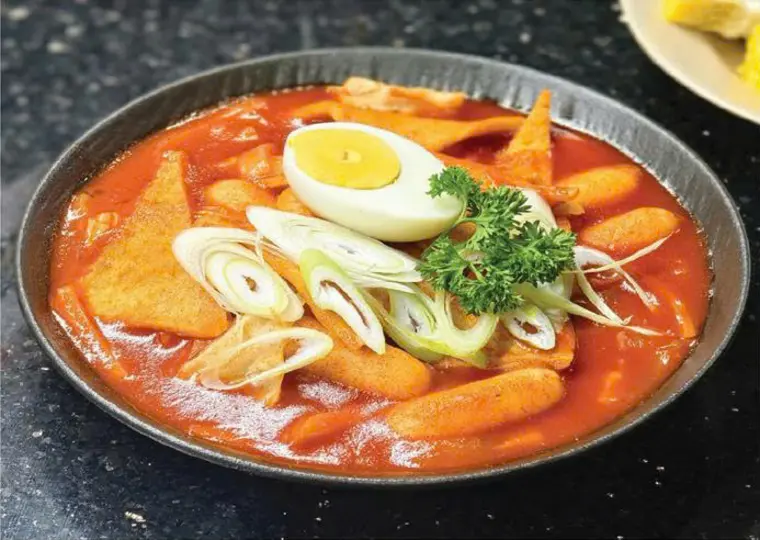
Gogizip serves tokbokki, Cheese Shake Rice Cakes, and Cheese-filled Tteokbokki.
How long does Chuseok last?
Usually three days off, including the day before, Chuseok day, and the day after.
What Chuseok teaches us about everyday meals
Chuseok reminds us of three simple things. First, be grateful for what you have, from the meal on the table to the people eating with you. Second, make time for family and friends, and don’t let work swallow everything. Third, respect traditions, whether your own or someone else’s, because that is how we understand and connect with one another.
That is also the spirit Gogizip wants to bring: a warm, abundant Korean meal where you can sit beside your loved ones, share each piece of grilled meat and each side dish, and create memories worth keeping.
Conclusion
Chuseok is a festival of gratitude, reunion, and songpyeon rice cakes fragrant with pine. Enjoy the flavors of Korea with your family at Gogizip, 93 Pham Van Nghi Street, Phu My Hung Urban Area, Tan Hung Ward, Ho Chi Minh City. Prices exclude 10% VAT.
Craving Korean BBQ? Gogizip BBQ – 93 Pham Van Nghi, Phu My Hung (District 7), open 11:00–23:00 daily. Combos for 2 from 599k VND, for 4 from 1,159k VND (prices before 10% VAT). 9 free banchan, refilled anytime. Some of our staff speak English.