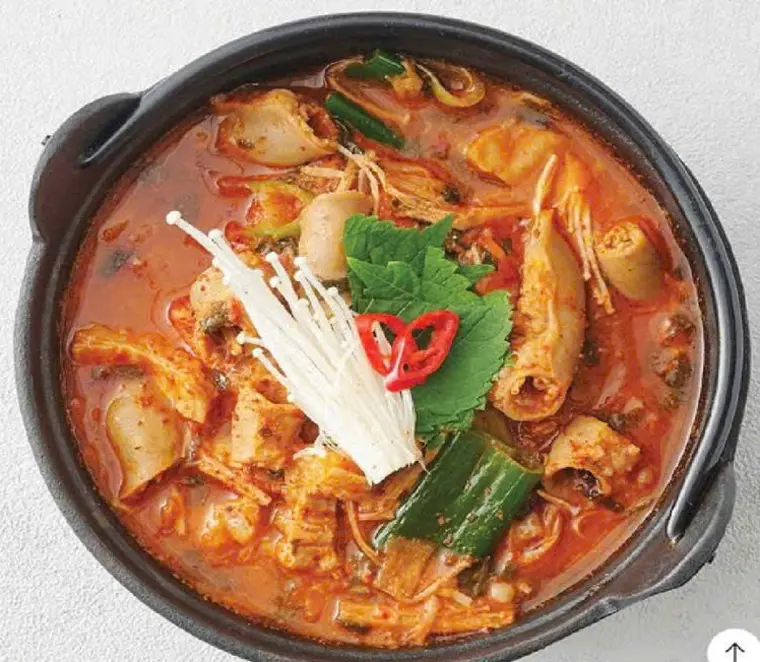
A bright red pot packed with sausages, Spam, kimchi, baked beans, a melting slice of cheese and a block of instant noodles – that is budae jjigae (부대찌개), “army stew”, one of the most-loved everyday hot pots in Korea.
A hot pot born in the post-war years
After the Korean War, food was scarce. People living around the US military bases in Gyeonggi Province – in places like Uijeongbu, Dongducheon, Paju and Songtan – made use of Spam and sausages from the bases, cooking them Korean-style in a spicy stew with kimchi and chili paste. According to a Gyeonggi Province magazine, Uijeongbu still has a “budae jjigae street” with restaurants that have been running for decades, and many people see budae jjigae as a “culinary miracle” born out of a hard chapter in Korean history.
Ingredients (serves 3–4)
- 150g Spam, 150g assorted sausages, plus a few slices of bacon if you like.
- 1 bowl of sour kimchi, ½ onion, ½ leek, mushrooms, tofu, rice cakes (optional).
- A little minced pork or beef (makes the broth sweeter).
- 2–3 tablespoons canned baked beans – the “signature” ingredient of army stew.
- 1 slice of cheddar cheese, 1 block of instant noodles.
- 500–700ml bone broth (or anchovy–kelp stock).
- Spicy sauce: 2 tablespoons chili powder, ½–1 tablespoon gochujang, 1 tablespoon soy sauce, 1 tablespoon minced garlic, ½ tablespoon sugar, a pinch of pepper.
Method
- Make the sauce first: mix all the spicy sauce ingredients and let it sit for a few minutes.
- Arrange the pot: line the bottom with onion and leek; arrange the Spam, sausages, kimchi, mushrooms and tofu in neat sections around the pot. Put the minced meat and baked beans in the middle and spoon the sauce over the top.
- Pour in the broth, bring to a boil over high heat, then lower to medium and simmer for about 10–15 minutes so the flavours come together.
- Add the noodles and cheese: drop in the instant noodles; when they are almost done, lay the cheese slice on top and let it melt – then dig in.
Quick tips
- The sourer the kimchi, the richer the broth.
- Keep it simmering on a portable burner while you eat, topping up with broth as it reduces.
- Serve with steamed rice – Koreans love spooning the broth over their rice.
Too lazy to cook? Hot Korean stews at Gogizip
Gogizip BBQ (93 Pham Van Nghi, Phu My Hung, District 7) doesn’t serve budae jjigae, but we do have warming Korean hot pots for rainy days: beef and mushroom hot pot, spicy beef tripe hot pot, spicy beef intestine hot pot and a mini spicy beef tripe hot pot for one – enjoyed alongside charcoal-grilled meat and free banchan. Open 11:00–23:00.
- What is Korean hot pot (jeongol)?
- Mini spicy beef tripe hot pot for one
- How to make doenjang jjigae (soybean paste stew)
Frequently asked questions
Why is it called “army stew”?
“Budae” means military unit. The stew was born after the war, when people living near US military bases cooked Spam and sausages from the bases with kimchi and chili paste.
Does budae jjigae have to include baked beans and cheese?
No, but the baked beans give the broth its signature sweet richness and the cheese rounds out the flavour; many Korean recipes include both.
Sources (in Korean)
Gogizip compared several popular recipes and rewrote them in our own words; the original text and images belong to their authors:
- Gyeonggi Province magazine – the legend of Uijeongbu army stew
- Kurly – kimchi army stew recipe
- 10000recipe – homemade army stew
Craving Korean BBQ? Gogizip BBQ – 93 Pham Van Nghi, Phu My Hung (District 7), open 11:00–23:00 daily. Combos for 2 from 599k VND, for 4 from 1,159k VND (prices before 10% VAT). 9 free banchan, refilled anytime. Some of our staff speak English.