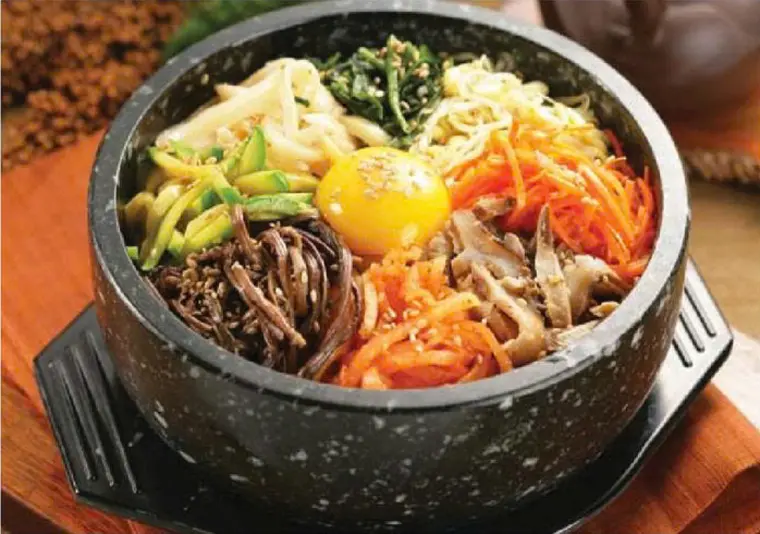
Going out for Korean BBQ with friends, but you don’t eat much meat, or you simply want something lighter today? You don’t have to sit and watch everyone else grill. Korean vegetable bibimbap is a great choice: filling, colourful, with the sweet heat of gochujang sauce mingling with the vegetables. It’s tasty on its own and doesn’t feel out of place at a BBQ table either. This article explains what vegetable bibimbap is, how to mix it properly and how to order so that both light eaters and meat lovers are happy.
What is vegetable bibimbap?
Mixed rice, bibimbap in Korean, literally means “mixed-up rice”. It is one of the best-known dishes in Korean cuisine: a bowl of steamed rice topped with an assortment of vegetables that have been blanched, stir-fried or seasoned, usually with an egg and a spoonful of gochujang chili sauce. When you eat it, you mix everything together so every spoonful has all the flavours.
Bibimbap comes in many versions. Some add beef, some use seafood, some keep it to vegetables only. The vegetable version is the lightest of all, standing out for the colour and freshness of its vegetables. If you’d like to learn more about its origins and variations such as dolsot bibimbap (stone-bowl bibimbap), read our article Bibimbap – Korean mixed rice.
Vegetables commonly found in bibimbap
In Korea, a bowl of vegetable bibimbap usually includes various namul (seasoned vegetables) such as bean sprouts, spinach, carrot, cucumber, mushrooms, bracken fern and radish. Each is prepared separately with a little sesame oil, salt and garlic, then arranged in colourful sections around the bowl. The exact ingredients vary by restaurant and by season, so if you want to know exactly what’s in Gogizip’s bibimbap, ask our staff when ordering.
Why is vegetable bibimbap good for people who eat less meat?
- Filling without feeling heavy: the rice provides carbohydrates and the vegetables feel fresh, so you still feel light after eating.
- Full of flavour, not bland: thanks to the sweet-spicy gochujang and fragrant sesame oil, the dish has a clear, bold taste, not a “token” dish.
- Easy to share a table: the light eater has their own main dish while the rest of the table grills meat as usual.
- You can add a few pieces of grilled meat: if you’re not avoiding meat entirely, you can take a piece or two from the grill and put them on your rice, enough for flavour without eating too much meat.
Note: eating less meat is not the same as fully vegetarian
This dish suits people who eat less meat or want a lighter meal, but you shouldn’t assume it is completely vegetarian. Bibimbap in general may contain egg, and sauces and seasonings of animal or seafood origin, depending on how it is made. If you are strictly vegetarian, vegetarian for religious reasons or have food allergies, please ask our staff carefully about the ingredients before ordering. In addition, the dish is served in a space with meat grills, so please take this into account if you need to avoid meat completely.
How to mix vegetable bibimbap the proper way
Koreans consider the mixing part of the dish. Mix it properly and every spoonful is balanced; rush it and some bites are too spicy while others are bland.
- Look and admire it first: when the bowl arrives, take a few seconds to enjoy the sections of vegetables. This is also the best moment for a photo.
- Add the gochujang gradually: gochujang is a Korean fermented chili paste, sweet, spicy and slightly salty. If you’re not used to spice, add half first, mix and taste, then add more.
- Use a spoon, not chopsticks: Koreans usually mix and eat bibimbap with a spoon. A spoon lets you turn the rice up from the bottom of the bowl without mashing the vegetables.
- Mix from the outside in: pull the rice from the edge of the bowl towards the middle, pressing lightly so the sauce coats every grain.
- If there’s an egg, break the yolk first: the yolk blends into the rice and makes the sauce smoother and richer.
- Taste and adjust: if it needs more flavour add a bit more sauce; if it’s too spicy, eat it with soup or a mild dish.
What to order with vegetable bibimbap
A bowl of bibimbap is a meal in itself, but a few side dishes make it more fun, especially in a group. Here are some suggestions for light eaters, taken from the Gogizip menu:
Light dishes that aren’t grilled meat
- Steamed egg (trứng hấp) (90,000 VND): soft, hot and mild, a good balance for the heat of gochujang.
- Seafood and green onion pancake (bánh xèo hành lá hải sản) (220,000 VND): crispy edges, fragrant with green onion, for sharing with the table.
- Steamed meat dumplings (bánh bao hấp nhân thịt) (139,000 VND): if you can eat a little meat, this is an easy small dish.
- Cold noodles in broth (mì lạnh nước) (150,000 VND): cool and refreshing, perfect at the end of the meal.
Soup with bibimbap
In Korea, bibimbap is often eaten with a small bowl of soup to pour over it or sip in between. If you eat seafood, you can choose the light seafood seaweed soup (canh rong biển hải sản) (170,000 VND), or the bolder seafood soybean paste stew (canh tương đậu hải sản) (180,000 VND). Spice lovers can try the spicy seafood tofu stew (canh đậu hủ hải sản cay) (180,000 VND). Soups at Gogizip come with complimentary rice.
Banchan and wrap vegetables
Don’t skip the banchan side dishes. Kimchi, seasoned vegetables and pickles add sour, crunchy notes to the meal and go very well with bibimbap. If there’s lettuce on the table, you can also wrap a spoonful of bibimbap in a leaf ssam style, with a little ssamjang.
Vegetable bibimbap or beef bibimbap?
The Gogizip menu has two bibimbap dishes: vegetable bibimbap (cơm trộn rau củ) (160,000 VND) and beef bibimbap (cơm trộn bò) (180,000 VND). Choosing is fairly simple:
- Choose vegetable bibimbap if you eat less meat, want a light meal, or the table has already ordered plenty of BBQ and you just need a rice dish for balance.
- Choose beef bibimbap if you want a richer, more filling rice dish, or you’re eating alone at lunch and don’t plan to grill.
In a big group, ordering one of each to share is a good idea too: light eaters scoop from the vegetable bowl, meat lovers get the beef.
Ordering suggestions when someone at the table eats less meat
A meal for 2: one light eater, one meat lover
- Vegetable bibimbap: 160,000 VND
- Pork belly (ba chỉ heo, samgyeopsal) 160g: 179,000 VND
- Seafood and green onion pancake: 220,000 VND
- Steamed egg: 90,000 VND
Total: 649,000 VND (excluding 10% VAT), about 714,000 VND with VAT. The meat lover gets grilled pork belly, the light eater gets bibimbap, pancake and steamed egg, and both share the side dishes.
A group of 4–6
Larger groups usually order a BBQ combo for the whole table, for example Combo B (4 people, 800g, 1,159,000 VND). For each light eater in the group, just add a bowl of vegetable bibimbap and a light dish such as steamed egg or the pancake. That way nobody has to eat according to someone else’s taste. If your group is as large as 8, remember to book ahead.
A few small tips for a well-rounded meal
- Order the bibimbap early: so the light eater has food from the start and doesn’t have to wait for the whole table to finish grilling.
- Sit a little further from the grill: if you don’t like the smoke, you can choose a seat in the open air-conditioned area or the enclosed air-conditioned room. See more on our space page.
- What to drink: sparkling or still water helps soothe the heat of gochujang.
- Take your time: bibimbap is best while still warm, but there’s no need to rush; let the vegetables, sesame oil and sauce blend together.
Frequently asked questions about Korean vegetable bibimbap
Is vegetable bibimbap a vegetarian dish?
You shouldn’t assume it is completely vegetarian. The dish suits people who eat less meat, but bibimbap in general may contain egg, sauces or seasonings of animal origin. If you are strictly vegetarian or have allergies, please ask our staff about the ingredients before ordering.
How much is the vegetable bibimbap at Gogizip?
Vegetable bibimbap costs 160,000 VND and beef bibimbap costs 180,000 VND. Prices exclude 10% VAT.
Is gochujang very spicy?
Gochujang is a Korean fermented chili paste, sweet, spicy and slightly salty. If you’re not used to spice, add it a little at a time, mix and taste before adding more, and eat it with soup or steamed egg to soothe the heat.
Should I mix bibimbap with chopsticks or a spoon?
Koreans usually mix and eat bibimbap with a spoon. A spoon lets you turn the rice up from the bottom of the bowl and press it lightly so the sauce coats everything evenly without mashing the vegetables.
What should light eaters order with it?
You can order steamed egg, the seafood and green onion pancake, cold noodles in broth or a seafood soup. Soups at Gogizip come with complimentary rice.
Do I need to book ahead for a group that includes light eaters?
It isn’t required for small groups, but groups of 8 should book ahead. Call or message on Zalo at 0898 611 611, or book through Gogizip’s booking page.
Conclusion
Korean vegetable bibimbap lets people who eat less meat enjoy a full, tasty meal when going out for BBQ with friends and family. With a bowl of bibimbap, a few light side dishes and a bowl of soup, you have your own meal while still sharing the fun with the whole table. Remember to ask our staff if you have any special requirements about ingredients. Browse our list of dishes and FAQ, or book a table at Gogizip, 93 Pham Van Nghi Street, Phu My Hung Urban Area, Tan Hung Ward, Ho Chi Minh City. Prices exclude 10% VAT.
Craving Korean BBQ? Gogizip BBQ – 93 Pham Van Nghi, Phu My Hung (District 7), open 11:00–23:00 daily. Combos for 2 from 599k VND, for 4 from 1,159k VND (prices before 10% VAT). 9 free banchan, refilled anytime. Some of our staff speak English.