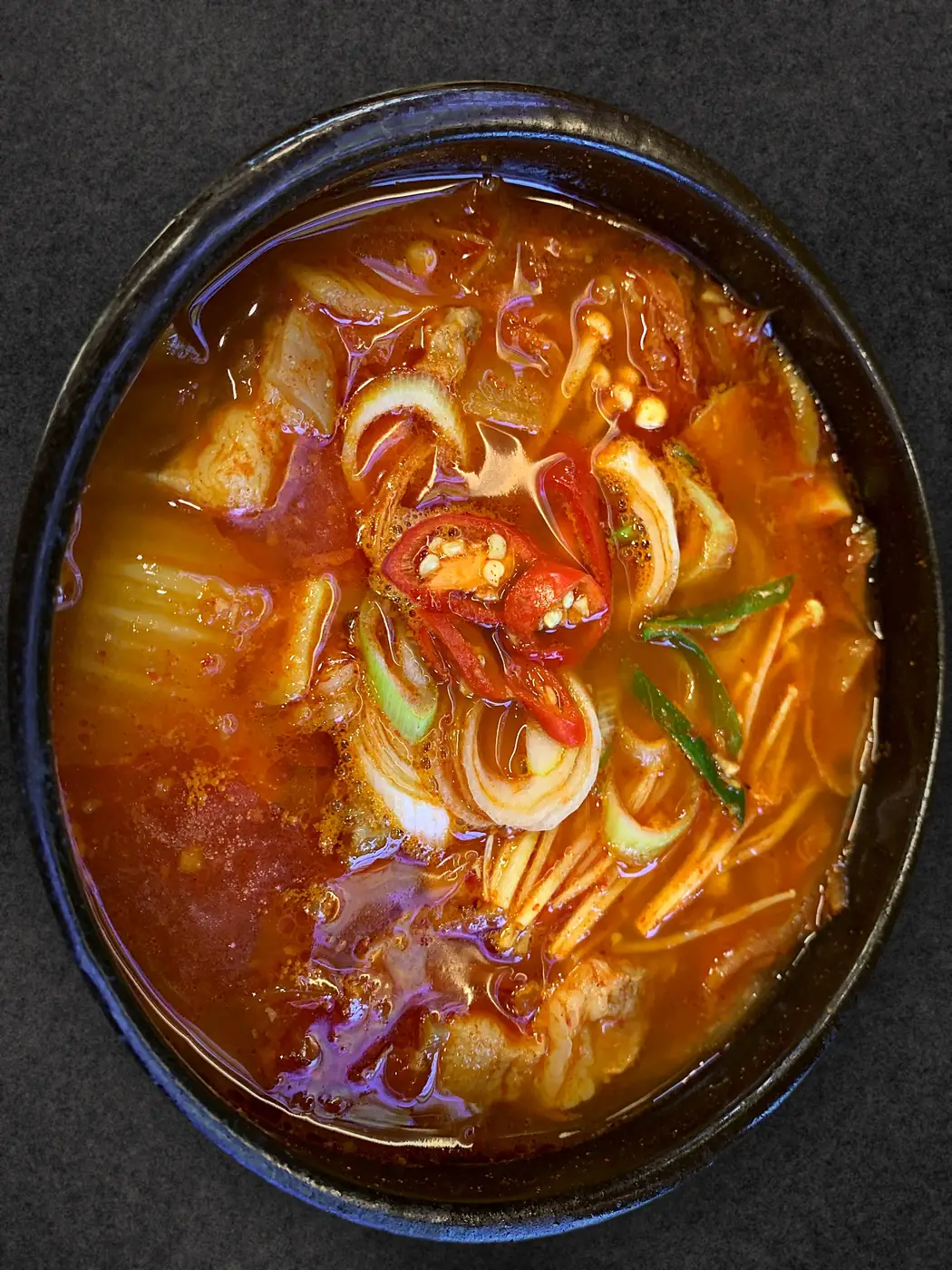
Kimchi (김치) is Korea’s salted, fermented vegetable dish, most commonly napa cabbage seasoned with chili flakes, garlic, ginger, scallions and fish sauce or salted shrimp. Kimchi tastes tangy, spicy, salty, slightly sweet and crunchy, and appears in almost every Korean meal, from family dinners to the Korean BBQ table. It is not just a side dish but also the foundation for cooking many other dishes such as kimchi soup, kimchi fried rice and kimchi pancakes.
This article explains what kimchi is, why Koreans eat it every day, the popular types of kimchi, how it is made and fermented, how to choose kimchi, how to eat it with grilled meat and the dishes cooked with kimchi. If you are interested in the whole system of side dishes, also read the article on what banchan is and the side dishes served with grilled meat.
What is kimchi?
Kimchi is the general name for vegetables that are salted and fermented in the Korean style. The most famous kind is baechu kimchi, made from napa cabbage. The cabbage is salted to draw out some of its water, then coated with a seasoning mixture of Korean chili flakes (gochugaru), garlic, ginger, scallions, radish, fish sauce or salted shrimp, and sometimes a little thinned glutinous rice paste. The kimchi is then left to ferment at a suitable temperature, then stored cold to be eaten gradually.
During fermentation, lactic acid bacteria grow and create the distinctive tang. Freshly made kimchi tastes fresh, crunchy and spicy; kimchi left longer has a clear sourness, is softer and has a strong fermented aroma. Each stage suits different uses.
Why is kimchi so important to Koreans?
Kimchi is present at almost every Korean meal. In Korean culture there is the tradition of “kimjang,” when whole families and neighbors make large quantities of kimchi together in late autumn to eat throughout the winter. This activity strengthens community bonds and has been recognized by UNESCO as an intangible cultural heritage of humanity.
For Koreans, a meal without kimchi is often considered incomplete. Kimchi is a side dish, a cooking ingredient and a cultural symbol all at once. That is why, when you eat Korean BBQ, you almost always see a plate of kimchi on the table.
Popular types of kimchi
- Baechu kimchi (배추김치): napa cabbage kimchi, the most popular and familiar type. It can be eaten in pieces or cut small.
- Kkakdugi (깍두기): white radish kimchi cut into square cubes, crunchy, spicy and tangy, usually eaten with soups, stews and rice.
- Oi sobagi (오이소박이): cucumber kimchi stuffed with seasoning, crisp and cooling, great in summer.
- Chonggak kimchi (총각김치): whole young radish kimchi with the stems, crunchy and bold.
- Pa kimchi (파김치): scallion kimchi with a strong aroma, good with grilled meat and rice.
- Nabak kimchi (나박김치): water kimchi, mildly spicy, light in flavor, eaten like a cold soup.
- Dongchimi (동치미): radish water kimchi, not spicy, light and refreshing, usually eaten with cold noodles or heavy dishes.
- Fresh napa cabbage kimchi (geotjeori): kimchi eaten right away without long fermentation, crisp and fresh like a salad.
Each type has its own timing and way of being eaten. For example, kkakdugi goes well with hot soups, while oi sobagi and dongchimi suit summer or help cut the richness after fatty grilled meat.
How is kimchi made?
The traditional baechu kimchi process can be summarized as follows:
- Salt the cabbage: halve or quarter the napa cabbage, soak it in salt water or sprinkle salt between the leaves for several hours until it softens and releases water.
- Rinse and drain: rinse well to reduce the salt, then drain completely.
- Make the seasoning mixture: mix chili flakes, garlic, ginger, scallions, julienned radish, fish sauce or salted shrimp and glutinous rice paste.
- Apply the seasoning: spread it evenly over each layer of cabbage leaves.
- Ferment: pack into an airtight jar, leave at room temperature for one to two days depending on the climate, then move to the refrigerator to continue slow fermentation.
In a hot climate like Vietnam, kimchi ferments faster, so the time at room temperature is usually shorter. If left too long, kimchi can turn harshly sour.
Three stages of kimchi flavor
- Fresh kimchi (just made): crunchy, spicy, less sour. Eat it like a salad or with grilled meat.
- Ripe kimchi: lightly sour, with a balanced flavor. This is the most common stage for eating as is.
- Well-aged kimchi (mukeunji): very sour, soft, with a strong fermented aroma. Suitable for kimchi soup, kimchi jjigae, fried kimchi or stir-frying with meat.
Koreans regard well-aged kimchi as a prized ingredient for stews, because its deep, bold sourness gives a very different flavor from fresh kimchi.
How to eat kimchi with grilled meat
Kimchi and grilled meat are a familiar pair. The tangy heat of kimchi cuts the richness of pork, helping you eat a lot without feeling heavy. A few popular ways:
- Grill it with the meat: place a few pieces of kimchi on the grill and let the edges char slightly so it turns sweeter and more fragrant.
- Wrap it in ssam: add a small piece of kimchi to a wrap of lettuce, meat and rice.
- With pork belly: crisp, rich pork belly with tangy, spicy kimchi is a classic combination.
- Alternate between bites: pick up a piece of kimchi between rounds of meat to cleanse the palate.
You can find more on eating pork belly in samgyeopsal: how to grill and eat Korean-style pork belly.
Dishes cooked with kimchi
- Kimchi jjigae: kimchi stew with meat and tofu, tangy, spicy and bold. See also Kimchi Soup with Pork and Kimchi Soup with Seafood.
- Kimchi bokkeumbap (kimchi fried rice): fried rice with kimchi, meat and egg.
- Kimchijeon: crispy kimchi pancake, tangy and spicy, great with drinks.
- Kimchi mandu: dumplings filled with kimchi and meat.
- Dwaeji kimchi jjim: pork braised with kimchi, eaten with rice.
Key ingredients that make the flavor of kimchi
- Gochugaru (Korean chili flakes): gives a beautiful red color and a mild, slightly sweet heat. Unlike ordinary chili powder, gochugaru is less harsh and more aromatic. It comes finely ground or coarsely ground, and traditional kimchi usually uses the coarse kind.
- Garlic and ginger: create a strong aroma and warmth in kimchi.
- Anchovy fish sauce or salted shrimp (saeujeot): brings umami, helps the fermentation stay stable and creates depth of flavor.
- Thinned glutinous rice paste: helps the seasoning cling evenly to the leaves and also “feeds” the fermenting bacteria.
- Radish and scallions: add crunch, sweetness and aroma.
- Salt: coarse salt used to soak the napa cabbage, which greatly affects the crunch and saltiness of the kimchi.
Every household has its own “secret” for making kimchi: some add grated apple or pear for a gentle sweetness, others add squid or oysters for a bolder taste. That is why kimchi at each restaurant and each family has its own flavor and is hard to make exactly alike.
How is kimchi different from Vietnamese pickled mustard greens?
Both are salted, fermented vegetables with a sour taste, but the preparation and flavor differ. Vietnamese pickled mustard greens (dua cai muoi) usually need only salt, water and sugar and are left to ferment naturally, with a light sourness and few seasonings. Kimchi is seasoned with a bold mixture: chili flakes, garlic, ginger, fish sauce or salted shrimp. So kimchi is spicier, bolder and has a clear garlic and ginger aroma.
Another difference is use: Vietnamese pickled greens are usually eaten with rice, braised pork or braised fish, while kimchi, besides being a side dish, is also an ingredient for soups, stews, stir-fries and fried dishes in many variations.
How to choose and store kimchi
- Choose the right type: for eating as is, pick fresh or ripe kimchi; for soup, pick well-aged kimchi.
- Store cold: keep kimchi in an airtight jar in the refrigerator. It will continue to ferment slowly and turn more sour over time.
- Use clean utensils: pick up kimchi with clean chopsticks or tongs to avoid spoiling the whole jar.
- Press kimchi under the brine: kimchi exposed to air easily grows mold or changes color.
- Check the smell and taste: if there is a strange foul smell, unusual sliminess or mold, throw it away.
Is kimchi spicy? Are there non-spicy versions?
Most kimchi is spicy because of the chili flakes. However, Koreans also have non-spicy kimchi such as dongchimi or baek kimchi (white kimchi), with a clear brine and a light flavor, great for people who do not eat spicy food, young children and older adults. When dining at a restaurant, if you do not eat spicy food, ask the staff about suitable options.
Kimchi in Korean culture and daily life
Kimchi is tied to many aspects of Korean life. When taking photos, people often say “kimchi” instead of “cheese” so everyone smiles brightly. Many families have a dedicated kimchi refrigerator to store large amounts of kimchi at a stable temperature. During the kimjang season in late autumn, neighbors often make and share kimchi together, including with households who need help.
In many regions, every household has its own recipe. Coastal regions often use more salted seafood such as salted shrimp and salted anchovies; inland regions use less seafood; the south is usually spicier and bolder, while the north is milder and lighter. So “homemade kimchi” in each region has very different flavors.
How to eat kimchi properly at a restaurant
- Take just enough: kimchi is served on a small shared plate; take a bite-sized amount and ask for more if needed.
- Cut small with scissors: napa cabbage kimchi is usually pre-cut, but if it is still in large whole leaves, you can use scissors to cut it to a bite-sized size.
- Do not pour kimchi juice onto your plate: kimchi juice is salty and sour, so use only a little when needed.
- Eat in between: eat kimchi between rounds of meat, and do not eat a large amount at once, which dulls your taste.
- Ask for more aged kimchi if you like it sour: some restaurants may have sour kimchi for soup or eating on its own; you can ask the staff.
Kimchi and the Vietnamese palate
Many Vietnamese people find kimchi familiar because its sour, spicy and salty flavors are similar to our pickled mustard greens, sour pickled greens or salted pickles. However, kimchi has its own flavor thanks to Korean chili flakes, garlic, ginger and fish sauce or salted shrimp. For newcomers, you can start with grilled kimchi, kimchi cooked in soup or kimchi mixed with rice to gradually get used to the fermented smell and taste.
Kimchi also “makes friends” easily with Vietnamese dishes: many people like to eat kimchi with white rice, fried eggs, instant noodles or banh mi. That is also why kimchi has become one of the most popular Korean foods in Vietnam.
Kimchi at Gogizip
Kimchi appears in many dishes on the menu, especially the soups. You can see all the dishes on the Gogizip dishes hub and the menu.
Enjoy it at GogizipBBQ
Address: 93 Pham Van Nghi Street, Phu My Hung Urban Area, Tan Hung Ward, Ho Chi Minh City.
Open 11:00 – 23:00 daily. Hotline: 0898 611 611.
Menu prices exclude 10% VAT.
Frequently asked questions about kimchi
What is kimchi?
Kimchi is Korea’s salted, fermented vegetable dish, most commonly napa cabbage seasoned with chili flakes, garlic, ginger, scallions and fish sauce or salted shrimp, with a tangy, spicy and salty flavor.
What types of kimchi are there?
Popular ones include napa cabbage kimchi (baechu), radish (kkakdugi), cucumber (oi sobagi), scallion (pa kimchi), water kimchi (nabak, dongchimi) and non-spicy white kimchi.
How long does kimchi keep?
Stored cold in an airtight jar, kimchi can keep from a few weeks to a few months, and the flavor will turn more sour over time. Throw it away if it has a strange smell or mold.
Can you eat sour kimchi?
Yes. Sour (well-aged) kimchi is usually used for soup, kimchi jjigae, fried rice or stir-frying because its deep sourness creates a distinctive flavor.
What is delicious to eat with kimchi?
Kimchi goes with grilled pork belly, white rice, soups, noodles and many other Korean dishes. The tangy heat helps balance rich dishes.
Is there non-spicy kimchi?
Yes. Dongchimi and baek kimchi are non-spicy kimchi with a light flavor, suitable for people who do not eat spicy food.
Craving Korean BBQ? Gogizip BBQ – 93 Pham Van Nghi, Phu My Hung (District 7), open 11:00–23:00 daily. Combos for 2 from 599k VND, for 4 from 1,159k VND (prices before 10% VAT). 9 free banchan, refilled anytime. Some of our staff speak English.