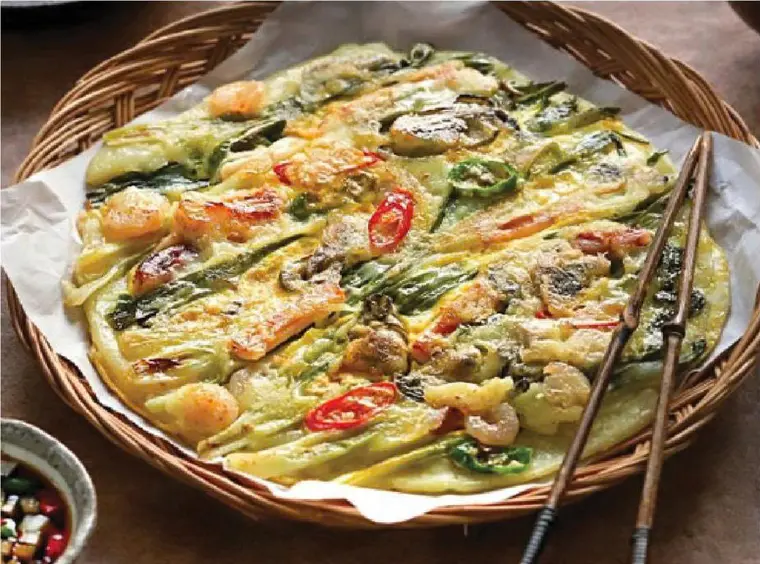
Pajeon (파전) is a Korean-style pan-fried pancake made from wheat flour or rice flour mixed with egg, topped with plenty of scallions and fried until golden and crisp. When seafood is added, it is called haemul pajeon, and Vietnamese diners often jokingly call it “Korean bánh xèo.” The nickname is easy to understand because of the round, flat shape, the golden frying, and the dipping sauce, but in reality pajeon differs quite a lot from Vietnamese bánh xèo: from the batter and fillings to the frying method and how it is eaten. This article helps you tell the two dishes apart, understand why Koreans crave pajeon on rainy days, and how to eat it for the best flavor.
What is pajeon?
The word pa means scallion, and jeon is a group of pan-fried dishes made with a thin layer of batter. Pajeon therefore means scallion pancake. The basic ingredients are wheat flour, a little rice flour or glutinous rice flour, cold water, egg, and lots of long-cut scallions. When seafood such as squid, shrimp, and clams is added, it becomes haemul pajeon. Many restaurants also add kimchi to make kimchijeon, or beef and mushrooms.
The most distinctive feature of pajeon is that the scallions are laid whole in long stalks, pressed against the pan, so when cooked they are fragrant, sweet, and crisp at the edges. The batter layer is not thick; it is just enough to bind the scallions and seafood, giving a texture that is soft inside and crisp outside.
How is pajeon different from Vietnamese bánh xèo?
| Criteria | Pajeon (Korea) | Bánh xèo (Vietnam) |
|---|---|---|
| Batter | Wheat flour, with egg | Rice flour, coconut milk, turmeric |
| Color | Light, pale yellow | Deep yellow from turmeric |
| Fillings | Scallions, seafood, kimchi | Shrimp, pork, bean sprouts |
| How to eat | Cut into pieces, dip in soy sauce | Wrap in herbs, dip in fish sauce |
| Flavor | Scallion aroma, lightly salty | Rich coconut, turmeric aroma |
| Thickness | Medium thick, soft and chewy | Thin, very crisp |
In general, Vietnamese bánh xèo has a thin crisp shell and is eaten by wrapping it with fresh herbs and dipping it in sweet-sour fish sauce. Pajeon is thicker and softer, eaten directly with chopsticks and dipped in soy sauce mixed with vinegar. The two dishes do not compete but complement each other: both are fried dishes served with greens, and both evoke a cozy feeling.
Popular types of jeon in Korea
- Pajeon: the scallion pancake, the most basic.
- Haemul pajeon: scallion pancake with seafood such as squid, shrimp, and clams.
- Kimchijeon: a tangy, spicy kimchi pancake, perfect on rainy days.
- Gamja jeon: shredded potato pancake fried crisp.
- Hobak jeon: sliced zucchini pan-fried with egg.
- Yukjeon: fried ground beef patties, often served on holidays.
- Bindaetteok: a crispy ground mung bean pancake with meat and kimchi.
Why do Koreans love pajeon on rainy days?
There is an interesting habit: on rainy days, Koreans often order pajeon with makgeolli (rice wine). There are many explanations. The sound of rain on the roof resembles the sizzle of batter in a pan, which stirs up a craving for fried pancakes. In addition, the cool, damp air makes people crave hot, rich food. Whether or not it is true, it has become a very distinctive part of food culture. You can read more in the article about makgeolli rice wine on the news page.
How to fry crisp, delicious pajeon
- Use cold water: mix the batter with ice-cold water for a crispier pancake.
- Don’t overmix: stir just enough, leaving a few small lumps to keep the pancake airy.
- Hot pan, more oil than usual: the pancake crisps thanks to enough oil, almost like shallow frying.
- Arrange the scallions neatly: scallions laid in the same direction make a beautiful pancake.
- Pour egg on top: the egg binds the scallions and seafood and gives a nice golden color.
- Flip only once: when the underside is firm and golden.
Dipping sauce for pajeon
The simplest dipping sauce consists of soy sauce, vinegar, a little sugar, chili flakes, finely sliced scallions, and toasted sesame. The light sour-salty flavor cuts richness and makes the pancake easier to eat. Some restaurants add minced garlic or sliced chili. You can also dip the pancake in ssamjang if you want a bolder flavor. See the article what is ssamjang to learn more.
Why are scallions such an important ingredient?
Scallions are not just an herb in Korean cuisine but a main ingredient, appearing in soups, dipping sauces, stir-fries, and fried dishes. When fried whole, scallions lose their sharpness and turn mildly sweet and very fragrant. The white bulb part is slightly crisp and the green leaf part is soft, creating two textures in one bite. That is also why Korean scallions are usually bigger and longer than Vietnamese ones, but with Vietnamese scallions you can still make very good pajeon if you choose fresh, green stalks of even size.
Scallions also have the advantage of being cheap, easy to find, and aromatic enough to mask the fishy smell of seafood. As a result, haemul pajeon is fragrant and not very fishy, even for people sensitive to the smell of the sea. You will notice more scallions in the pancake than expected; that is the secret of this dish.
Texture: crisp or soft, which is right?
Koreans have two camps: those who like crisp edges and those who like soft, chewy pancakes. The crisp camp uses plenty of oil, thin batter, and high heat, producing a golden pancake with crunchy edges. The soft camp uses thicker batter, more glutinous rice flour, and medium heat, producing a chewy, moist pancake. There is no right or wrong answer; what matters is that the pancake is cooked evenly, with no raw batter inside and no burning outside. Haemul pajeon at restaurants usually leans crisp because it is eaten with drinks and grilled dishes.
How to eat pajeon and keep it crisp
- Eat it right when it arrives at the table; don’t leave it more than five minutes.
- Pick up pieces with chopsticks and dip in soy sauce just before eating; don’t soak.
- If the pancake cools, you can quickly pan-fry it again to make it crisp.
Pajeon in a BBQ meal
Pajeon is not a grilled meat dish, but it is a wonderful accompaniment. The fragrant, crisp-chewy scallion flavor is a starter to share with the group, perfect to order while waiting for the charcoal to heat up. The pancake also helps balance the rounds of bold grilled meat. At Gogizip, you can order the Seafood and Green Onion Pancake to share with the whole table. It is easy to eat and suits adults and children alike.
Pairing suggestion: Seafood and Green Onion Pancake + Pork Belly + Kimchi Soup with Pork. The rich crispness of the pancake, the boldness of the meat, and the tangy heat of the soup make a meal with every shade of flavor.
A short history of jeon dishes
Jeon dishes have a long history in Korean cuisine, appearing on ancestral offering tables and royal court banquets. Originally, jeon were fried in sesame oil or seed oil, usually with meat, fish, or vegetables coated in egg and flour and then pan-fried. On major holidays like Seollal or Chuseok, families often spend the whole day frying jeon, arranging them in large platters on the offering table. This gives the dish a meaning of family reunion.
Pajeon became more popular in everyday life thanks to cheap, easy ingredients: scallions are a familiar vegetable in every region. Each region has its own way of making it, the most famous being the pajeon of Dongnae (Busan), with scallions, seafood, and egg mixed in a glutinous rice flour batter. Many Koreans say that eating Dongnae pajeon is the most authentic way to experience traditional flavor.
Making pajeon at home: ingredients to prepare
- About one and a half cups of all-purpose flour and half a cup of rice flour.
- Cold water, one egg, and a little salt.
- Scallions cut to the length of the pan, about a large handful.
- Seafood such as squid, shrimp, and clams, cleaned and prepped.
- Enough cooking oil to cover the bottom of the pan.
Mix the flour with cold water and salt into a moderately thin batter. Heat the pan with oil, lay down the scallions, drizzle with batter, arrange the seafood on top, and pour on a little beaten egg. Fry for about four to five minutes per side until golden and crisp. Cut into squares and serve with dipping sauce.
Drink pairings for pajeon
In Korea, pajeon usually goes with makgeolli. If you don’t drink alcohol, soda, cold tea, or mineral water all keep the meal light. A cold fizzy drink cleanses the richness of fried oil very well. For small children, juice or drinkable yogurt is also suitable.
Things to note when eating pajeon
Pajeon is fried in plenty of oil and is therefore high in calories; eating a moderate amount and combining it with fresh vegetables feels better. People with seafood allergies should ask carefully about the ingredients. The pancake should be eaten hot, because once it cools the batter becomes chewy and loses its crispness. Divide the pancake into small pieces so the whole table can enjoy it.
Comparing pajeon with other Asian fried pancakes
Asia has many pan-fried pancakes. Japan’s okonomiyaki is made from batter, cabbage, and many toppings, eaten with a rich sauce and mayonnaise. Vietnamese bánh xèo has a thin, crisp shell and is wrapped with fresh herbs. Chinese scallion pancake is thick and layered, eaten like bread. Pajeon sits in between: not as thick as the Chinese scallion pancake, not as heavily sauced as okonomiyaki, and not as thin and crisp as bánh xèo. It emphasizes fragrant scallion flavor and a moderate soft chew, eaten lightly with a sour-salty dipping sauce.
Once you are familiar with Vietnamese bánh xèo, trying pajeon helps you notice interesting similarities and differences: both are pan-fried dishes, both eaten hot, both tied to the sizzling sound, yet the approach to ingredients and seasoning is completely different.
Tips for enjoying pajeon with friends
Pajeon is perfect for sharing. When the whole table picks up hot pieces, dips them in sauce, and chats, the mood of the meal becomes warm and cheerful. Order one large plate for the center of the table, divide it into many pieces, and then continue with the grilled meat. If there are small children, cut the pancake into small pieces and choose a mild dipping sauce. If someone is vegetarian, ask in advance about the ingredients to choose a version without seafood.
Frequently asked questions about pajeon
Is pajeon the same as Korean bánh xèo?
Almost, but pajeon uses wheat flour and scallions and is thicker and softer than Vietnamese bánh xèo, which is made from rice flour and turmeric.
What is haemul pajeon?
It is pajeon with added seafood such as squid, shrimp, and clams.
What do you dip pajeon in?
Usually soy sauce mixed with vinegar, sugar, chili flakes, and toasted sesame.
Why do Koreans eat pajeon on rainy days?
It is a cultural habit: the sound of rain resembles batter frying in a pan, and hot, rich food suits cool weather.
Does Gogizip have a seafood pancake?
Yes. Gogizip serves a Korean-style Seafood and Green Onion Pancake.
Is pajeon spicy?
The original is not spicy; any heat comes from kimchi or a dipping sauce with added chili.
Substitute ingredients when making pajeon at home
You will not always have all the seafood. You can replace squid and shrimp with thinly sliced pork, mushrooms, or chopped kimchi. You can replace wheat flour with a mix of rice flour and tapioca starch for a chewier pancake. If you like it crisp, add a spoonful of cornstarch. If you want a bolder flavor, season the batter with a little soy sauce or seafood seasoning powder. However you change it, keep the core principles: lots of scallions, thin batter, hot pan, enough oil.
One small tip is to brush a thin layer of beaten egg over the surface before flipping the pancake; this layer binds the scallions and seafood and also gives a nice golden color. After flipping, press lightly with a spatula so the pancake sits flat against the pan, creating evenly crisp edges.
Conclusion
Pajeon is a fragrant, crisp scallion pancake that is easy to eat, great for sharing, and a wonderful way to open a BBQ meal. Try it at Gogizip, 93 Đ. Phạm Văn Nghị, Khu đô thị Phú Mỹ Hưng, Tân Hưng, Ho Chi Minh City. Prices exclude 10% VAT.
Craving Korean BBQ? Gogizip BBQ – 93 Pham Van Nghi, Phu My Hung (District 7), open 11:00–23:00 daily. Combos for 2 from 599k VND, for 4 from 1,159k VND (prices before 10% VAT). 9 free banchan, refilled anytime. Some of our staff speak English.