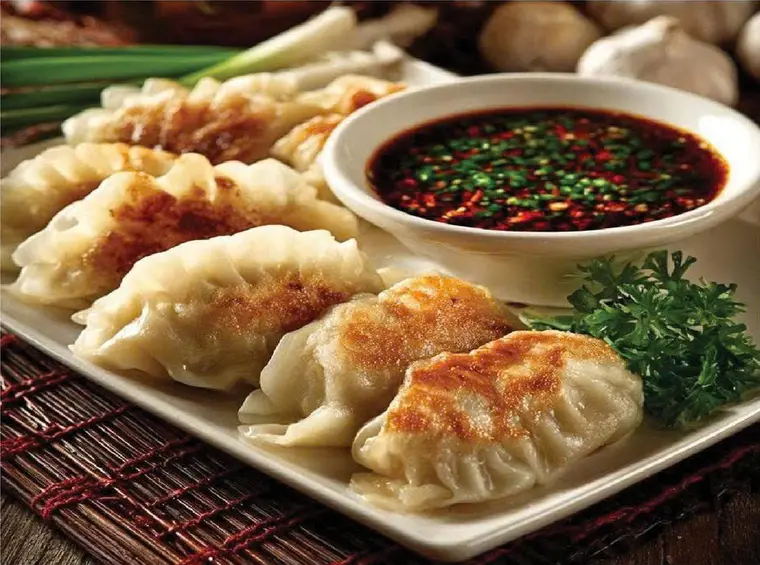
Korean dumplings is how many Vietnamese diners refer to mandu (만두) – pockets of meat and vegetable filling wrapped in a dough skin, which can be steamed, fried, or cooked in soup. Although similar to Chinese jiaozi and steamed buns, mandu has its own character: a bold filling with kimchi, glass noodles, scallions, garlic, and pork or beef, seasoned with sesame oil and soy sauce. At a Korean BBQ meal, a plate of crispy fried dumplings or piping hot steamed dumplings is a much-loved starter. This article helps you understand what mandu is, how fried and steamed dumplings differ, and how to enjoy them best.
What is mandu?
Mandu is the general name for filled dough-wrapped dumplings in Korean cuisine. The dish has a history of hundreds of years, influenced by Chinese cuisine but strongly Koreanized in its filling and seasoning. Mandu filling usually includes ground pork or beef, tofu, glass noodles, kimchi, scallions, bean sprouts, and garlic. Every family has its own recipe, and mandu are often wrapped together at New Year or on holidays.
The wrapper is made from wheat flour, thin and chewy. Dumplings can be shaped as half-moons, boats, or lotus buds depending on the type. Thanks to this variety, mandu appears in many forms: steamed, fried, boiled for soup, grilled, or even deep-fried.
Popular types of mandu
- Jjin mandu: steamed dumplings, soft and smooth, with a translucent wrapper that keeps the filling moist.
- Gun mandu: pan-fried dumplings, with a golden crisp bottom and a soft body.
- Mul mandu: boiled dumplings eaten in broth, often found in soups.
- Mandu guk: dumpling soup, eaten at New Year.
- Kimchi mandu: filled with tangy, spicy kimchi.
- Gogi mandu: mainly meat-filled.
How are fried and steamed dumplings different?
| Criteria | Fried Dumplings | Steamed Dumplings |
|---|---|---|
| Cooking method | Pan-fried or fried in oil | Steamed |
| Wrapper | Crisp, golden, fragrant with oil | Soft, moist, slightly translucent |
| Filling | Bold, slightly drier | Juicy, sweet with meat flavor |
| Feel | Fun to eat, rich and fragrant | Gentle, light |
| Best for | Those who like crispness, nibbling | Those who prefer light food, or children |
Both are delicious, and the best approach is to order one portion of each to compare. Fried dumplings go well with fizzy drinks, while steamed dumplings go well with hot soup.
What is special about Korean dumpling filling?
What sets mandu apart from Chinese-style dumplings with plain meat filling is the vegetables and the flavor of kimchi or glass noodles. Glass noodles mixed into the filling absorb the meat juices, making the filling soft and juicy. Mashed tofu adds fluffiness. Finely chopped kimchi adds a tangy kick. Scallions and garlic bring a rich aroma. Sesame oil and pepper at the end balance the flavor. Thanks to this complex filling, every bite has layers of flavor: rich, salty, lightly tangy, and fragrant with sesame.
Dipping sauce for Korean dumplings
The simplest dipping sauce is soy sauce mixed with vinegar and a little chili flakes. The sour-salty flavor cuts the richness and makes the dumplings easier to eat. You can add sliced scallions, toasted sesame, or minced garlic. Fried dumplings suit a more sour sauce, while steamed dumplings suit a bolder sauce. If you like spice, add diluted gochujang sauce. See the article Korean BBQ dipping sauces to learn about more kinds of sauces.
Why are dumplings the first thing people order?
There are three reasons dumplings are often ordered at the start of a meal. First, they are small, easy to share and pick up, and need no preparation, so the whole table can start eating as soon as they sit down. Second, the bold filling and oil-fragrant wrapper stimulate the appetite and warm the stomach, preparing for the grilled meats to come. Third, dumplings offer an interesting textural contrast: crisp or soft wrapper, juicy filling, pleasing both fast eaters and those who like to savor slowly.
In addition, dumplings are close to the Vietnamese palate. Vietnamese people are used to steamed buns, bánh giò, and há cảo, so mandu feels familiar yet fresh with the flavor of kimchi and sesame oil. It is a great dish for first-timers to Korean food, since it does not require you to be used to very spicy or unusual flavors.
How to eat dumplings at their best
- Eat them hot: cold fried dumplings lose their crispness, and cold steamed dumplings dry out.
- Bite in half: blow on the juicy filling to cool it and avoid burning your mouth.
- Dip just enough: don’t soak for too long or the wrapper turns soggy.
- Eat with kimchi or pickled radish: the tangy crunch balances the richness.
- Share: dumplings are best enjoyed with friends.
Dumplings in a BBQ meal
Dumplings are a sensible starter because they are light, warming, and do not overpower the main dishes. Crispy fried dumplings give the group something to nibble while the meat cooks. Steamed dumplings suit children and older adults. You can pair dumplings with Pork Belly or Kimchi Soup with Pork for a well-rounded meal. See all dishes as well.
How to wrap basic mandu
Wrapping mandu is not hard but needs patience. First prepare thin round wrappers (store-bought or rolled from wheat dough). Put a spoonful of filling in the center, brush the edge of the wrapper with a little water, fold in half and press the edges tightly to seal. You can pleat with your fingers to make the dumpling pretty and secure. The half-moon shape is the simplest; the round purse shape requires an extra step of pulling the two ends together.
When wrapping, avoid too much filling because the dumplings can tear when steamed. Squeeze the water out of kimchi and vegetables before mixing them into the filling, or the wrapper will turn soggy. Season the filling to taste before wrapping; you can pan-fry a little filling to taste test. After wrapping, if you are not cooking right away, arrange the dumplings on a floured tray so they do not stick together and keep them in the freezer.
Common mistakes when making mandu
- A wet filling makes the wrapper tear during cooking.
- Wrappers left out in the air dry out and are hard to seal.
- Frying over too-high heat burns the wrapper before the filling is cooked.
- Steaming too long makes the dumplings mushy.
Mandu at Korean New Year
At Seollal (Lunar New Year), many Korean families wrap mandu together and cook them into dumpling soup (mandu guk). There is a belief that if you wrap beautiful dumplings, you will have beautiful daughters later, though that is just a family joke. The activity of wrapping dumplings is a chance for the family to gather, chat, and pass down recipes. For this reason, mandu is not just food but also a family memory.
Mandu, gyoza, and há cảo: what is the difference?
Many people find mandu similar to Japanese gyoza and Chinese há cảo (har gow). In shape that is true, but the flavors differ. Japanese gyoza are usually small with thin wrappers, filled with pork and cabbage, pan-fried with a crisp bottom. Cantonese har gow are translucent, shrimp-filled, and steamed. Korean mandu has a richer filling with more vegetables, kimchi, and glass noodles, is usually larger, and is bold with garlic and scallions. Because the flavors differ, it is worth trying, especially if you are already familiar with gyoza or har gow.
Pairing dumplings with other dishes
Fried dumplings pair well with fizzy drinks, spicy rice cakes, or cold noodles. Steamed dumplings pair well with hot soups such as kimchi soup or seaweed soup. When ordering for a large group, order both kinds so everyone can choose freely. A sensible order is dumplings first, grilled meat next, and finally cold noodles or soup to close the meal. This arrangement ensures the meal has light, bold, and then mellow stages.
Dining with family
For families with small children, steamed dumplings with a meat filling are a safe choice. Kids can eat them by hand or with a spoon. Let the dumplings cool a bit and cut them in half to make them easier for the little ones.
Dining as a couple
Couples who like to nibble often choose fried dumplings with a cool drink. A small plate is enough to start before grilling the meat, without filling you up too early.
Things to note when eating dumplings
The hot filling inside can burn your mouth, so blow on it to cool. Fried dumplings contain a lot of oil, so eat them in moderation. People allergic to gluten, soy, or seafood should ask carefully about the ingredients. For small children, cut the dumplings into small pieces to avoid choking.
Nutritional value of dumplings
Dumplings provide starch from the wrapper, protein from meat and tofu, and fiber from vegetables. Steamed dumplings have less oil than fried ones, so they suit people eating light. Fried dumplings have a bolder flavor but more oil. If you want to cut down on oil, you can blot fried dumplings with a paper napkin before dipping. The dipping sauce contains salt and sugar, so don’t dip too much.
For those on a diet, choose steamed dumplings, eaten with fresh greens or a light soup. For children, soft steamed dumplings are easier to digest than fried. For older adults, cut the dumplings small and choose a soft filling.
Mandu in Korean street food culture
Beyond restaurants, mandu appears at street stalls, traditional markets, and convenience stores. Seoul’s Namdaemun and Gwangjang markets are famous for stalls of steaming mandu, where customers stand and eat on the spot, dipping in soy sauce and biting piece by piece. In winter, the steam from the steamer creates a very distinctive, cozy scene. At convenience stores, frozen mandu heated in the microwave is a very common quick meal for students and office workers.
This popularity and accessibility makes mandu a dish nearly every Korean feels attached to. Bringing it onto a BBQ restaurant menu is a natural way to give the meal a familiar, easy-to-share touch.
Frequently asked questions about Korean dumplings
What is mandu?
It is a Korean dumpling with a dough wrapper filled with meat, vegetables, glass noodles, or kimchi, which can be steamed, fried, or cooked in soup.
Fried or steamed dumplings, which is better?
It depends on taste: fried are crisp and fragrant, steamed are soft and juicy. Try both.
Are Korean dumplings spicy?
Mostly not, except the kimchi-filled kind. The heat usually comes from the dipping sauce.
How are Korean dumplings different from Vietnamese steamed buns?
Mandu has kimchi, glass noodles, and tofu in the filling and a thinner wrapper than Vietnamese bánh bao, which has a fluffy dough.
Does Gogizip have dumplings?
Yes. Gogizip serves Fried Korean Dumplings and Steamed Korean Dumplings.
Can children eat dumplings?
Yes. Choose steamed ones, use a mild dipping sauce, and cut them small.
Questions newcomers often ask when ordering dumplings
Newcomers often ask whether dumplings are filling enough. A plate of dumplings is usually just a starter for two to three people, so if you want to be full, you need to order a main dish as well. Another question is whether to order fried or steamed first. The suggestion is to order fried first because the aroma is enticing, then order steamed for a change of flavor. One more worry is whether Korean dumplings suit people who are not used to the smell of kimchi. The answer is yes, because you can choose a meat-and-vegetable filling without kimchi, and the heat comes only from the dipping sauce that you adjust yourself.
Finally, many people ask if dumplings can be eaten alone as a main meal. Absolutely: a plate of dumplings with a bowl of hot soup and a few banchan makes a complete, light lunch. To learn more about banchan, read what is banchan. If you want a heartier meal, see Combo A or Combo C for two people.
Conclusion
Korean dumplings are a friendly, flavorful starter, delicious whether fried crisp or steamed soft. Try them at Gogizip, 93 Đ. Phạm Văn Nghị, Khu đô thị Phú Mỹ Hưng, Tân Hưng, Ho Chi Minh City. Prices exclude 10% VAT.
Craving Korean BBQ? Gogizip BBQ – 93 Pham Van Nghi, Phu My Hung (District 7), open 11:00–23:00 daily. Combos for 2 from 599k VND, for 4 from 1,159k VND (prices before 10% VAT). 9 free banchan, refilled anytime. Some of our staff speak English.