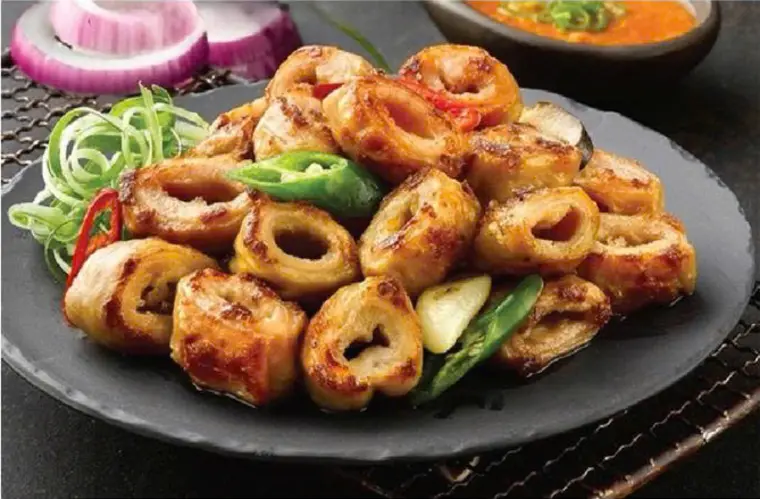
Pan-fried beef large intestines are a dish for those who love a chewy, crisp texture and bold flavor. Unlike intestines grilled directly over a charcoal grate, pan-fried intestines are cooked on a hot pan surface, giving a golden crisp outside and a tender chew inside, evenly seasoned and easier to eat. It is a dish that often appears at drinking tables and friend get-togethers, where everyone eats and chats for a long time. This article explains what beef large intestines are, why pan-frying is a sensible way to cook them, and how to eat them for the best flavor.
What are beef large intestines?
Beef intestines include several parts of the digestive system. Small intestine is soft, fatty, and richly flavored. Large intestine is thicker, chewier and crisper, a little less fatty, with a distinctive bold flavor. When properly prepared, large intestine has an addictive crisp chew, still tasting sweet and rich after long chewing. Because of this firm texture, large intestine suits pan-frying, stir-frying, grilling, and braising.
To Koreans, large intestine is called daechang, one of the favorite offal cuts at drinking restaurants. Meanwhile, in many parts of Vietnam, beef intestines are familiar in dishes like intestines stir-fried with pickled mustard greens, grilled intestines, and phá lấu, so Vietnamese diners get used to Korean-style pan-fried intestines very easily. You can also read the overview article on Korean grilled offal.
Why are large intestines good for pan-frying?
Large intestine has a thick wall and lots of tendon, so grilling it directly over glowing charcoal easily burns the outside before the inside is cooked. Pan-frying solves that problem with indirect heat, which is even and easy to control. When the intestines go into a hot pan, the fat inside melts, forming a natural layer of oil that fries the pieces themselves. As a result the outside is golden and crisp, while the inside keeps a moderate tender chew.
Another advantage of pan-frying is that you can marinate in advance, or add garlic, onion, and pepper right during cooking. This is hard to do with charcoal grilling because seasonings falling onto the coals easily burn. So pan-fried intestine dishes usually have a bolder, more harmonious flavor, which suits people who like a “rice-friendly” dish but do not like an overly strong smoky smell.
Characteristics of quality large intestines
- Ivory or light pink color, not darkened.
- Clean smell, without a strong stench.
- Dry surface, not slimy.
- Moderate thickness, springy when pressed.
How is pan-frying different from charcoal grilling?
| Criteria | Charcoal grilling | Pan-frying |
|---|---|---|
| Heat | Direct from glowing charcoal | Indirect through the pan surface |
| Aroma | Distinctive charcoal smoke | Fragrant fat, garlic, seasoning |
| Crispness | Crisp, burnt edges | Evenly crisp, golden |
| Ease of control | Needs watching | Easier, less burning |
| Best for | People who like smoky aroma | People who like bold seasoning and easy eating |
Pan-frying lets the fat from the intestines run out and fry the intestines themselves, forming a golden crisp crust. Seasonings like garlic, onion, and pepper are added to the pan and soak directly into the intestines. So the overall flavor is bolder and more uniform, with less charring or dryness than direct grilling.
Preparing beef intestines before pan-frying
Proper preparation determines whether the intestines smell or not. First, the intestines are rinsed several times with clean water to remove outside dirt. Then they are scrubbed with coarse salt, flour, or vinegar to remove slime and odor. Next they are briefly boiled with ginger, scallion, and a little rice wine to deodorize completely, then drained dry. Finally, the intestines are cut into bite-size pieces and seasoned according to the dish.
This step takes time but cannot be skipped. A restaurant with a stable process gives guests peace of mind. If you cook at home, spend more time on preparation, because carelessly prepared intestines ruin the whole dish.
Tips for keeping intestines crisp when pan-frying
- Let the intestines dry completely before putting them in the pan.
- Heat the pan first; don’t put intestines into a cold pan.
- Don’t crowd too many at once, to avoid lowering the pan temperature.
- Limit constant flipping so the underside has time to turn golden.
How to eat pan-fried beef large intestines
- Eat them hot: cooled intestines turn tough and lose their aroma.
- Dip in lemon pepper salt or ssamjang: cuts richness and boosts flavor.
- Wrap in greens: lettuce, perilla leaves, and pickled onion help balance.
- Add grilled garlic and chili: fragrance and a little heat.
- Drink a cold beverage: cuts richness so you can eat longer.
Intestine dishes in Vietnamese and Korean drinking culture
In both Vietnam and Korea, intestine dishes are tied to gatherings of friends. Vietnamese people have intestines stir-fried with pickled mustard greens, boiled intestines, phá lấu, and blood sausage, usually eaten with beer and lively conversation. Koreans have grilled gopchang, sundae, and jokbal (pork trotters), usually eaten with soju and beer. What they share is that these dishes are not just for filling the stomach but for prolonging conversation. A plate of pan-fried intestines in the middle of the table, each person with a pair of chopsticks, eating and chatting, is a familiar scene in both cultures.
So when you order pan-fried intestines at Gogizip, you are taking part in a shared tradition of Asian cuisine: sharing, connecting, and relaxing. Order a moderate amount at first, eat slowly, talk a lot, and order more when the group wants to continue.
Pairing suggestions
- Pan-fried intestines + grilled American beef: two kinds of beef, one chewy and crisp, one tender and sweet. See Beef Outside Skirt.
- Pan-fried intestines + kimchi soup: rich and spicy in harmony. See Kimchi Soup with Pork.
- Pan-fried intestines + steamed eggs: silky softness balances the chew. See Steamed Eggs.
Ordering pan-fried intestines for each type of group
Young friends
Order a portion of pan-fried intestines with a portion of cheese rice cakes for both bold and rich flavors. Add fizzy drinks to cut richness. Read the article on cheese rice cakes to choose a snack to go with it.
Coworkers
Pan-fried intestines suit an after-work dinner: bold flavor, easy to share, relaxed atmosphere. Choose the outdoor or air-conditioned area depending on the weather, and see photos on the space page.
Couples
A small portion combined with a combo for two, plus soup for a balanced meal. If you like trying unusual dishes, this is an interesting choice.
How to tell the cuts of intestine when reading a menu
The menus of many restaurants list the intestine cuts in Korean or Vietnamese, which can confuse newcomers. Small intestine is the thin-walled part, fatty, rich and tender when grilled. Large intestine is the thick-walled part, chewier and crisper, a little less fatty. Beef stomach (also called tripe or honeycomb tripe) is crunchy and chewy, usually dipped in hot pot or stir-fried. Sausages and blood sausages are made from intestine and blood, cooked through, with a distinctive flavor.
When unsure, ask staff about chewiness, richness, and preparation to choose the right cut. Gogizip staff are happy to advise based on taste and group size. A simple rule: if you like soft richness, choose small intestine; if you like chewy crispness, choose large intestine; if you like crunchy, choose tripe.
How much should you order?
One portion of intestines is usually enough for two to three people nibbling. For groups of four to six, you can order two portions or one large portion. Because intestines are calorie-dense, you will fill up faster than expected, so order moderately and add more if needed.
Nutrition and healthier eating
Beef intestines contain protein, iron, and zinc but also plenty of cholesterol and saturated fat. To eat more healthily, eat with plenty of greens, cut down on salty dipping sauces, drink enough water, and don’t eat too much at once. Finishing the meal with a light soup or cold noodles helps the body feel more comfortable.
Things to note when eating beef intestines
Beef intestines are rich in cholesterol, so people with high blood lipids, gout, or cardiovascular disease should limit them. Choose a restaurant with a clean preparation process. They should be eaten thoroughly cooked. Small children and people with weak teeth should think twice because intestines are chewy.
Questions newcomers often ask when ordering intestines
The most common question is whether intestines smell. The answer is no if the intestines are prepared and cooked properly. If you are worried, start with a small portion, dip in lemon pepper salt, and wrap in greens to taste. The second question is whether they are too chewy. Large intestine is naturally chewy, but when pan-fried correctly, the chewiness is moderate and makes chewing fun. If you have weak teeth, cut them small or choose softer small intestine.
The third question is when to eat the dish during the meal. Eat it midway through, once you have warmed your stomach with a light dish and before you are too full. The fourth question is whether it suits small children. For small children, be careful because intestines are chewy and fatty; choose softer dishes such as steamed eggs or dumplings.
Finally, many people ask whether they can eat intestines while dieting. Intestines are high in calories and fat, so people losing weight should eat little and focus on vegetables and lean protein. For any questions about the dishes, you can call the hotline 0898 611 611 for guidance from staff before you visit.
Frequently asked questions about pan-fried beef large intestines
How are large intestines different from small intestines?
Small intestine is soft, fatty, and rich. Large intestine is thicker, chewier and crisper, with a bold flavor.
Do pan-fried intestines smell?
If properly prepared and cooked through, intestines do not smell but are rich and fragrant.
How is pan-frying different from charcoal grilling?
Pan-frying cooks on the pan surface, with an evenly golden crisp crust and well-absorbed seasoning; charcoal grilling has a distinctive smoky aroma.
What do you dip intestines in?
Lemon pepper salt, ssamjang, with grilled garlic, pickled onion, and fresh greens.
Does Gogizip have pan-fried beef large intestines?
Yes. Gogizip serves Stir-Fried Large Intestines on the menu.
Who should limit eating intestines?
People with high blood lipids, gout, or cardiovascular disease should limit them or consult a doctor.
Suggested order of dishes in a meal with pan-fried intestines
- Starter: a light dish such as steamed dumplings or steamed eggs.
- Grilled meat: order pork belly or pork collar to start. See Pork Collar.
- Pan-fried intestines: order midway through the meal so the whole table can nibble.
- Beef: order a portion of tender beef for a change of texture.
- Finish: hot soup or cold noodles to soothe the stomach.
This order balances rich, chewy, bold, and light, and ensures you fully enjoy each dish without feeling overwhelmed. If you come in a large group, you can order all the dishes at once but eat them in this order.
Conclusion
Pan-fried beef large intestines are for those who love bold flavor and a chewy, crisp texture. Try them at Gogizip, 93 Đ. Phạm Văn Nghị, Khu đô thị Phú Mỹ Hưng, Tân Hưng, Ho Chi Minh City. Prices exclude 10% VAT.
Craving Korean BBQ? Gogizip BBQ – 93 Pham Van Nghi, Phu My Hung (District 7), open 11:00–23:00 daily. Combos for 2 from 599k VND, for 4 from 1,159k VND (prices before 10% VAT). 9 free banchan, refilled anytime. Some of our staff speak English.