Mention Seoul and many travelers think of Myeongdong right away: a place for shopping, cosmetics and, above all, rows of brightly lit carts selling street snacks every evening. It is one of the best-known street food hubs in Korea, with hot, sweet, spicy, fried and grilled dishes all sold right on the sidewalk. This article introduces popular street foods, how to order, tips for enjoying them, and how you can try Korean flavors in Ho Chi Minh City.
Quick summary: Korean street food includes tokbokki, odeng, hotteok, gyeran-ppang, grilled skewers, tornado potato and many more. For traditional grilled dishes, see the Gogizip menu.
Myeongdong and street snack culture
In Korea, street food is part of urban life. Office workers stop for a fish cake skewer after work, students buy tokbokki after school, and travelers eat as they stroll. Myeongdong is special because of its dense cluster of stalls, with many dishes prepared right in front of you and the aroma spreading all along the street.
Signature street foods
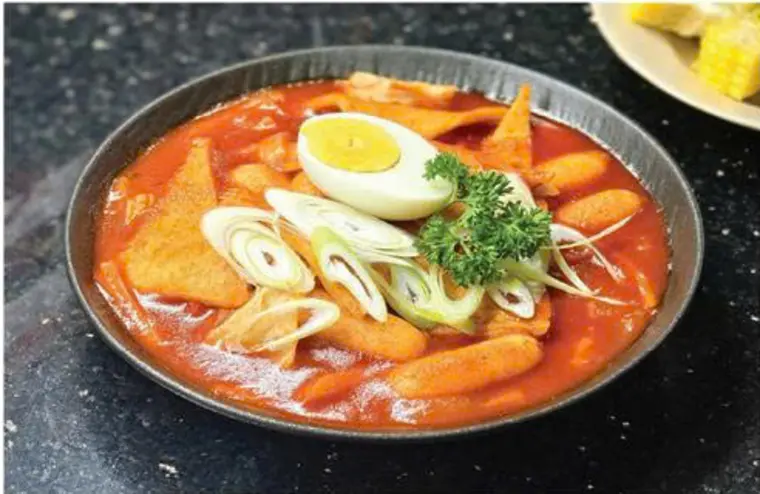
Tokbokki
Chewy, sweet rice cakes in a spicy gochujang sauce, usually eaten with fish cake and boiled eggs. See the details in the article What is Tokbokki.
Odeng (eomuk)
Fish cake skewers simmered in warm broth, eaten with a cup of hot broth, especially good in cold weather.
Hotteok
Yeasted wheat flour pancakes filled with brown sugar, cinnamon and nuts; pan-pressed until golden and eaten hot. There are variations with cheese or vegetable fillings.
Gyeran-ppang
A small egg bread with a whole egg baked inside, with a sweet and savory flavor in every bite.
Grilled skewers (kkochi)
Chicken, beef or pork on skewers, brushed with a sweet and spicy sauce and then grilled, very fragrant.
Tornado potato
A potato cut in a spiral on a stick, fried until crisp and sprinkled with cheese powder or onion seasoning.
Tteok-kkochi
Rice cakes on a skewer, fried and brushed with a sweet and spicy sauce, eaten like a grilled skewer.
Cheese rice cakes
Rice cakes wrapped around stretchy cheese; see the article Cheese rice cakes.
Mini kimbap and steamed buns
Filling snacks sold at many stalls; see also Korean steamed buns and kimbap vs. sushi.
Sweet treats in detail: hotteok, gyeran-ppang, bungeoppang
Hotteok is the “national” winter treat. Wheat dough is kneaded with yeast and allowed to rise, flattened, stuffed with brown sugar mixed with cinnamon and nuts, then placed on a hot oiled griddle and pressed flat with a tool until golden on both sides. Take a bite and the melted sugar inside is scorching hot and can easily burn your mouth, so Koreans are often told to “eat slowly.” Gyeran-ppang is a small oblong cake with a whole egg cracked into the middle and baked in a mold; it has a light sweetness from the batter and a rich savoriness from the egg. Bungeoppang is a fish-shaped cake baked in a mold, filled with sweet red bean paste, with a lightly crisp shell.
Why are hot sweet snacks so loved?
Winters in Korea are very cold, and a hot cake in your hand is both delicious and warming. Many people remember the smell of baked cakes as a childhood memory. For travelers, it is an affordable dish that is easy to eat while walking.
How to order and pay
Stalls usually have a price board or photos of the dishes, and many accept both cards and cash. Just point to the item and say the quantity, and the vendor will make it right away. Some items are packed in a paper cup with a skewer; eat them right away while they are hot.
Savory dishes in detail: grilled skewers, tteok-kkochi, tornado potato
Grilled skewers usually use chicken or pork cut into bite-size chunks, alternating with green onion or rice cakes, brushed with a sweet and spicy sauce and grilled over charcoal or gas. The smell of the caramelizing sauce on the meat is very appealing. Tteok-kkochi is rice cakes on a skewer, fried golden and brushed with a gochujang sauce mixed with honey; there is a version with sausage or cheese. Tornado potato is a potato cut in one continuous spiral around a stick, fried until crisp and sprinkled with cheese powder, onion or sauce; it is a very “photo-worthy” snack popular with young people.
Odeng and hot broth
A skewer of odeng with a cup of broth made from radish, mushrooms and seaweed is an ideal light bite. The broth is usually ladled freely, so many people stand and sip right at the stall. It is also a familiar dish at pocha; read more in the article What is Pocha.
Tips for enjoying street food
- Go in the evening when the stalls are at their busiest, but be prepared to wait in line.
- Bring small change and tissues.
- Eat a moderate amount at each stall so you still have room to try many dishes.
- Choose busy stalls where food is made on the spot.
- Drink water between spicy dishes.
A suggested snack route for an evening in Myeongdong
- Start with something hot: a skewer of odeng and a cup of broth.
- Something spicy: share a portion of tokbokki.
- Something grilled: meat skewers or tteok-kkochi.
- Something fried: tornado potato or cheese rice cakes.
- Dessert: hotteok or gyeran-ppang.
Going in this order, you balance salty, spicy and sweet without getting full too early. If you are in a group, have each person buy one dish and share, so you can try more kinds.
Things to note with spicy and fried food
If you have a sensitive stomach, start with light dishes and drink water regularly. Vegetarians should ask carefully about ingredients, since many broths are cooked with dried fish. People allergic to seafood or eggs need to be especially careful because fish cake and egg bread contain those ingredients.
How do street snacks differ from a main meal?
Street food is usually a quick bite, done in a step or two. A Korean main meal, on the other hand, is a long sit-down meal with many dishes and many people. Grilled meat belongs to the second kind: the whole group gathers around the grill, grilling and wrapping their own food, eating and chatting. If you want to experience both styles, you can have snacks in the afternoon and then a grilled meat meal in the evening.
Bring the flavors of Korean streets home
You do not need to go to Seoul; you can still make a few street foods yourself. Tokbokki needs only rice cakes, gochujang chili paste, sugar, garlic, broth and fish cake. Hotteok can be made from wheat flour, yeast, brown sugar and cinnamon. Grilled skewers need only meat marinated in a sweet and spicy sauce and a grill. What matters is to eat them hot and with friends you like.
You can also read about the pan-fried batter dish in the article What is Pajeon or about the cheese-filled snack in the article Cheese rice cakes.
What does Gogizip serve?
Gogizip is a Korean BBQ restaurant in Ho Chi Minh City. The menu includes beef, pork, soups, hot pots, mixed rice, cold noodles and side dishes. See more on the menu and space pages, or choose Combo E for 2 people.
Myeongdong beyond food: why does this district attract visitors?
Myeongdong is in the center of Seoul, a bustling shopping district with cosmetics stores, fashion shops and shopping malls. In the afternoon, the street is crowded with shoppers; by evening, snack stalls appear on both sides of the road, turning the whole district into a miniature “night market.” International visitors, especially from Asia, often spend the whole evening here: buying cosmetics, trying food, taking photos. It is this combination of shopping and eating that creates its special appeal.
Prices and quality
Because it is in a tourist area, food prices in Myeongdong are usually higher than in residential districts. In return, you get convenience and variety. Some travelers snack in Myeongdong for the experience, then have their real meals in areas with lower prices. For Vietnamese visitors, a way to save is to buy fewer items and share them.
Other famous street food areas
- Gwangjang Market: famous for bindaetteok (fried mung bean pancakes), mini kimbap and mayak kimbap.
- Namdaemun Market: many rustic dishes such as flour-based cakes and hand-cut noodles.
- Hongdae: a young people’s district with many creative street food stalls.
- Dongdaemun: a night market with late-night food.
Standing-and-eating culture and queuing etiquette
In Korea, eating standing at the stall is normal. You take your food, eat right away, throw the trash in the bin placed near the stall, and move on. Koreans value tidiness in public spaces, so keep the habit of taking your trash to the designated place. When queuing, stand in order and do not cut in. These are small rules but show respect, and they are covered in more detail in the article Korean dining etiquette.
Frequently asked questions
What is Myeongdong famous for?
Tokbokki, hotteok, gyeran-ppang, grilled skewers, tornado potato and many other street snacks.
Is Korean street food spicy?
Some dishes are spicy, like tokbokki, but there are also many sweet or lightly salty dishes like hotteok and gyeran-ppang.
When should I go to Myeongdong?
Late afternoon to evening is usually the liveliest because the stalls are fully open.
Is street food safe to eat?
Choose busy stalls, food cooked through on the spot, and keep your hands clean before eating.
Where can I try Korean food in Ho Chi Minh City?
You can visit Gogizip to enjoy Korean BBQ and other Korean dishes.
What are Gogizip’s opening hours?
Gogizip is open 11:00–23:00 every day.
Conclusion
Korean street food is the fastest way to feel the urban rhythm of Seoul. If you want a full meal and a lively gathering, stop by Gogizip at 93 Pham Van Nghi Street, Phu My Hung Urban Area, Tan Hung Ward, Ho Chi Minh City, open 11:00–23:00 every day. Hotline 0898 611 611. Prices exclude 10% VAT.
Craving Korean BBQ? Gogizip BBQ – 93 Pham Van Nghi, Phu My Hung (District 7), open 11:00–23:00 daily. Combos for 2 from 599k VND, for 4 from 1,159k VND (prices before 10% VAT). 9 free banchan, refilled anytime. Some of our staff speak English.