Pocha (포차) is the short name for “pojangmacha,” the orange-tarp-covered food and drink stalls that spring up along Korean streets from early evening until late at night. If you have ever watched Korean dramas, you have surely seen the scene of the main characters sitting in a cozy tent, eating tokbokki, drinking soju, and telling their life stories. This article explains what a pocha is, why it matters to Korean food culture, the dishes you commonly find there, and how to bring that spirit to a get-together with friends in Vietnam.
Quick summary: A pocha is a casual tent-style drinking spot associated with hot dishes, simple drinking snacks, and a warm, friendly atmosphere. For a proper Korean BBQ meal in Ho Chi Minh City, see the Gogizip menu or the dining space.
What is a pocha?
“Pojang” means covered, and “macha” means cart. Originally, a pojangmacha was a pushcart with a tarp cover, selling hot food and liquor to people returning late from work. Over time, many stalls became fixed tents with plastic tables and chairs, small gas stoves, yellow lights, and the signature orange tarps. Today “pocha” is also used to refer to modern retro-style drinking bars in Korea and abroad.
A brief history of the pocha
Roadside night food stalls appeared in Korea in the mid-20th century, when many workers needed a quick, low-cost place to eat. They grew strongly during the urbanization period and then became meeting points for students, office workers, and night owls. At times pocha were tightly regulated for occupying sidewalks, but their image has become deeply embedded in popular culture, often appearing in films, music, and variety shows.
Why the pocha is tied to working people and young people
The pocha holds a special place because it is cheap, fast, and demands no dress code or formality. Someone coming home late from work can stop by, sit down, order a bowl of hot soup and a bottle of soju, and chat with a stranger beside them. Students love pocha because they can eat their fill on a tight budget. Couples on a first date like the pocha because the cozy space seats two close together and makes conversation easier. Many Koreans recall the pocha as part of their youth, where they cried, laughed, and confided after exams or setbacks at work.
This closeness is why the pocha often appears in Korean dramas: a pocha scene is almost the quickest way for characters to speak honestly with each other. International viewers see an orange tent and instantly recognize it as Korea.
The distinctive atmosphere of a pocha
- An orange or translucent white tarp tent, with warm yellow light inside.
- Low tables and stools, sitting close together, so it is easy to strike up a conversation.
- A hot stove right in front of you, with steam rising from pots of soup and tokbokki.
- The owner is usually an older woman or man who calls customers “child” or “young one” in a very friendly way.
- Affordable prices and filling portions.
Dishes commonly found at a pocha
Tokbokki and other rice-flour dishes
Sweet-spicy tokbokki sauce is the signature dish of snack stalls and pocha. You can learn more in our article What is Tokbokki.
Hot soups and small hot pots
Fish soup, egg soup, or small hot pots warm the stomachs of those who drink. See more in Korean soups and stews.
Simple fried and grilled dishes
Fried chicken, grilled squid, sausages, rolled omelets, and crispy fried foods are all popular anju. Read more about fried chicken and beer culture in our article What Is Chimaek.
Scallion pancakes, Korean-style
On rainy days, Koreans often eat pajeon with makgeolli. The details are in our article What Is Pajeon.
Street snacks that often go along with the pocha
Besides the dishes above, the area around a pocha often has stalls selling odeng (fish cake skewers in broth), hotteok (fried pancakes filled with brown sugar), gyeran-ppang (egg bread), and bungeoppang (grilled fish-shaped pastry with red bean filling). In winter, a cup of hot odeng broth is what many Koreans miss most when they are far away.
Odeng and its broth
Odeng is fish cake on skewers, cooked in a pot of broth made with radish and kelp. The broth is served free or very cheaply, and drinking it hot warms you up.
Hotteok
A yeasted wheat-flour pancake filled with brown sugar, cinnamon, and nuts, pan-pressed on an oiled griddle. This warm sweet treat is perfect for cold evenings.
Grilled squid and dried seafood
Shredded grilled dried squid dipped in chili paste and mayonnaise is a classic drinking snack with beer and soju.
How to order and behave at a pocha
Most pocha do not have a long menu. You ask the owner what is available, order one main dish and one drinking snack, and then order more as needed. Koreans have a habit of pouring drinks for others, receiving with both hands, and not pouring for themselves first. At the end, the owner usually totals the bill by what you ate.
Drinking etiquette and table manners
Korean drinking culture has rules worth knowing: younger people pour for elders with both hands, and the receiver also receives with both hands; when drinking with someone older, turn your head to one side and then drink; don’t pour for yourself while others are still sitting beside you. These rules express respect, and in the friendly atmosphere of a pocha they are usually observed lightly, not too strictly. Read more in our article on Korean dining etiquette.
The pocha in film, music, and media
The pocha appears frequently in Korean dramas: a main character breaking up with a lover, losing a job, or getting a promotion can all end the day sitting in a tent. The reason is that a pocha is a “neutral” space: not home, not work, so characters find it easy to speak honestly. Many variety shows also recreate a pocha to let guests chat comfortably. You can read more in our article on food in Korean dramas.
Modern pocha and pocha abroad
In Seoul and Busan, many modern pocha have been redecorated, still keeping the orange tarp and yellow light but with air conditioning and a more varied menu. Abroad, this model has been brought along by Korean communities, and many places have become Korean-style bars.
Ideas for a Korean-style late-night meal at home
If you want to recreate the pocha atmosphere at home, you only need a few dishes: a pot of sweet-spicy tokbokki, a few fish cake skewers, rolled omelet, and a pot of hot soup. Turn on a warm yellow light, set out a low table, invite friends, and let everyone help themselves. A small tip is to prepare dipping sauce separately so that both spicy and non-spicy eaters have their own share.
A pocha-style meal at home doesn’t need to be fussy; what matters is a slow pace, plenty of stories, and no one in a rush to leave.
From pocha to a Korean BBQ meal with friends
What the pocha and a Korean BBQ restaurant have in common is the feeling of togetherness: sitting around one stove, sharing dishes, and talking. Gogizip is a Korean BBQ restaurant, not a pocha, but that spirit of sharing is also in how you order. You can start with the grilled dishes, with banchan, kimchi, and a warming soup, and then set the pace of your meal yourselves.
Drinks commonly found at a pocha
Soju is the drink most closely tied to the pocha: a clear liquor of moderate strength, drunk in small glasses. Cold beer is also very popular, sometimes mixed with soju into “somaek.” On rainy days, makgeolli (cloudy rice wine) is chosen more often because of its mildly sweet-sour taste and its pairing with flour-based dishes like pajeon. See our articles on Korean liquor: soju and makgeolli and What Is Makgeolli. Those who don’t drink can choose a fizzy soft drink, barley tea, or water, and no one will pressure you.
Pocha through the seasons
Winter is the pocha season: steam from pots of soup and tokbokki warms the whole space under the tent, with people sitting close together. In summer, the tarp is rolled up, fans run, and cold beer is preferred. In the rainy season, pajeon and makgeolli take the lead. The way Koreans choose food by weather is also an interesting lesson for anyone who wants refined eating and drinking: hot dishes when it’s cold, cold dishes when it’s hot, crispy fried dishes when it’s humid.
Comparing the pocha with Vietnamese sidewalk drinking spots
Vietnamese people have snail eateries, sidewalk grills, and fresh-beer joints: also casual, also lively, and also tied to late nights. The difference with the pocha is the enclosed tent model, small tables, few seats, an owner who often cooks right in front of customers, and a drink that is mainly soju rather than beer. A pocha also often has an owner who plays the role of “listener,” a familiar image from dramas. In Vietnam, sidewalk eateries lean toward open spaces, many tables, and lively noise. Each culture has its own way of creating a friendly atmosphere.
Similarities
- Casual prices, accessible to all ages.
- A variety of dishes, with sharing as the main idea.
- Tied to after-work hours, weekends, and get-togethers.
Differences
- A pocha is small, enclosed, with a tarp cover; Vietnamese eateries are usually spacious and airy.
- Pocha serve a lot of soju; Vietnamese eateries serve a lot of beer.
- Pocha have many soups and tokbokki; Vietnamese eateries have snails, grills, and hot pots.
Safety notes for late-night eating
Eating late now and then is fine, but don’t overeat or drink too much alcohol. Choose hot, fresh, thoroughly cooked dishes; drink water in between; don’t drive after drinking; and know when to stop. People with stomach conditions, high blood pressure, or on medication should ask a doctor before eating many spicy and salty dishes.
Frequently asked questions about the pocha
Is a pocha a restaurant?
No. A pocha is a casual eatery in the form of a tent or roadside stall, usually open in the evening and late at night.
What does a pocha sell?
Commonly tokbokki, hot soups, fried dishes, scallion pancakes, grilled squid, and drinking snacks that go with drinks.
Does every pocha sell alcohol?
Most do, but some stalls sell only snacks such as tokbokki, odeng, and fish-shaped pastry.
Is Gogizip a pocha?
Gogizip is a Korean BBQ restaurant that operates as a restaurant, not a pocha tent.
Is Korean-style late-night eating unhealthy?
Eat in moderation, favor hot dishes with plenty of vegetables, and limit alcoholic drinks.
What should I do to experience the Korean atmosphere in Ho Chi Minh City?
You can book a Korean BBQ meal with a group of friends, ordering kimchi, banchan, and a soup to feel the spirit of eating together.
Conclusion
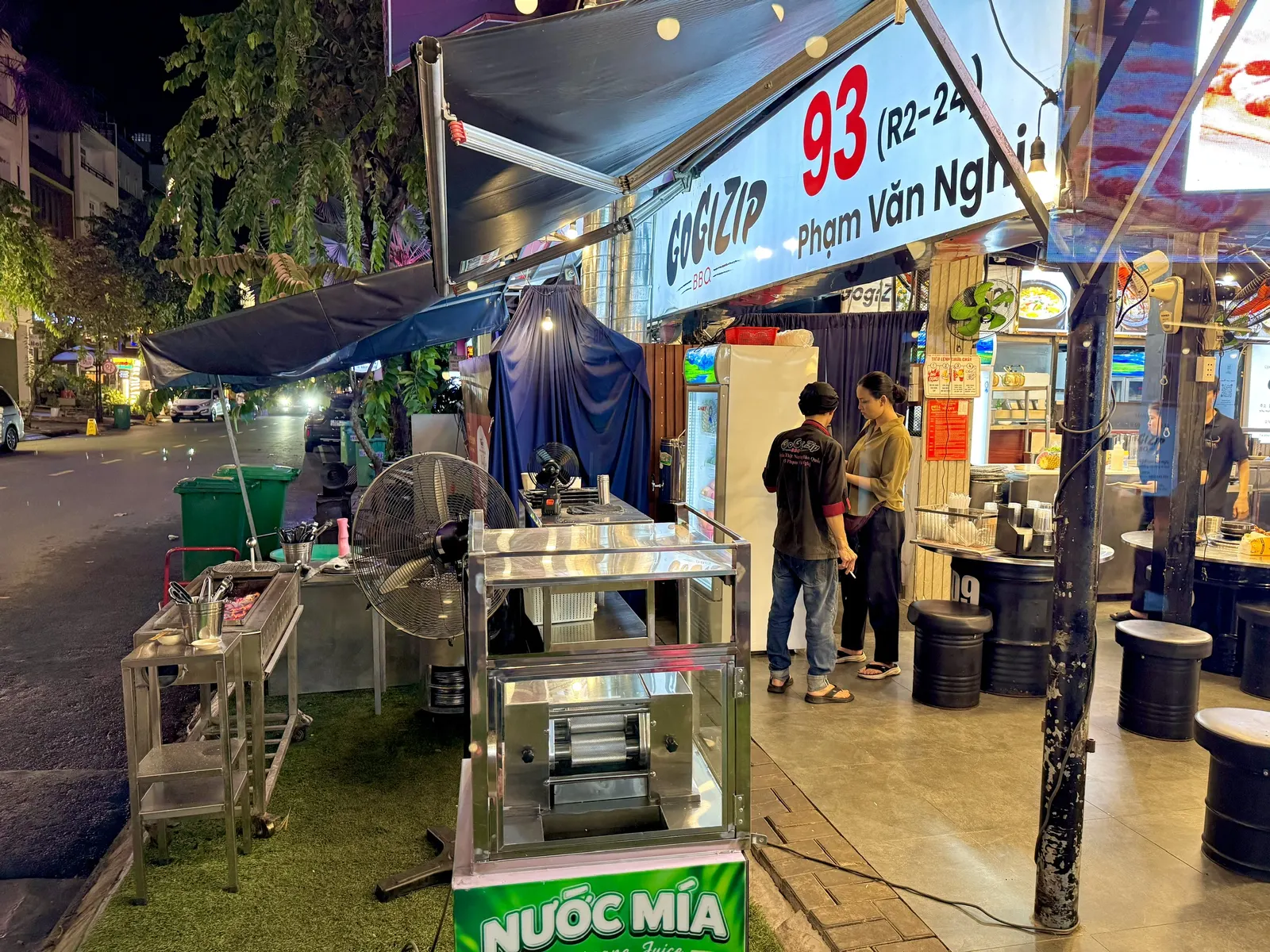
The pocha is not just a place to eat and drink but a shared Korean memory: yellow light, the sound of boiling pots, stories told after a long day. If you want a proper Korean BBQ meal with friends, visit Gogizip at 93 Pham Van Nghi Street, Phu My Hung Urban Area, Tan Hung Ward, Ho Chi Minh City, open 11:00–23:00 every day. Hotline 0898 611 611. Prices exclude 10% VAT.
Craving Korean BBQ? Gogizip BBQ – 93 Pham Van Nghi, Phu My Hung (District 7), open 11:00–23:00 daily. Combos for 2 from 599k VND, for 4 from 1,159k VND (prices before 10% VAT). 9 free banchan, refilled anytime. Some of our staff speak English.