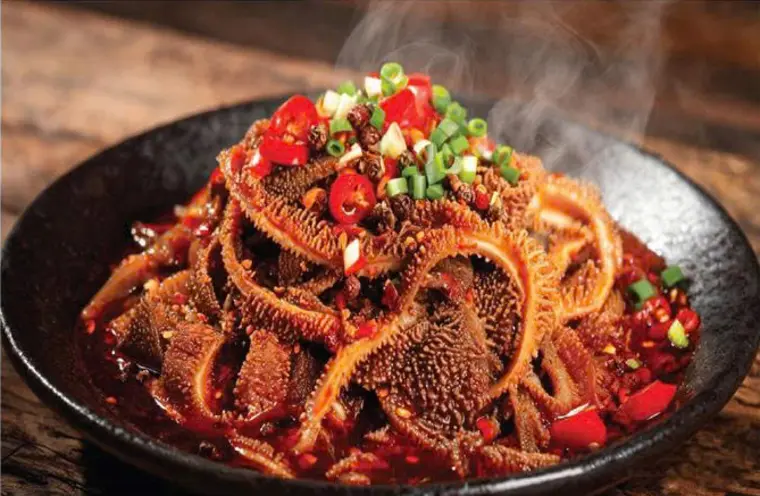
Spicy stir-fried beef tripe is a standout among Korean-style drinking dishes: crunchy pieces of beef tripe (the omasum, or book tripe) quickly stir-fried in a rich sweet-and-spicy sauce with plenty of garlic and green onion. Vietnamese diners already know beef tripe from dishes such as vinegar-pickled tripe, tripe stir-fried with lemongrass and chili, and tripe dipped in hot pot, so when they meet the Korean spicy stir-fried version, many find it very easy to enjoy and quickly get “hooked.” This article explains which part of the cow beef tripe is, why it is so wonderfully crunchy, what to eat it with, and how to enjoy it during a Korean BBQ meal.
Which part of the cow is beef tripe?
Cattle are ruminants with a four-chambered stomach: the rumen, the reticulum, the omasum and the abomasum. Beef tripe here (also called book tripe) is the third chamber, which is made of many layers stacked like the pages of a book, hence the name. Thanks to all those folds, beef tripe has a very distinctive crunchy texture and soaks up sauce well.
In Korean cuisine, this cut is called cheonyeop and is usually eaten raw with sesame-oil salt (hoe style), stir-fried, or grilled. The spicy stir-fried version is the most approachable preparation for most people because its flavor is bold and it goes well with rice.
Why is beef tripe so crunchy?
The multi-layered structure of the omasum creates its special texture. Each thin leaf sits tightly against the next, forming countless tiny crevices. When cooked to just the right point, these layers keep a light crunch and make a characteristic crunchy sound as you chew. If cooked too long, the layers shrink, becoming chewy and tough. If undercooked, the tripe is still tough and has an off smell. That is why beef tripe is usually cleaned thoroughly, briefly boiled, and only then stir-fried quickly over high heat to keep its crunch.
This explains why beef tripe tastes best right after it is stir-fried: the outside is coated in sauce while the inside stays crunchy. As it cools, the crunch gradually fades, so you should eat it as soon as it is served. This quality also makes beef tripe a dish to “eat hot and nibble slowly,” which suits drinking culture perfectly.
Beef tripe in Vietnamese cuisine
In Vietnam, beef tripe is prepared in many ways: vinegar-pickled tripe eaten with fresh herbs, tripe stir-fried with lemongrass and chili, tripe dipped in hot pot, and tripe stir-fried with pickled vegetables. These dishes lean toward sour, spicy and lemongrass-fragrant flavors. The Korean spicy stir-fry uses gochujang and garlic, giving a rich, sweet, slightly fermented taste that is quite different. If you are used to Vietnamese-style beef tripe, trying the Korean version will feel refreshingly new.
Flavor and texture of spicy stir-fried beef tripe
- Crunchy: a fun, satisfying bite that is not tough or hard.
- Sweet and spicy: gochujang sauce, chili powder and sugar create a balanced flavor.
- Garlic and green onion aroma: a rich fragrance as it is stir-fried.
- Lightly rich: tripe is low in fat, lighter than intestines.
How to prepare beef tripe properly
Beef tripe has many crevices, so it easily holds dirt and odors. It must be prepared carefully. First, separate each leaf and rinse under running water to remove impurities. Next, soak it in lightly salted water or rice-rinse water for several tens of minutes. Then scrub it with coarse salt combined with vinegar or lemon to remove odors. Finally, briefly boil it with ginger, lemongrass and green onion for a few minutes, then remove it and soak it in ice water to keep it crunchy.
The ice-water step is very important because it firms up the tripe and preserves its crunch when stir-fried. Afterward, the tripe is cut into bite-size pieces, drained, and then either seasoned or put straight into the pan with the sauce. The restaurant follows this process, so the tripe is always clean, fragrant and evenly crunchy. If you cook at home, do not skip any step.
Common mistakes when stir-frying beef tripe
- Stir-frying too long makes the tripe shrink and turn chewy.
- A pan that is not hot enough makes the tripe release water and lose its crunch.
- Adding lots of sauce at the start makes the sauce burn before the tripe is cooked.
- Stir-frying too large a batch at once lowers the pan temperature.
How to eat spicy stir-fried beef tripe
- Eat it hot: cold tripe becomes chewy and loses its crunch.
- Eat it with steamed rice: the rice soaks up the spicy sauce and makes the dish very satisfying.
- Wrap it in greens: perilla leaves, lettuce and pickled onion add a refreshing note.
- Dip in salt, pepper and lime: if you want a change of flavor.
- Pair it with steamed egg or soup: to soften the heat.
Other ways to eat beef tripe besides spicy stir-fry
To understand the ingredient better, it helps to know that beef tripe can be prepared in many ways. Raw beef tripe (hoe) thinly sliced and dipped in sesame-oil salt is a traditional Korean dish for those who eat raw food, and it requires extremely fresh ingredients. Boiled beef tripe dipped in soybean paste or ginger fish sauce is a light way to eat it. Beef tripe dipped in hot pot keeps its crunch when briefly cooked in boiling broth. Vietnamese-style tripe stir-fried with lemongrass and chili is strongly lemongrass-flavored. Grilled beef tripe with chili salt is a different way to enjoy it.
Among these, the spicy stir-fry is the easiest to eat, because the sweet and spicy sauce covers the characteristic smell of the tripe and adds richness. That is why this dish is often chosen as the first drinking snack for people who are not used to eating offal.
Spicy stir-fried beef tripe in a Korean BBQ meal
Spicy stir-fried beef tripe plays the role of a change-of-pace dish. After rich pieces of meat, the tripe brings a crunchy, spicy, refreshing feel that keeps the meal from becoming monotonous. You can combine it with Pork Belly, Beef Outside Skirt and Kimchi Soup with Pork. Take a look back at our articles on pan-seared large beef intestines and grilled offal for more drinking dishes.
Beef tripe compared with other kinds of offal
| Type | Texture | Richness | Best for |
|---|---|---|---|
| Beef tripe (omasum) | Crunchy | Low | Spicy stir-fry, hot pot |
| Young intestines | Soft, rich | High | Grilling |
| Large intestines | Chewy and crisp | Medium | Pan-searing, grilling |
| Stomach (yang) | Crisp and chewy | Low | Grilling, stir-frying |
The table above helps you choose by taste: if you like something light, pick beef tripe; if you like rich and fatty, pick young intestines; if you like chewy and crisp, pick large intestines or stomach. At Gogizip, you can try a few kinds to compare the experience, for example spicy stir-fried beef tripe together with Stir-Fried Large Intestines and Grilled Beef Intestine.
Suggested combinations for different groups
A group of close friends out for drinks
Order spicy stir-fried beef tripe as the snack, along with a portion of pan-seared intestines and cheese rice cakes for variety. Add grilled meat to fill up. Cold fizzy drinks help ease the heat and cut the richness.
A group of coworkers
Spicy stir-fried beef tripe is easy to share, not too greasy, and not too heavy, which makes it a good fit for dinner after work. Order a soup as well to round out the meal.
An adventurous couple
One small portion of spicy stir-fried beef tripe with a combo for two is enough. Choose a moderate level of spice and order steamed egg to soothe your palate. See our article on Korean steamed egg to learn more.
Nutrition of beef tripe
Beef tripe is rich in protein, low in fat and lower in calories than many other cuts of meat, and it also provides iron and zinc. However, a spicy stir-fry usually contains a fair amount of oil, sugar and salt, so it should be eaten in moderation. People who need to limit cholesterol or purines should consult a doctor. Pairing it with fresh vegetables and a light soup helps balance the meal.
Things to keep in mind when eating beef tripe
Beef tripe must be washed clean and cooked thoroughly. People with gout or high blood fats should limit it. Spicy dishes are not suitable for young children or people with stomach problems. Choose a restaurant you trust for the source of its ingredients.
Spicy stir-fried beef tripe: try it once to see if it suits you
Not everyone loves beef tripe on the first try. The crunchy chew can feel unfamiliar to people used to soft meat, and the fact that it is offal sometimes makes people hesitant. But for those who have tried it, the dish usually leaves a good impression thanks to its fun crunch and rich sweet-and-spicy flavor. Our advice is to try it with an open mind, wrap it with greens, dip it in sauce, and not worry too much. If it is not for you, you still have dozens of other dishes to choose from.
When you come with a group, do not hesitate to order a small portion so everyone can try. Many people are surprised that the dish is not as “scary” as they thought, and some even order a second portion. That is also how food widens circles of friends and creates memories: trying something new together and laughing at each other’s reactions.
Common questions when ordering beef tripe for the first time
- Does beef tripe smell gamey? No, if it is prepared properly, there is only the aroma of the seasonings and sauce.
- Should I order it very spicy? Start at a moderate level, then adjust to your taste.
- Should I eat it before or after the grilled meat? Usually in the middle of the meal or alternating with the meat for a change of flavor.
- How many people does one portion serve? About two to three people nibbling, or four people if used as a tasting dish.
Frequently asked questions about spicy stir-fried beef tripe
What is beef tripe?
It is the omasum (book tripe) of the cow, with many layers stacked like the pages of a book, and it is crunchy when prepared properly.
Does spicy stir-fried beef tripe smell bad?
If it is prepared thoroughly, beef tripe does not smell bad; it is fragrant and delicious.
What do you eat beef tripe with?
Eat it with steamed rice, wrapped in greens, or with steamed egg or soup.
Is spicy stir-fried beef tripe very spicy?
Usually medium to very spicy. If you do not handle spice well, order something mild alongside it.
Does Gogizip serve spicy stir-fried beef tripe?
Yes. Gogizip serves spicy stir-fried beef tripe.
Who should limit eating beef tripe?
People with gout, high blood fats or a weak stomach should limit it.
Why are Korean-style drinking dishes so addictive?
Korean drinking dishes (anju) are designed to be eaten with drinks, so they usually have bold flavors, interesting textures and are not too filling. Spicy, salty, rich, crunchy and chewy are the elements that stimulate the palate and make people want to reach for another bite. Spicy stir-fried beef tripe combines most of these elements: crunchy, sweet and spicy, garlicky and not too filling. That is why it has become a familiar drinking dish.
In addition, because Korean dining culture is communal, anju dishes are usually placed in the middle of the table and everyone picks from them together. Sharing food creates a sense of closeness and intimacy. Even if you do not drink alcohol, you can still enjoy this spirit with a fizzy soft drink, cold tea or fruit juice.
Other famous Korean anju
- Fried chicken (chicken): eaten with beer, called chimaek.
- Tokbokki: spicy rice cakes, a popular nibbling dish.
- Pajeon: crispy green onion pancake, eaten with rice wine.
- Gopchang: rich grilled intestines.
- Dakbal: fiery chicken feet.
- Grilled dried squid: chewy, fragrant and full of flavor.
Tips for enjoying spicy stir-fried beef tripe to the fullest
Eat this dish in small rounds. When the plate of beef tripe has just come out, the steam and garlic aroma are at their most appealing. Pick up a piece, let it cool for a few seconds, and bite in to feel the crunch. Then dip it in a little of the sauce left on the plate or wrap it in lettuce. If you are eating with rice, scoop a spoonful of rice with a piece of tripe and let the sweet heat spread in your mouth.
Finally, do not leave the leftover sauce. Mix a little steamed rice with the red sauce on the plate, sprinkle on some seaweed or toasted sesame, and you will have a simple spicy sauce rice that is surprisingly delicious. This is a familiar habit in Korean restaurants, making use of all the flavor of the dish. Come to Gogizip and try it yourself, or call 0898 611 611 to reserve a table in advance. See also our menu.
Conclusion
Spicy stir-fried beef tripe is a crunchy, fiery drinking dish that is easy to eat and easy to share. Try it at Gogizip, 93 Pham Van Nghi Street, Phu My Hung Urban Area, Tan Hung Ward, Ho Chi Minh City. Prices exclude 10% VAT.
Craving Korean BBQ? Gogizip BBQ – 93 Pham Van Nghi, Phu My Hung (District 7), open 11:00–23:00 daily. Combos for 2 from 599k VND, for 4 from 1,159k VND (prices before 10% VAT). 9 free banchan, refilled anytime. Some of our staff speak English.