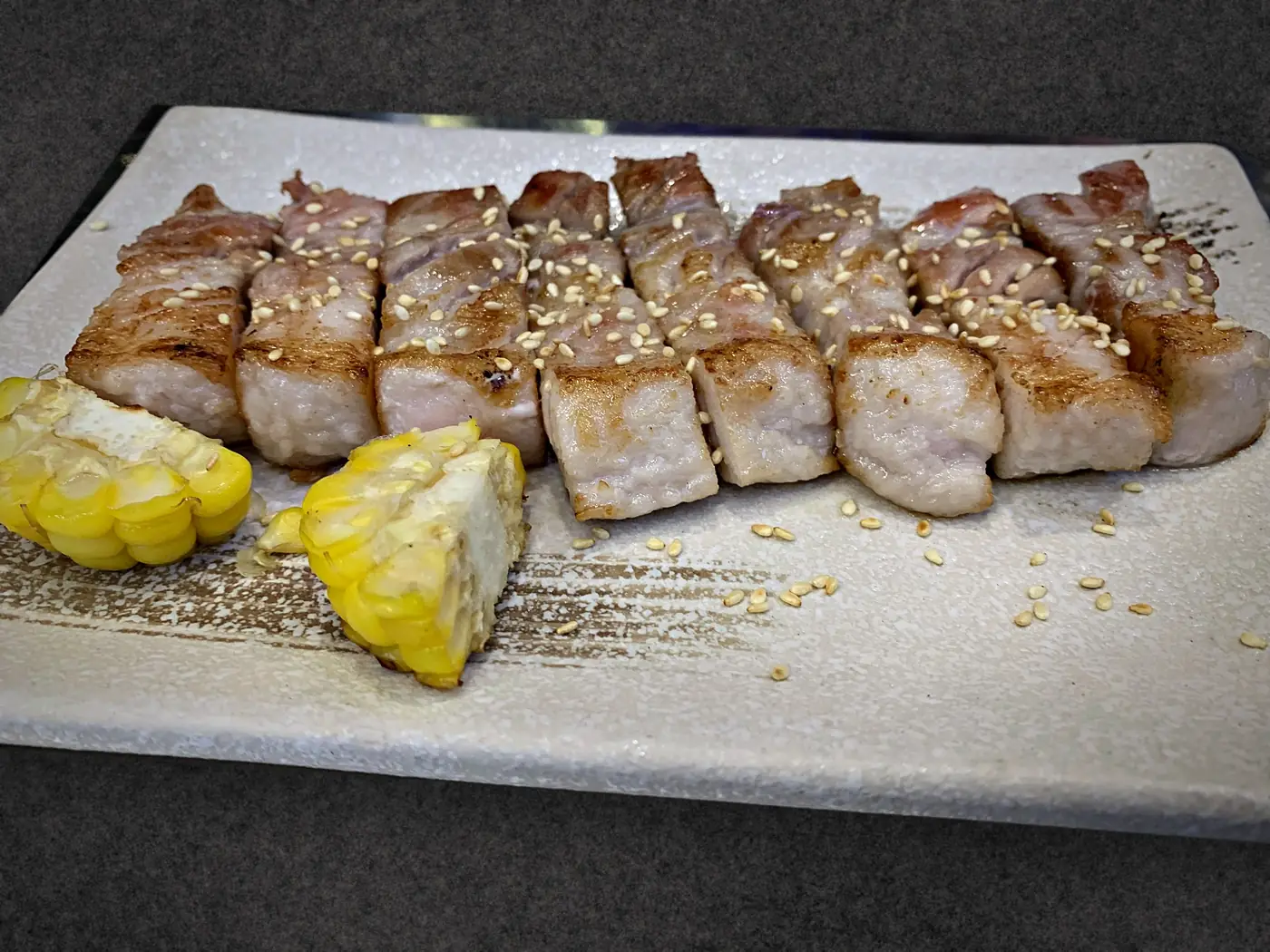
📍 Want to try samgyeopsal grilled over charcoal in Saigon? See Korean BBQ in District 7: Gogizip, 93 Pham Van Nghi, Phu My Hung. Pork belly 179,000₫, 9 free banchan, English-speaking staff, open 11:00–23:00. Book 0898 611 611.
What is samgyeopsal?
If you have ever seen a plate of thick-cut pork laid on a grill, the fat sizzling, and the whole table wrapping the meat in lettuce, chances are you have met samgyeopsal (삼겹살). It is Korea’s most popular grilled meat, and put simply, it is Korean-style grilled pork belly.
The name samgyeopsal combines three parts: sam (삼) means three, gyeop (겹) means layer, and sal (살) means meat. Literally, it is “three-layer meat,” because when you cut across a piece of pork belly, you can clearly see the layers of lean meat and fat stacked in alternation. This structure is what gives the dish its flavor: the fat melts as it grills and seeps into the lean meat, making it rich, fragrant and never dry.
In Korea, samgyeopsal is almost the default “get-together” meal. Coworkers heading out after work, friends reuniting after a long time, families gathering around the grill on weekends: they often all choose samgyeopsal. Even March 3rd (3/3) is jokingly called “samgyeopsal day” by many Koreans, because the number 3 matches the “sam” in the dish’s name. This article will help you understand the dish, how to choose the cut, how to grill it and how to eat it properly.
If you would like to read more about why Koreans love grilled meat and charcoal grills, see Korean BBQ Culture. This article focuses on one specific dish: pork belly.
Why is samgyeopsal so beloved?
A balance of lean meat and fat
The first appeal of samgyeopsal is its balance. The fat provides richness, while the lean meat keeps the firmness and natural sweetness of pork. When grilled over charcoal or a hot grill, the outside tightens and turns golden and crisp while the inside stays tender. Every piece has two different textures in a single bite, which is why many people never get tired of it.
An interactive, shared way of eating
Samgyeopsal is not just something to eat; it is an experience. The whole table grills, flips and cuts together, then wraps a ssam to their own taste. Grilling meat for others, or wrapping a ssam and handing it to the person next to you, is often seen as a gesture of care. That makes this dish perfect for fun get-togethers.
Flexible for every taste
A plate of pork belly can become many different dishes depending on how you eat it: dip it in sesame oil with salt and pepper to taste the pure flavor of the meat, dip it in ssamjang for a richer taste, wrap it with kimchi for extra tang and heat, or eat it with hot rice as a main meal. This flexibility suits both those who like mild flavors and those who like bold ones.
Popular grilled pork cuts besides pork belly
Once you are used to pork belly, you will want to try other pork cuts. Each cut has its own richness, crispness and flavor, and ordering several at once makes the grilling more fun. Here are the cuts you will commonly see.
Pork belly (samgyeopsal, 삼겹살)
This is the cut from the belly of the pig, with alternating layers of lean meat and fat. Pork belly is the default choice to start with: easy to enjoy and suitable for almost everyone. If you want to try it, see Gogizip BBQ’s charcoal-grilled Pork Belly page for portion sizes and prices.
Pork collar (moksal, 목살)
Pork collar has alternating lean meat and fat but is usually less greasy than pork belly. The meat has a light crispness, is fun to chew, and suits people who like a moderately bold flavor without too much fat. You can learn more on the grilled Pork Collar page.
Pork jowl (hangjeongsal, 항정살)
Pork jowl comes from the area under the chin and is famous for its distinctive crispness and richness. Each piece is small but full of flavor, grills quickly and smells wonderful. See details on the Pork Jowl page.
Pork loin and pork skin
Besides the three cuts above, the grilled pork menu also includes pork loin, which is sweeter and leaner, and crispy grilled pork skin for those who like a chewy, crunchy texture. You can take a look at the Special Pork Loin Meat and Grilled Pork Skin. For those who prefer pre-marinated meat, Marinated Pork Ribs are also worth considering.
If you are not sure what to order, a combo is the simplest way. Combo A is for 2 people and includes pork belly, pork collar, pork jowl and a complimentary serving of Tokbokki; Combo B has similar items at double the weight, suitable for a group of 4.
How to grill samgyeopsal the Korean way
Grilling samgyeopsal is not difficult, but a few small details make the difference between “just okay” meat and “surprisingly delicious” meat. Here are the basic principles.
1. Heat the grill before adding the meat
The grill or charcoal needs to be hot enough that the meat sizzles lightly when it touches. A hot surface makes the meat tighten quickly, locks in the juices and creates a golden crust. If you place the meat on a cold grill, it tends to stick and cook unevenly.
2. Lay the meat in a single layer, not overlapping
Place the slices with a little space between them so each piece is in direct contact with the heat. Piling the meat up makes it steam instead of grill and it loses its crispness.
3. Do not flip constantly
A common mistake is flipping the meat too many times. Let each side sit until golden before flipping. This gives the meat an even golden crust, crisp outside and tender inside.
4. Cut the meat with scissors once cooked
In Korea, people usually use scissors to cut large pieces of meat into bite-sized pieces right on the grill. Once the meat is golden and cooked, you can cut it into small pieces and grill it for another round so the cut surfaces also turn golden and crisp, adding more aroma.
5. Use the fat to grill side dishes
Do not throw away the rendered fat. Place sliced garlic, onion, kimchi or mushrooms on the grill so they soak up the meat’s fat and turn golden. Kimchi grilled in pork fat has a mellow tang and a lovely aroma, and goes very well with the meat.
6. Eat while the meat is hot
Samgyeopsal is best right off the grill. Cold meat can feel greasy because the fat solidifies. So grill in small batches instead of putting a lot of meat on at once.
How to eat samgyeopsal: the art of the ssam wrap
Ssam (쌈) in Korean means “wrap.” This is the signature way to eat samgyeopsal and the most enjoyable part of the meal. A complete ssam usually includes:
- A leaf layer: a lettuce or perilla leaf (kkaennip leaf, 깻잎), laid flat in your palm.
- The meat: one or two bite-sized pieces of pork belly.
- Dipping sauce or sauce: a little ssamjang or sesame oil with salt and pepper.
- Accompaniments: grilled garlic, pickled scallions, kimchi or a slice of chili.
Then you wrap everything into one mouthful-sized bundle and eat it in a single bite. Koreans often stress “eating it in one bite” to experience all the layers of flavor: the richness of the meat, the coolness of the leaf, the depth of the sauce and the light heat of garlic or chili.
What is ssamjang?
Ssamjang (쌈장) is the signature dipping sauce for wraps, usually made from soybean paste (doenjang) and chili paste (gochujang), plus seasonings such as garlic and sesame oil. Ssamjang tastes salty, slightly sweet and mildly spicy, with a deep flavor that goes well with rich pork.
Sesame oil with salt and pepper (gireumjang)
If you prefer something lighter, you can dip the meat in a mixture of sesame oil, salt and pepper. The nutty aroma of sesame oil brings out the natural sweetness of the meat without overpowering it. This is a way of eating that many Koreans like when they want to taste the quality of the meat.
Pickled scallions and other accompaniments
Scallion strips mixed with vinegar, sugar and chili flakes (pajeori) or onions pickled in vinegar help balance the richness and add a light tang. Together with grilled garlic and kimchi, you can enjoy many different “versions” of ssam in a single meal. To learn more about these side dishes, read What Is Banchan?.
What should you eat with samgyeopsal?
A well-rounded samgyeopsal meal usually includes more than just meat. Here are combinations that many people choose.
Hot soups and stews
The sour heat of Kimchi Soup with Pork balances the richness of pork, so this pairing is almost a classic. The soup also makes the meal more filling, especially when eaten with rice. If you prefer something light, seaweed soup is an easy choice too.
A cool dish to finish
After a rich, fragrant grill, many Koreans order a bowl of cold noodles to “reset the palate.” Cold Noodles with Soup, with its cool broth and chewy noodles, cleanses the palate and ends the meal gently.
Greens, scallions and fresh seasonings
Do not skip the greens. Lettuce, perilla leaves, garlic, chili and scallions are essential for making ssam. Fresh vegetables make the meal less greasy and give a refreshing feeling, especially when the weather is hot.
Drinks
In Korea, samgyeopsal is usually enjoyed with soju or beer, and this is part of the dining culture. However, you can absolutely choose tea, soft drinks or water as you like; what matters is that the meal is fun and in moderation.
Common mistakes when grilling and eating samgyeopsal
- Grilling before the grill is hot enough: the meat tends to stick and cook unevenly.
- Putting too much meat on at once: the heat drops quickly, the meat steams and loses its crispness.
- Flipping the meat too often: the meat struggles to form a golden crust.
- Leaving the meat on too long: pork belly can still turn dry and tough if overcooked.
- Eating only meat, skipping greens and dipping sauces: it gets heavy after a few bites; wrap ssam to balance the flavors.
- Discarding the rendered fat: it is a wonderful “ingredient” for grilling kimchi, garlic and onions.
Suggestions for enjoying samgyeopsal by group
Couples or groups of 2
Two people can start with one portion of pork belly, add a portion of pork collar or jowl for a change of texture, and a shared soup. If you want to keep it simple, choose a combo for 2 so you do not have to weigh each dish.
Groups of 4 friends
A group of 4 should order 3 different types of meat and grill in several rounds so everything is eaten hot. A plate of sides or starters such as seafood and green onion pancake, tokbokki or cheese rice cakes will make the table even richer.
Families with young children
For young children, cut the meat into very small pieces and cook it thoroughly. Mild dishes such as steamed eggs or beef seaweed soup will make it easier for kids to eat. You should also keep the spicy dipping sauce separate for the adults.
Frequently asked questions about samgyeopsal
What is samgyeopsal?
Samgyeopsal (삼겹살) is thick-sliced pork belly grilled on a stove and wrapped with greens and dipping sauce. The name means “three-layer meat,” referring to the alternating layers of lean meat and fat in the cut.
How is samgyeopsal different from ordinary grilled pork belly?
In terms of ingredients, both are pork belly. The difference lies in how it is enjoyed: thicker slices, grilled directly on the grill, cut with scissors when cooked, and eaten as ssam wraps with many side dishes.
What should I eat with samgyeopsal so it is less heavy?
Wrap it with lettuce or perilla leaves, and eat it with grilled garlic, pickled scallions and kimchi. Ordering kimchi soup or cold noodles also helps balance the richness.
Which pork cut should I choose for my first time?
Pork belly is the easiest choice because its flavor is balanced and loved by many. If you want something less fatty, try pork collar; if you like crisp richness, pork jowl is an interesting choice.
How long should I grill samgyeopsal?
It depends on the thickness of the meat and the heat of the grill. Grill until both sides are golden and crisp, the meat is fully cooked and no pink remains inside, then cut it into small pieces and grill for another round for extra aroma.
Can I eat samgyeopsal without spice?
Absolutely. Dip the meat in sesame oil with salt and pepper or wrap it with fresh greens, and avoid ssamjang and spicy kimchi. Samgyeopsal itself is not spicy; the heat only comes from the sauces and side dishes.
Enjoy samgyeopsal at Gogizip BBQ
Gogizip BBQ is a Korean BBQ restaurant at 93 Pham Van Nghi Street, Phu My Hung Urban Area, Tan Hung Ward, Ho Chi Minh City, open from 11:00 to 23:00 every day. The menu includes pork belly, pork collar, pork jowl, pork loin, pork skin and marinated pork ribs, along with a variety of soups, cold noodles and starters. You can view the full menu, check out the restaurant’s space with its outdoor area, open-air air-conditioned area and closed air-conditioned room, or browse the all dishes page.
Prices on the menu exclude 10% VAT. To book a table or confirm current prices, call the hotline 0898 611 611.
Quick recap
- Samgyeopsal (삼겹살) is Korean-style grilled pork belly; the name means “three-layer meat.”
- Popular grilled pork cuts include pork belly, pork collar, pork jowl, pork loin and pork skin.
- Grill when the grill is hot enough, do not pile the meat, flip sparingly and cut with scissors once cooked.
- Eat it as ssam: a leaf, the meat, dipping sauce or ssamjang and accompaniments.
- Pair it with kimchi soup and cold noodles to balance the richness of the meat.
Craving Korean BBQ? Gogizip BBQ – 93 Pham Van Nghi, Phu My Hung (District 7), open 11:00–23:00 daily. Combos for 2 from 599k VND, for 4 from 1,159k VND (prices before 10% VAT). 9 free banchan, refilled anytime. Some of our staff speak English.