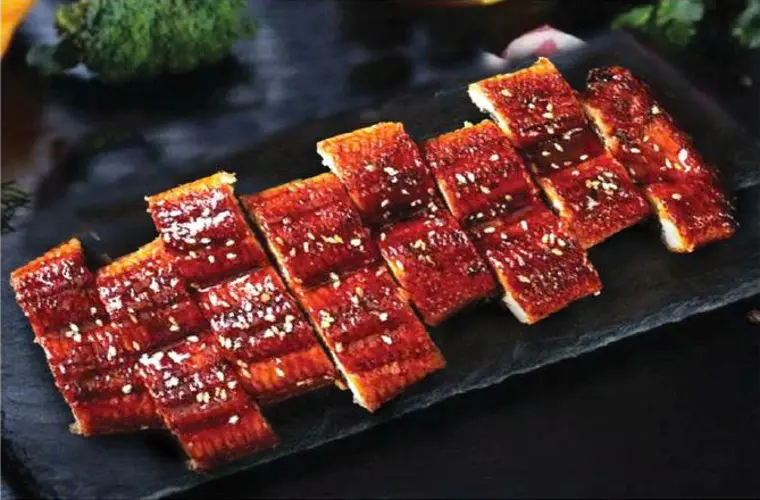
Korean-style grilled eel (jangeo-gui, 장어구이) is a charcoal-grilled seafood dish with a golden crisp exterior, rich tender flesh inside, and a smoky aroma. In Korea, eel is regarded as a restorative food, usually eaten on sweltering days or when one needs to regain strength. Vietnamese diners are already familiar with eel dishes: eel stir-fried with lemongrass and chili, eel braised with banana and tofu, eel porridge, so when they meet Korean grilled eel, many find it both familiar and new. This article explains what jangeo-gui is, how to grill it, what to eat it with, and why it is so beloved at the BBQ table.
What is jangeo-gui?
Jangeo means eel and gui means grilled. Jangeo-gui is grilled eel, usually opened, deboned, and cut into pieces or left as a long fillet, marinated in sauce or salted, then grilled over a charcoal stove. There are two popular styles: salt-grilled (sogeum-gui), which keeps the natural flavor, and spicy or sweet sauce-grilled (yangnyeom-gui), brushed with a bold sauce. The eel is grilled until the skin is crisp and the flesh rich, with rendered fat giving off a fragrant, buttery aroma.
At many Korean BBQ restaurants, eel is one of the seafood dishes ordered together with meat, because its clean richness is quite different from beef or pork, adding variety to the meal.
Why do Koreans consider eel a restorative food?
In Korean food culture, on the hottest days of summer (called bok-nal), there is a custom of eating hot, nourishing dishes to regain strength, described as “fighting heat with heat.” Ginseng chicken soup (samgyetang) is the most famous, but grilled eel is also a restorative dish many people choose. This belief is a traditional cultural notion, not a medical claim, but it explains why eel often appears on menus during hot weather.
Nutritionally, eel provides protein, unsaturated fats, and some vitamins such as A and B. However, because it is rich in fat, you should eat a moderate amount. If you want another restorative dish, see Chicken Stewed with Korean Ginseng on the Gogizip menu.
Eel in Asian cuisine: how do Vietnamese, Japanese, and Korean styles differ?
Eel is a common ingredient in many Asian countries, but each place prepares it in its own way. The Japanese are famous for unagi kabayaki: eel grilled in a sweet-salty tare sauce, eaten with rice in an unaju box. Vietnamese cuisine has eel stir-fried with lemongrass and chili, eel braised with banana and tofu, eel soup, and eel porridge, leaning toward the bold flavors of local seasonings. Koreans have jangeo-gui, salt-grilled or spicy-sauce-grilled over charcoal, eaten wrapped in greens with ginger and garlic.
The main difference in the Korean style is the “ssam” way of eating: grilled eel is not only eaten on its own but wrapped in greens with condiments, so the richness of the eel is balanced by fresh vegetables and spicy ginger. This is also the spirit that runs through the whole Korean BBQ meal. If you already love Japanese or Vietnamese eel, try the Korean style as well to see how one ingredient can have many faces.
What is Japanese eel?
The name “Japanese eel” is commonly used to refer to a medium-sized eel with thick, fatty flesh, often used in Japanese cuisine as unagi. The flesh of this type is soft and rich with few small bones, so when grilled it makes an attractive and easy-to-eat result. For Korean-style grilling, this eel is a great fit because the thick flesh does not dry out easily over charcoal.
How to grill eel well
- Choose fresh eel and clean it well: remove the slime, innards, and large bones.
- Grill over medium heat: eel is fatty, and too-high heat will burn the skin before it is cooked.
- Grill the flesh side first: then flip to the skin side to crisp the skin.
- Brush the sauce on in thin layers: don’t apply too much at once, to avoid burning the sugar.
- Grill until glossy golden: the flesh is cooked tender and the skin fragrant and lightly crisp.
- Eat right away while hot: cold eel easily turns fishy and tough.
What to eat grilled eel with
- Pickled ginger: the mildly sour-spicy flavor cuts richness and removes fishiness.
- Grilled garlic: fragrant and sweet, pairs beautifully with eel.
- Perilla leaves and lettuce: wrap a piece of eel with greens for a lighter bite.
- Pickled onion: mildly sour and crisp, cleansing the mouth.
- Dipping sauces: salt and pepper, sweet soy sauce, or ssamjang.
See the articles on ssam and BBQ dipping sauces to learn how to wrap and dip.
Two grilling styles: salt-grilled and sauce-grilled
Salt-grilled keeps the natural flavor of the eel, with only a little coarse salt and sesame oil. This style suits people who like a clean taste and want to experience the full rich sweetness of the eel flesh. Sauce-grilled is brushed with a sweet-salty or mildly spicy sauce, creating a glossy caramelized crust, deeply fragrant, and suited to people who like bold flavor. At many restaurants, customers often order one portion of each to compare.
When eating salt-grilled eel, dip it in a little salt and pepper or sesame oil. When eating sauce-grilled eel, eat it with plenty of greens and ginger to balance the deep sweetness. Whichever style you choose, note that eel is high in fat and can get heavy, so eat in small pieces with greens.
Pickled ginger: the eel’s companion
Thinly sliced ginger pickled in vinegar and a little sugar is a familiar side for grilled eel. The mild heat of ginger removes fishiness, cleanses the palate, and stimulates digestion. Just place a slice of ginger on a piece of grilled eel, wrap it in a perilla leaf, and eat; you will find the richness is balanced very naturally.
Grilled eel in a BBQ meal
Eel is usually ordered as the second grilled dish after meat, or as a change of flavor. The clean richness of eel is quite different from pork belly or beef, creating a new rhythm for the meal. For groups with someone who doesn’t like red meat, eel is an excellent alternative. However, because eel has its own smell, eat it with ginger, garlic, and greens to balance. At Gogizip, you can combine Grilled Eel with Pork Belly or Pork Collar to enjoy two different kinds of richness.
Suggestions for enjoying grilled eel by group
Dining as a couple
A small portion of grilled eel with a combo for two makes a varied meal. Eel feels more “special” than ordinary meat, suited to an anniversary. Add a vegetable or light salad dish to balance.
Dining with friends
Order a large plate of eel to share. Everyone wraps in their own way and tries different dipping sauces. Groups with many people who like trying new things will love this dish.
Dining with family
Eel is soft and, when grilled properly, has few small bones, so older adults find it easy to eat. For small children, check carefully for bones and cut into small pieces. Don’t give eel to children who have never tried seafood.
Choosing drinks to go with grilled eel
Iced tea, ginger tea, lemonade, or soda are choices that cut richness. For adults, light beer or Korean rice wine is also a traditional pairing. Drink responsibly and do not drive after drinking alcohol. Read more about Korean drinks in the article on Korean liquor.
Things to note when eating eel
Eel must be cooked thoroughly for safety. People with seafood allergies should avoid it. People with high blood lipids or cardiovascular disease should eat it in moderation. Do not eat dead eel or eel that has been left out for long. Choose a reputable restaurant with clear ingredient sourcing.
Questions newcomers often ask about grilled eel
Newcomers often worry whether eel is fishy or has lots of bones. With quality eel, carefully prepared and grilled properly, there is almost no fishy smell, replaced by the rich aroma of grilled fat. As for bones, eel is usually opened and the large bones removed, and the small bones become soft when grilled, so they rarely bother you. If you are still worried, start with a small salt-grilled portion and see how you feel.
Another question is when to eat eel during the meal. Generally it is best in the middle of the meal, after a few rounds of boldly flavored meat, for a change of pace. If eaten too early, the richness of eel can fill you up quickly; if too late, you may have no room left. The key is to eat it while it is hot, and don’t forget the greens, ginger, and garlic.
Finally, many people ask whether eel suits people on a diet. Eel is rich in protein but also high in fat, so those trying to lose weight should eat moderate amounts. If you have a particular medical condition, consult a nutrition professional before eating.
Frequently asked questions about Korean grilled eel
What is jangeo-gui?
It is Korean-style grilled eel, salt-grilled or sauce-grilled over charcoal.
Is grilled eel fishy?
If properly prepared and cooked through, eel is rich and fragrant, not fishy. Eating it with ginger and garlic helps remove any odor.
When do Koreans eat eel?
Usually when they need to restore strength, especially on hot summer days, according to traditional food beliefs.
What goes well with grilled eel?
Pickled ginger, grilled garlic, perilla leaves, lettuce, pickled onion, and salt and pepper or sweet sauce.
Does Gogizip have grilled eel?
Yes. Gogizip serves Grilled Eel on the menu.
Who should limit eating eel?
People with seafood allergies, high blood lipids, or cardiovascular disease should limit it or consult a doctor.
Grilled eel: a dish of patience
Unlike meats that cook in a minute, grilled eel takes more time and attention. Grilling until the skin is crisp, the flesh cooked evenly, and the sauce clings in a glossy layer is not a matter of a few seconds. You need patience to watch the color, flip at the right moment, and keep the heat moderate. That process is what makes the dish memorable: the whole table waits together, watches the eel slowly turn golden, then picks up the first piping-hot piece together.
Many diners say they love grilled eel not just for the taste but for that moment of waiting. It is when you have time to chat, to laugh, to truly be present at the meal. Perhaps that is also why the Korean spirit of “eat slowly, grill slowly” is so beloved by many.
Storing and reheating grilled eel
If you cannot finish, you can take it home, but grilled eel is best straight off the grill. When reheating, use an oven or a nonstick pan over low heat to crisp the skin again, and avoid the microwave, as eel easily turns tough and loses its aroma. Eat it the same day and keep it in the refrigerator. Do not leave eel at room temperature too long, especially in the hot, humid weather of Ho Chi Minh City.
Finally, remember that every time you enjoy grilled eel is a chance to slow down. You can see more dishes in the Gogizip dishes and reserve by calling the hotline 0898 611 611 for a comfortable seat.
Conclusion
Grilled eel is an interesting change of flavor in a BBQ meal: cleanly rich, smoky, and a great match with ginger and greens. Try it at Gogizip, 93 Đ. Phạm Văn Nghị, Khu đô thị Phú Mỹ Hưng, Tân Hưng, Ho Chi Minh City. Prices exclude 10% VAT.
Craving Korean BBQ? Gogizip BBQ – 93 Pham Van Nghi, Phu My Hung (District 7), open 11:00–23:00 daily. Combos for 2 from 599k VND, for 4 from 1,159k VND (prices before 10% VAT). 9 free banchan, refilled anytime. Some of our staff speak English.