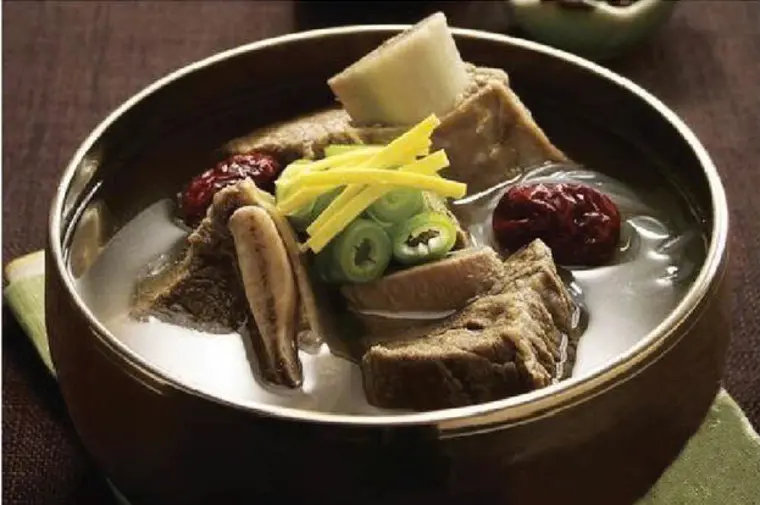
Korean beef rib soup (galbitang, 갈비탕) is a signature braised soup of Korean cuisine: beef ribs simmered for hours in a clear, cleanly sweet broth and served with glass noodles, radish and egg. Unlike spicy soups such as kimchi soup, galbitang has a mild, clean flavor that warms the stomach, and it is considered a nourishing dish often served on holidays, at family feasts and when you need to regain your strength. At Gogizip, you can enjoy Beef Rib Soup as well as the Ginseng Beef Rib Soup, rich with the aroma of herbs. This article explains what galbitang is, how it is made and how to enjoy it.
What is galbitang?
Galbi means ribs and tang means a braised soup. Galbitang is therefore a rib soup. The dish is made from beef ribs (usually meaty short ribs) simmered for a long time with radish, green onion, garlic and ginger to give a clear, sweet, fragrant broth. When served, glass noodles, shredded fried egg and green onion are added. The broth is usually lightly seasoned, and diners add salt, pepper or green onion to their own taste.
Galbitang is a dish for formal occasions: weddings, birthday celebrations, meals for welcoming guests. It is also easy to digest, suitable for older adults and for people who want to eat lightly but still get good nourishment. That is why you will often see galbitang on the menu of Korean restaurants next to the grilled dishes.
Which cut of beef rib is used for galbitang?
In Korean cuisine, the beef ribs used for galbitang are usually short ribs cut into pieces, with both bone and meat. The bones make the broth cleanly sweet, while the meat becomes meltingly tender when simmered long enough yet still keeps its grain. Some places use ribs with cartilage, which gives the broth a slight body. Properly simmered rib meat comes off the bone easily, falling apart at a touch of the chopsticks, without being dry.
Unlike grilled ribs (galbi), which are usually heavily marinated and grilled over charcoal, ribs for soup are left with their natural flavor so that the broth stays clear and clean. That is why two dishes sharing the name “galbi” taste completely different. If you want to compare, read our article Korean grilled beef: galbi and LA galbi.
Why does the broth need to be clear?
A clear broth is a sign of patience and technique. The cook has to soak the ribs, blanch them briefly, skim the foam, simmer over low heat and skim the fat. A cloudy broth usually comes from cooking over high heat, not soaking out the blood, or skipping the skimming step. When the broth is clear, the natural sweetness of the bones shines through without any gamey smell.
Bone broth: the secret to a cleanly sweet flavor
- Soak the ribs to remove blood: soak the ribs in cold water for several hours, changing the water a few times so the broth stays clear.
- Parboil and skim the foam: blanch the ribs in boiling water for a few minutes and discard the first water.
- Simmer over low heat: cook at a low simmer until the meat is tender and the broth is sweet.
- Add radish and green onion: they create a natural sweetness.
- Skim the fat: remove the layer of fat on top so the broth is clean.
- Season lightly: so diners can adjust to their own taste.
What goes in a bowl of galbitang
- Glass noodles (dangmyeon): chewy sweet potato noodles that soak up the broth and turn soft and silky.
- White radish: simmered until tender, cleanly sweet.
- Shredded fried egg (jidan): for decoration and a light richness.
- Green onion: sprinkled on top for aroma.
- Mushrooms or jujubes: included in some traditional recipes.
Each component has a role: the glass noodles give texture, the radish gives sweetness, the egg adds color, and the green onion adds fragrance. Together, the bowl becomes harmonious, nourishing and beautiful.
Galbitang for holidays and family
In Korea, galbitang often appears at big holidays such as Lunar New Year, the Mid-Autumn festival and longevity celebrations. The dish symbolizes thoughtfulness and family affection, because making it takes a long time and a lot of effort. Many families pass the recipe down through generations, each household with its own way of seasoning. If you want to learn more about Korean holiday food, stay tuned for upcoming articles on Seollal and Chuseok on our news page.
Ginseng Beef Rib Soup
The ginseng version adds ginseng to the broth, creating a distinctive herbal aroma, with a slight bitterness that finishes sweet. Ginseng is a traditional ingredient in Korean cuisine, often used in restorative dishes such as chicken stewed with ginseng. Not everyone is immediately used to the taste of ginseng, but many people love its warmth and difference. Read more about another restorative dish at Chicken Stewed with Korean Ginseng.
Please note that the benefits of ginseng belong to traditional belief; this is a food, not a medicine. People with medical conditions or who are taking medication should ask a doctor before consuming a lot.
Beef rib soup and other Korean braised soups
| Dish | Characteristics | Flavor |
|---|---|---|
| Galbitang (beef rib soup) | Clear broth, beef ribs, glass noodles, radish | Cleanly sweet, mild |
| Seolleongtang | Milky white broth from long-simmered beef bones | Lightly rich, clean |
| Samgyetang | Young chicken stewed with ginseng | Herbal, warming |
| Kimchi jjigae | Spicy, sour kimchi soup | Spicy, sour, bold |
| Doenjang jjigae | Soybean paste soup | Salty, nutty, umami |
The table above helps you picture where galbitang sits in the family of Korean braised soups: gentle, clean, good for people who do not eat spicy food, and completely different from the red spicy soups. If you like bold flavors, try adding Kimchi Soup with Pork or soybean paste soup to your meal.
How to eat beef rib soup the right way
- Taste the broth first: notice its natural sweetness.
- Season with salt and pepper as you like: the dish is usually left lightly seasoned.
- Eat the rib meat with your hands or chopsticks: the meat is tender and comes off the bone easily.
- Eat with steamed rice: put the rice in the broth or eat it separately.
- Add kimchi or pickled radish: the crisp sourness balances the soup.
Who should order beef rib soup?
- People who do not eat spicy food: the broth is mild and not spicy at all.
- Families with young children: easy to eat, lightly seasoned, tender meat.
- Older adults: a soft braised dish that is easy to digest.
- People who want a warming meal: on rainy days, or after recovering from an illness.
- People who want a change after lots of grilled meat: light and clean, it balances the meal.
Enjoying the soup in your own style
Some people like to eat the soup as the main dish with rice, sipping the broth and picking the rib meat off little by little. Others like to alternate the soup with grilled meat, taking a spoonful of soup after a few bites of meat to soothe the palate. Others like to put rice into the soup bowl and eat it like a thin porridge. Every way is right; eat the way that makes you most comfortable.
Beef rib soup in a Korean BBQ meal
A BBQ meal is usually heavy on protein and smoke, and a bowl of cleanly sweet beef rib soup soothes and warms the stomach. You can order it along with Pork Belly or Beef Outside Skirt. Take a look back at our article on Korean soups and stews to learn about other kinds of soup.
Making galbitang at home: a summary of the steps
Ingredients for about four people: one kilogram of young beef ribs, half a white radish, a handful of sweet potato glass noodles, green onion, garlic, ginger, soy sauce, salt, pepper and eggs. Soak the ribs in cold water for about two to three hours to remove blood, changing the water a few times. Blanch the ribs in boiling water for five minutes, discard the water and rinse. Put the ribs into a pot of fresh water, add garlic, ginger and green onion, and simmer over low heat for about two hours, skimming constantly. Add the radish cut into chunks and simmer for another half hour. Soften the glass noodles in boiling water and fry a thin egg and cut it into strips. Season the broth with a little soy sauce, salt and pepper, and ladle it into a bowl with the glass noodles, egg and green onion.
The dish takes time but is not complicated. The secret lies in patience. The restaurant prepares large batches, so the broth has a consistently rich flavor. If you do not have time, coming to Gogizip is the quickest way to enjoy a bowl of authentic rib soup.
Notes
The soup is hot, so blow on it to cool it before eating. People with digestive problems should eat a moderate amount. People who are allergic to ginseng or are being treated for an illness should ask a doctor.
Nutrition of beef rib soup
Beef rib soup provides protein from the meat and bones, natural collagen from the cartilage, some minerals such as calcium and magnesium from the bone broth, and carbohydrates from the glass noodles and radish. Because it is cooked in liquid, it uses less oil than fried or stir-fried dishes, but if the fat is not skimmed well, the fat content can rise. The sodium content depends on seasoning; season lightly and add just enough salt. People who need to limit blood fats or salt should choose lean pieces of meat, skim the fat thoroughly and limit how much thick broth they drink.
How the soup is served at Gogizip
The beef rib soup is served hot, with a bowl of rice and basic side dishes. If you order it with grilled meat, our staff will advise on when to bring out the soup so it stays hot. Be sure to blow on it to cool it before eating, especially for young children. If you are eating it with rice, you can order extra steamed rice separately.
The restaurant is open from 11:00 to 23:00 every day, and you can choose the airy outdoor area or the air-conditioned area. See photos on our space page, and reserve a table through the hotline 0898 611 611.
Frequently asked questions about beef rib soup
What is galbitang?
It is Korea’s braised beef rib soup, with a clear, sweet broth, served with glass noodles, radish and egg.
Is beef rib soup spicy?
No, it is mild and clean, and usually lightly seasoned.
How is Ginseng Beef Rib Soup different from the regular soup?
The ginseng version has an added distinctive herbal aroma, with a slight bitterness that finishes sweet.
Can children eat beef rib soup?
Yes, because the dish is not spicy and is easy to eat. Season lightly and cut the meat small.
Does Gogizip have beef rib soup?
Yes. Gogizip has Beef Rib Soup and Ginseng Beef Rib Soup.
When do you eat beef rib soup during a meal?
Usually as a main dish or with rice, and you can order it along with grilled meat.
Suggested pairings for beef rib soup with other dishes at Gogizip
- Beef Rib Soup + grilled pork belly: cleanly sweet and rich and fragrant. See Pork Belly.
- Beef Rib Soup + steamed dumplings: a light, warming meal. See Korean dumplings.
- Beef Rib Soup + steamed egg: a gentle pair for those who like mild food.
- Ginseng Beef Rib Soup + steamed rice: a simple nourishing meal.
Each pairing gives a different feel. What matters is that you choose dishes to suit your taste and needs, and enjoy them at an unhurried pace. A good meal is not only about the food but also about the comfort of sitting with the people you love.
Conclusion
Beef rib soup is a cleanly sweet, warming and nourishing soup. Try it at Gogizip, 93 Pham Van Nghi Street, Phu My Hung Urban Area, Tan Hung Ward, Ho Chi Minh City. Prices exclude 10% VAT.
Craving Korean BBQ? Gogizip BBQ – 93 Pham Van Nghi, Phu My Hung (District 7), open 11:00–23:00 daily. Combos for 2 from 599k VND, for 4 from 1,159k VND (prices before 10% VAT). 9 free banchan, refilled anytime. Some of our staff speak English.