Watching Korean dramas, many people share the same feeling: hungry while watching. A steaming pot of tokbokki, slices of pork belly sizzling on the grill, a bowl of icy cold noodles, a roll of kimbap hurriedly packed before a picnic… all make viewers want to order right away. This article explains why food plays such an important role in Korean dramas, the dishes that often appear and what they mean, and how you can enjoy them in real life.
Quick summary: Food in Korean dramas is often a storytelling language: eating together means closeness, eating alone means loneliness, and cooking for each other means love. To try real Korean BBQ, see the Gogizip menu.
Why do Korean dramas so often film eating scenes?
In Korean culture, a common greeting is not only “how are you?” but also “have you eaten yet?”. A meal is a way of showing care. So an eating scene in a drama is rarely there just to fill running time: it reveals the relationships between characters, their moods, and even their living circumstances.
Eating together means closeness
Koreans share dishes, pick up food for each other, and share a pot of soup. A scene of two characters sitting at the same table, picking up a piece of meat for each other, often signals a relationship that is warming up.
Eating alone means loneliness or self-care
A bowl of instant noodles late at night can speak of exhaustion; a full meal cooked for oneself can speak of growing up.
Cooking for others is love
A character cooking porridge for someone who is sick or packing a lunchbox for someone taking an exam are familiar scenes, showing love expressed through small actions.
Food as a language of emotion
Korean filmmakers understand that a global audience doesn’t need subtitles to understand an eating scene. When a character picks up food into the other person’s bowl, when they sip hot soup together, when someone quietly saves the best piece for the person they love, it says more than a long line of dialogue. Food also reveals class, region, and era: the plain table of a working family differs from the luxurious restaurant of a chaebol family, while a grandmother’s countryside cooking opens up childhood memories.
This explains why, after each famous drama, many dishes “go viral” abroad. Viewers don’t just want to eat a dish; they want to recapture the feeling of that scene: the warmth, the closeness, the laughter at the table.
Three kinds of eating scenes you often see
- Celebration scenes: grilled meat, drinks, the whole group clinking glasses after a success or a long day.
- Comfort scenes: a bowl of hot soup, a bowl of porridge, instant noodles after a mishap.
- Romantic scenes: sharing a snack, wrapping meat for the other person, sharing a bowl of cold noodles.
The dishes that appear most
Grilled meat (samgyeopsal, galbi)
A scene of a whole group gathered around a grill is the symbol of a company dinner, a celebration meal, or colleague bonding. You can read more in our articles on Korean BBQ culture and cuts of grilled pork.
Tokbokki and snacks
Students stopping at a snack stall after school, a couple sharing a plate of tokbokki: familiar images of youth. See more in What is Tokbokki.
Instant noodles and cold noodles
Noodles cooked in a small pot and eaten straight from the pot lid are an almost default image for late nights. Cold noodles (naengmyeon), on the other hand, are tied to summer and to a meal after grilled meat; see Korean cold noodles.
Kimbap and lunchboxes
Kimbap is the dish you bring along on a picnic, to school, or to an exam. It is also the dish a mother packs for her child.
Seaweed soup
A soup tied to birthdays and to women who have just given birth. See more in Korean birthdays and seaweed soup.
Fried chicken and beer
A couple eating late in front of the TV, or friends watching soccer, is a popular image. See the article What Is Chimaek.
The pocha tent bar
The place where characters confide with a glass of soju in hand. See the article What Is a Pocha.
Home-style meals in Korean dramas
Beyond the “eating out” dishes, Korean dramas also depict family meals very concretely: a bowl of white rice, soup, a few plates of banchan (side dishes), and one main dish. You will see kimchi, seasoned vegetables, rolled omelet, braised fish, and pan-fried tofu placed in the middle of the table for everyone to pick from. If you want to learn more, read our articles What Is Banchan and What Is Kimchi.
One small detail: the rice bowl and spoon are placed in their proper spots, and the youngest waits for the eldest to pick up the spoon first. This is something you can see in family meal scenes and is explained in more detail in our article on Korean dining etiquette.
Drinks and memorable moments
Soju, beer, makgeolli, and barley tea often appear with the corresponding dishes. Cloudy rice wine suits rainy days and scallion pancakes, beer suits fried chicken, and soju suits hot soup and grilled dishes. See more in our article on Korean liquor: soju and makgeolli. For those who don’t drink alcohol, soft drinks, tea, or water are perfectly normal.
How to eat grilled meat the Korean drama way
To get that picture-perfect “meat wrap” like in the dramas, place a lettuce or perilla leaf in the palm of your hand, add a piece of freshly grilled meat, a little ssamjang, a few slices of garlic or pickled onion, then fold it up and eat it whole in one bite. For details see our articles Ssam: wrapping grilled meat in lettuce and perilla and What Is Ssamjang.
Tips for grilling meat as well as in the dramas
In the dramas, meat is always grilled to a beautiful golden doneness. In real life, the secret is fairly simple. For beef, prefer tender cuts such as outside skirt or top blade, grill over high charcoal heat for about a minute per side, and dip in sesame-oil salt. For pork, pork belly should be grilled until the fat turns clear and the edges are slightly crisp. Don’t flip constantly; let one side cook through before flipping. Eating with pickled onions in soy sauce, grilled garlic, and perilla leaves will balance the richness. See details in our articles on onions pickled in soy sauce and vinegar and perilla leaves.
Charcoal or gas?
A charcoal grill gives a distinctive smoky aroma, while a gas grill feels clean and easy to control. Each has its own strengths; read charcoal or gas grill to choose.
Dining at Gogizip
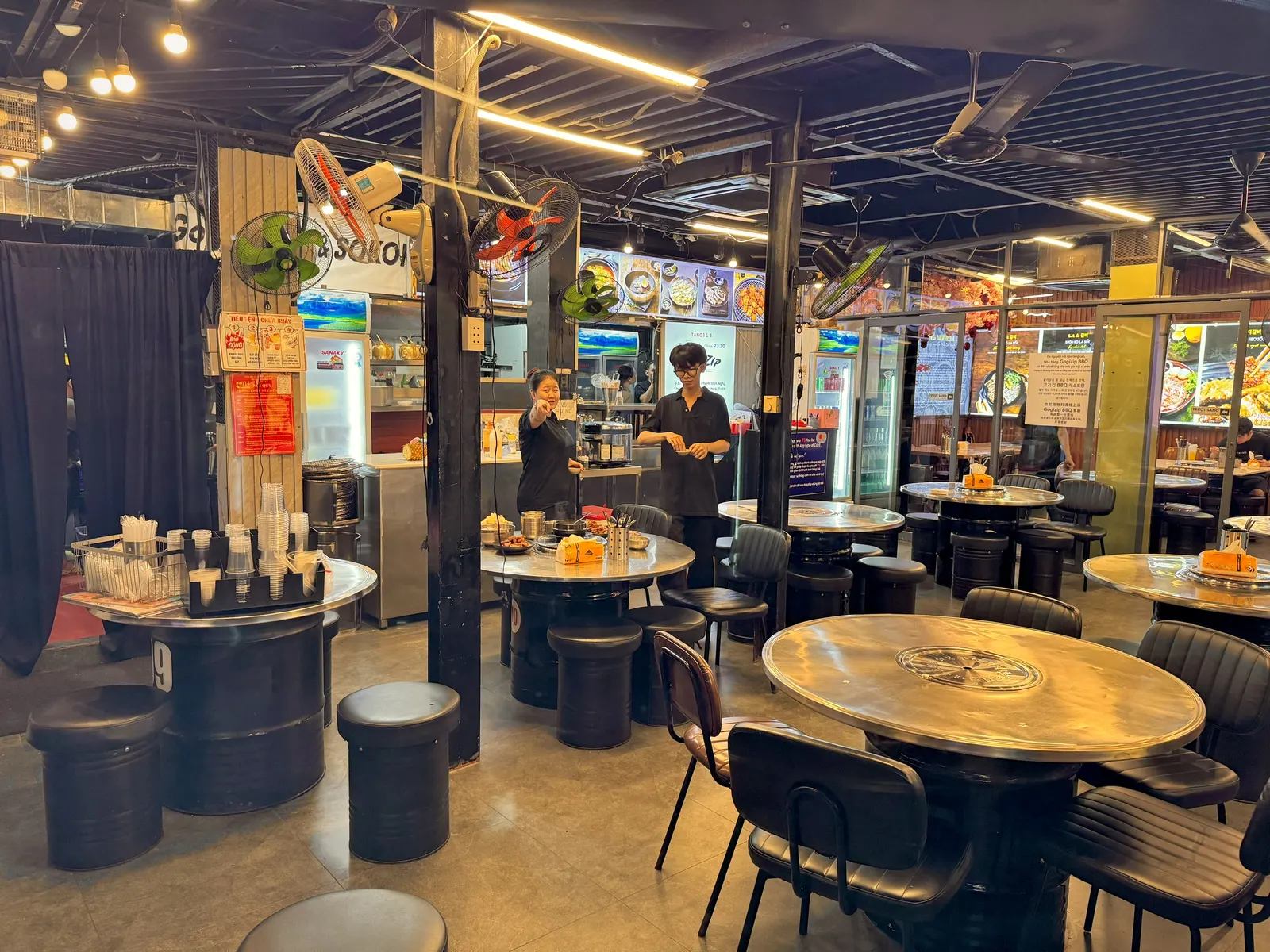
Gogizip is a Korean BBQ restaurant in Ho Chi Minh City, serving beef, pork, soups, hot pots, and side dishes. You can choose Combo E for 2 people or Combo F for 4 people to make ordering easier. See also our dining space.
The Hallyu wave and Korean food around the world
“Hallyu” (the Korean Wave) includes dramas, music, fashion, and food. As Korean dramas spread, dishes such as tokbokki, kimbap, cold noodles, fried chicken, and Korean BBQ became familiar choices in many countries. In Vietnam, young people first learn about Korean food through dramas and music, and then seek out restaurants to try the real flavors. Notably, the best way to enjoy it is still to eat together: order a few dishes, share, and talk.
Common misunderstandings when eating like in the dramas
- Thinking every dish is spicy: in fact many Korean dishes aren’t spicy, such as bulgogi, seaweed soup, steamed eggs, and cold noodles. See our article on non-spicy Korean dishes.
- Thinking you must eat very fast: in dramas, fast eating is often for drama; in real life, a Korean BBQ meal is fairly leisurely.
- Thinking you must drink alcohol to do it right: not at all; you can eat just as well with soft drinks or tea.
Ideas for a “watch a drama, eat Korean food” night at home
If you want an evening at home in the Korean drama style, you can prepare tokbokki, a few fish cake skewers, rolled omelet, kimchi, and a pot of noodles. Put on your favorite drama, set the food in the middle of the table, and let everyone help themselves. For grilled meat, you can book a restaurant for convenience, since smoke and the smell of grilling are hard to handle in a small apartment.
Frequently asked questions
Why do Korean dramas often have eating scenes?
Because a meal is a way of showing care in Korean culture, helping to tell the story of relationships and characters’ moods.
What dishes appear most often in Korean dramas?
Grilled meat, tokbokki, instant noodles, kimbap, fried chicken, and soups are very familiar.
What does seaweed soup in dramas mean?
It is a birthday dish and a restorative for women who have just given birth, symbolizing a mother’s love.
What do I need to eat Korean BBQ the drama way?
Grilled meat, lettuce or perilla leaves, ssamjang, garlic, pickled onions, and kimchi.
Does Gogizip serve Korean BBQ?
Yes. Gogizip is a Korean BBQ restaurant in Ho Chi Minh City, open 11:00–23:00 every day.
Should I order a combo when dining in a group?
Yes, a combo makes it easier to estimate portions when dining with 2 or 4 people.
A few “memorable” dishes worth trying in real life
If you’ve just finished a drama and want to try right away, start with the easy dishes: sweet marinated bulgogi, grilled pork belly wrapped in leaves, hot kimchi soup, and spicy mixed cold noodles. For beginners, order a few mild dishes first and then gradually increase the spice. If you’re in a group, order one large plate of meat, one soup, and one noodle or rice dish, and share. See our article on what to know before your first Korean BBQ to ease any nerves.
The most important thing isn’t to imitate every detail of the drama but to feel the spirit of the meal: warm, shared, and happy.
Conclusion
Food in Korean dramas is not just decoration but part of the story. If you want to create your own “gathered around the grill” scene, visit Gogizip at 93 Pham Van Nghi Street, Phu My Hung Urban Area, Tan Hung Ward, Ho Chi Minh City, open 11:00–23:00 every day. Hotline 0898 611 611. Prices exclude 10% VAT.
Craving Korean BBQ? Gogizip BBQ – 93 Pham Van Nghi, Phu My Hung (District 7), open 11:00–23:00 daily. Combos for 2 from 599k VND, for 4 from 1,159k VND (prices before 10% VAT). 9 free banchan, refilled anytime. Some of our staff speak English.